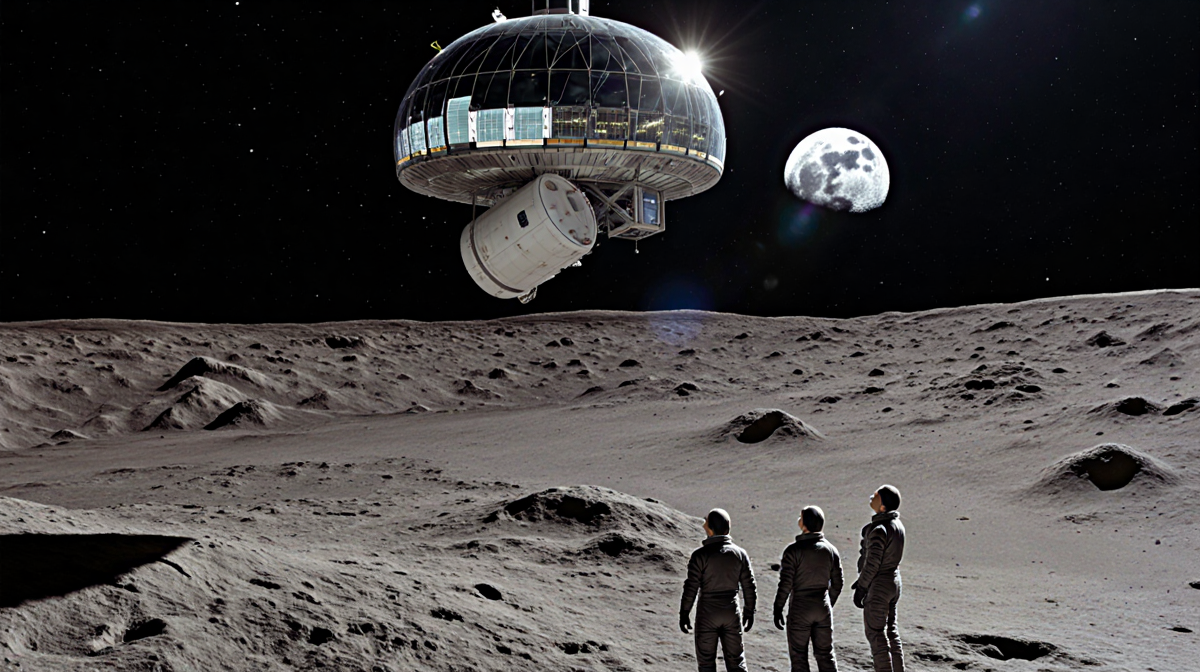
In a surprising move, a private company has announced its intention to build a space hotel in the near future. The company, a leading player in the space industry, plans to launch its first prototype in 2029, followed by a full-scale hotel in 2032. The project is expected to be a significant milestone in the development of space tourism and commercial space travel.
Timeline of GRU Space Milestones
| Date | Milestone |
|---|---|
| Jan. 12 | Announcement of lunar hotel plan |
| 2029 | Earth launch and lunar landing of inflatable prototype |
| 2032 | First hotel operational on lunar surface |
| 2028 | President Trump’s executive order to return to Moon |
| 2030 | Executive order for permanent lunar outpost |

The initial hotel will be an inflatable structure built on Earth and then transported to the lunar surface in 2029. Once landed, it will use compressed gas to inflate a version of the hotels, offering accommodation for four guests. The design is robust enough to survive the harsh lunar environment.
GRU Space plans to equip the hotel with a full Environmental Control and Life Support System, featuring carbon dioxide removal, oxygen generation, water reclamation, and thermal control. This system is essential for maintaining a livable atmosphere inside the inflatable habitat.
The first version of the hotel is expected to remain on the lunar surface for at least ten years before requiring major repair or replacement. This longevity target reflects the company’s commitment to sustainable, long-term lunar infrastructure.
Subsequent missions will focus on in-situ resource utilization, collecting, processing, and using local lunar material to produce essential supplies like building materials. The company envisions robotic technology constructing a second-generation hotel, taking inspiration from San Francisco’s Palace of Fine Arts.
If the lunar prototype proves successful, GRU Space hopes to eventually build the first cities on Mars, expanding its vision beyond the Moon. This long-term goal signals the company’s broader interest in extraterrestrial colonization.
The announcement comes amid renewed U.S. government focus on lunar exploration. On Dec. 18, President Donald Trump signed an executive order titled “Ensuring American Space Superiority,” directing NASA to return to the Moon by 2028 and to establish initial elements of a permanent lunar outpost by 2030.
While GRU Space has not disclosed detailed financial backing, the ambitious deposit and pricing structure suggest it seeks substantial investment to fund research, development, and launch operations. Potential investors may be drawn by the prospect of pioneering commercial space tourism.
Building a hotel on the Moon presents significant technical challenges, from launch mass constraints to radiation shielding. GRU Space has indicated it will partner with aerospace firms and research institutions to address these hurdles, though specific collaborators have not yet been announced.
GRU Space’s moon-hotel concept represents a bold step into commercial space infrastructure. By combining high-end hospitality with advanced life-support systems, the company aims to make lunar stays a reality within the next decade. Whether the venture succeeds will depend on technological breakthroughs, regulatory approval, and market demand.