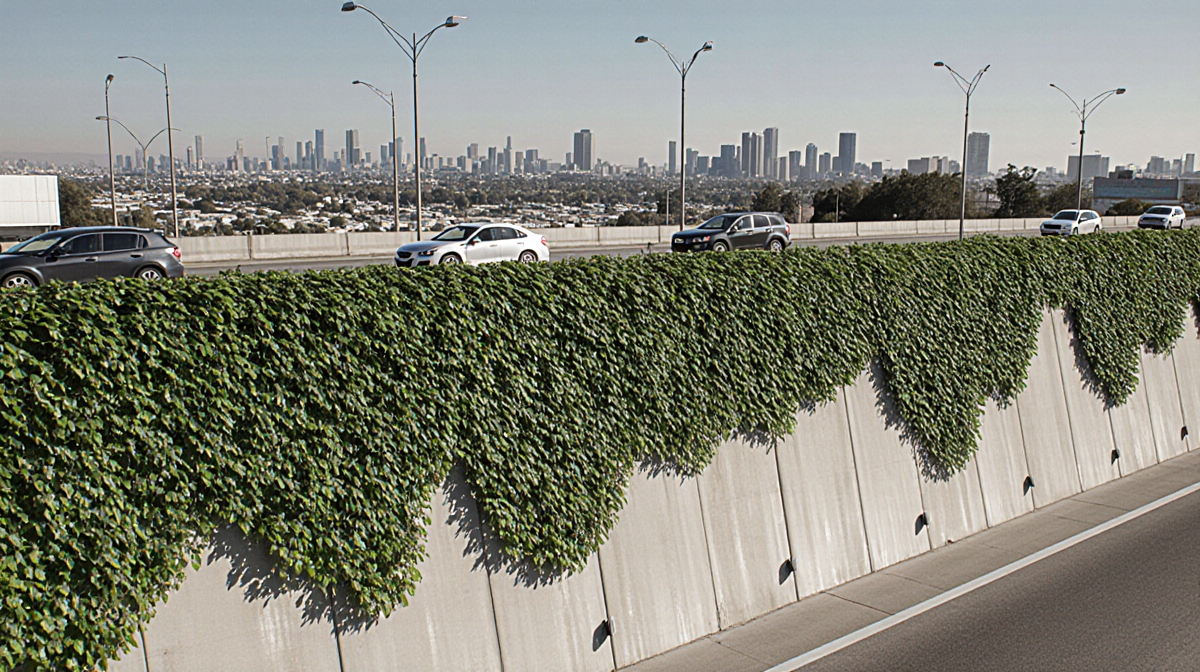
Caltrans is installing artificial ivy along the 101 Freeway near downtown Los Angeles in an effort to deter vandalism on the walls. The pilot program began two weeks ago and is slated for completion this week, according to the agency. The fake ivy now lines the walls of the 101 Freeway at Los Angeles Street, where staff removed about 90% of graffiti that previously covered the walls.
At a Glance
- Caltrans deploys artificial ivy to block graffiti on the 101 Freeway.
- The pilot started in early 2026 and aims to finish within the month.
- Approximately 90% of existing graffiti has been removed.
- The initiative follows a November 2024 effort that cost $300,000 to clear 300,000 square feet of graffiti.
- Why it matters: It preserves mural art while offering an environmentally friendly alternative to paint removal.
Pilot Program Details
The ivy installation covers roughly 1,200 feet of wall space along the freeway segment. The plants are made of durable synthetic material that mimics real ivy’s growth pattern. They are attached using low-impact mounting brackets that do not damage the underlying concrete.
Each ivy panel measures about 4 feet by 8 feet, allowing crews to cover large swaths of wall quickly. The panels are pre-painted in neutral tones to blend with the existing urban landscape. They are also designed to be removable once the mural artists finish their work.
Caltrans staff conducted a visual inspection before installing the panels. They confirmed that the walls had been heavily graffitied, with tags and spray paint covering most of the surface. The removal of these markings was done through a combination of chemical cleaning and mechanical scraping.
The decision to use artificial ivy stems from a legal constraint: the agency cannot paint over or remove graffiti in areas protected by murals and related agreements. The ivy acts as a temporary barrier that protects the artwork while the legal process is underway.
Installation crews worked in shifts to minimize traffic disruptions. The process involved securing the panels to the wall, ensuring they were level, and sealing the edges to prevent moisture infiltration. Once in place, the panels provide a continuous surface that deters future spray-paint attempts.
The program is monitored daily by Caltrans inspectors. They record any new graffiti activity and assess the ivy’s condition. If new marks appear, crews can quickly replace the affected panels.
Graffiti Removal Costs and Impact
In the past year, Caltrans spent more than $300,000 to remove over 300,000 square feet of graffiti on the 101 Freeway. The removal effort included hiring specialists, purchasing cleaning equipment, and compensating contractors for labor.
| Year | Total Cost | Area Cleared |
|---|---|---|
| 2025 | $300,000 | 300,000 square feet |
| 2026 (pilot) | $0 (installation cost not disclosed) | 1,200 feet of wall |
The cost data highlights the financial burden of maintaining clean public infrastructure in high-traffic urban corridors.
Legal and Environmental Considerations
“Due to a mural and related agreements at this location and several walls along U.S. 101 in downtown Los Angeles, Caltrans is not legally allowed to paint over or remove graffiti,” said the agency. “As a temporary measure, to protect the mural artworks, Caltrans has been installing artificial ivy, which has aesthetic benefits and acts as a graffiti deterrent and is a more environmentally friendly solution to graffiti removal.”
The agency emphasized that the ivy is a reversible solution that avoids the use of harsh chemicals that could damage the underlying concrete or surrounding vegetation. The panels also reduce the need for repeated cleaning cycles.
Legal agreements with local artists and community groups prevent the agency from altering the murals without consent. The ivy installation respects these agreements while maintaining public safety and cleanliness.
Future Plans and Mural Restoration
Once the muralists complete their work, Caltrans will remove the artificial ivy panels. The agency plans to conduct a final inspection to ensure no new graffiti remains. After removal, the walls will be ready for any future maintenance or artistic projects.
The pilot program’s success may lead to broader adoption of artificial ivy along other segments of the 101 Freeway. Caltrans is evaluating the cost-effectiveness and durability of the panels in different weather conditions.
Key Takeaways
- Artificial ivy provides a non-invasive barrier against graffiti.
- The pilot covers 1,200 feet of wall and protects existing murals.
- Legal restrictions prevent direct removal of graffiti in protected areas.
- The approach is more environmentally friendly than chemical cleaning.
- Future expansions depend on the pilot’s performance and community feedback.