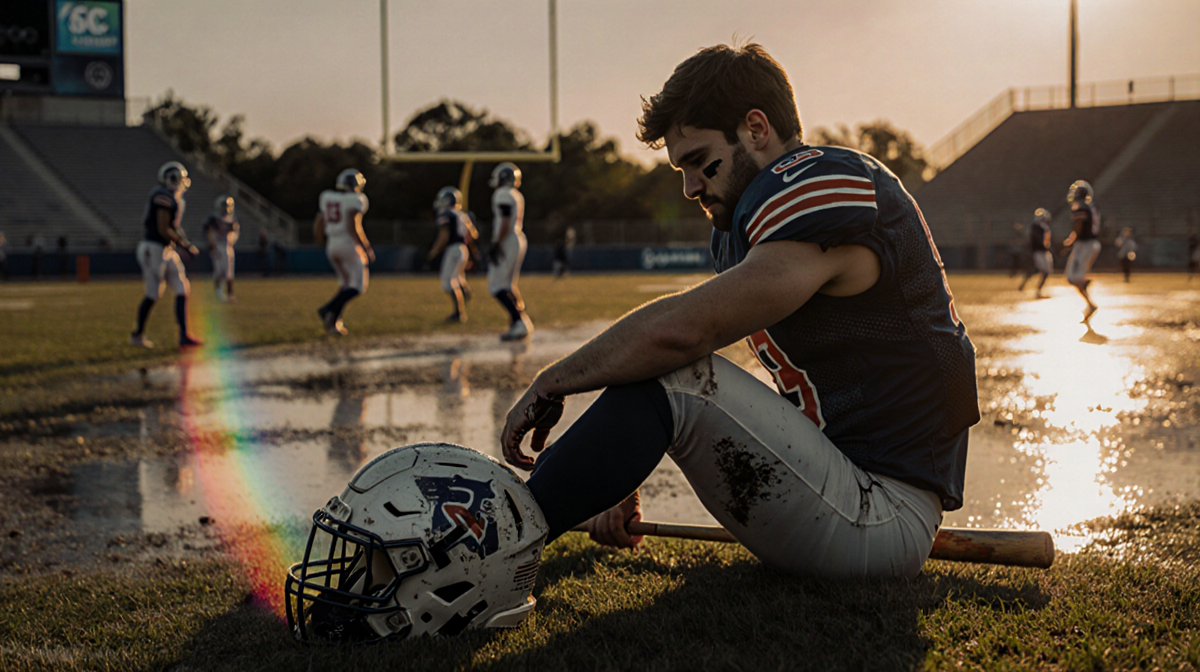
Jake Eldridge hid his sexuality while playing college football, a secret that eventually led to a hospitalization for ulcerative colitis. After retiring in 2024, he publicly came out on National Coming Out Day, using his platform to inspire other athletes.
At a Glance
- Jake Eldridge hid his sexuality while playing college football.
- Hospitalized in November for ulcerative colitis after years of stress.
- Retired in 2024, publicly came out on National Coming Out Day.
- Now shares his story on TikTok, Instagram, and YouTube, helping others feel less alone.
Early Life and Football Beginnings
When Jake Eldridge was growing up, he knew two things early on: football came easily to him – and he was gay. After his family moved from California to Texas, Eldridge’s parents enrolled him in peewee football. What began as an extracurricular quickly became his identity. He excelled, eventually specializing as a long snapper and traveling across the country to attend elite football camps.
The second truth – his sexuality – was something he learned to keep quiet.
> “I knew from a young age,” Eldridge, now 21, tells News Of Los Angeles exclusively. “But football became the thing that kind of pushed everything else aside.”
The Dual Identity at IMG
By his junior year of high school, that commitment paid off. Eldridge was recruited to IMG Academy, the prestigious preparatory boarding school and sports training facility in Bradenton, Fla. – a pipeline to college football’s biggest programs.
On the surface, it was a dream opportunity. Privately, it marked the start of what Eldridge calls “living two lives.”
> “It was like living in this fake persona for a year,” he says. “It really confused me. I started thinking, ‘Oh – maybe this is just who I have to be. Maybe football is just my whole life.’ “
College and the Weight of Secrecy
Eldridge was recruited to play college football in the Big 10 at Rutgers University. From the moment he committed, Eldridge says he felt the weight of what it would do to his mental health.
> “While it felt like everything I’d worked for was finally coming true, at the same time, it felt like an imprisonment – like this was my life now, and I didn’t have another option,” he explains.

Inside the program, speculation about his sexuality began circulating. His roommate would come home and tell him people were asking if he was gay.
> “My biggest fear wasn’t just people knowing – it was people knowing before I was ready.”
His parents had already accepted him when he came out to them while still at IMG Academy. They were very supportive.
> “They were very accepting,” he says. “They supported me the whole way.”
The demands of Division I football left little room for escape. He described the daily grind:
> “You don’t know if it’s going to be a soft landing – or if you’re going to hit the pavement,” he says. “Is my scholarship going to get taken? Am I going to play anymore? Am I going to get bullied to the point where I don’t want to be here? That was terrifying.”
> “Once I got home, I could finally close my door and be myself for a few hours before going to sleep and doing it all over again,” he says. “You’re constantly faking it. You don’t even have time to know who you are or what you actually like.”
Health Crisis and Decision to Step Away
By November, toward the end of his freshman season, the pressure became unbearable. Eldridge was hospitalized for ulcerative colitis for three days. Doctors said stress was likely the trigger.
> “It was the stress of being closeted – going in every day and faking who I am for years on end,” he says. “I’d been saying for years, ‘This is making me sick.’ And then my body finally proved it.”
The hospitalization became a breaking point. Eldridge met with his coach, who offered two options: transfer and continue playing football, or medically retire while keeping his education covered.
> “I didn’t hesitate,” Eldridge says. “I was done.”
He moved his classes online, stepped away from the sport that had defined him for nearly a decade, and relocated to New York City. Walking away was disorienting – football had been his entire identity – but it was also freeing.
> “For eight years, it was the only thing I ever told people I did,” he says. “When I left, I had to figure out who I was without it.”
He admits there’s grief in looking back on the years he spent hiding parts of himself.
> “When you come out, you kind of feel like you wasted time,” he says. “Time you could’ve spent doing what you actually loved.”
Life After Football and Coming Out
Since then, Eldridge has found a passion in baking, beauty and fitness – sharing his journey with his thousands of followers on TikTok, Instagram and YouTube.
As his platform grew, he began considering opening up about his sexuality. In 2024, on National Coming Out Day, Eldridge finally decided to make it public.
> “The tipping point was being asked every day online, ‘We know you’re gay – just say it,’ ” he says. “That was one of the hardest parts. People within the community almost forcing you to come out.”
The pressure both scared him and clarified things.
> “In a way, it forced me to say, ‘Here it is. This is who I am. Accept it or not,’ ” Eldridge explains.
The response overwhelmed him.
> “I remember posting it while I was taking off from L.A.,” he says. “When I landed, my comments were just filled with hearts. I cried. I didn’t expect that many people to care – let alone be supportive.”
Eldridge says he receives messages almost daily from people who tell him his story has helped them feel less alone.
> “That’s been the most meaningful part,” he says. “Realizing I’ve helped more people than I ever thought I would.”
Living openly has also changed his relationship with his body and his health. Eldridge still lives with ulcerative colitis, but he says the symptoms are far more manageable now that he’s no longer carrying the weight of hiding.
> “A huge part of it is stress,” he says. “And I’m actually able to manage that now.”
> “I feel so much lighter,” Eldridge adds. “Before, I couldn’t manage my stress at all. Now, even when things get busy, I’m doing what I love – and that weight just isn’t there anymore.”
Impact and Message
Now, he hopes his story can reach other athletes afraid of coming out.
> “Do it on your own time,” he says. “Don’t live your life for other people. Once you start living for yourself, it’s one of the most rewarding things there is.”
His journey illustrates how the pressure of secrecy can affect mental and physical health, and how authenticity can bring relief and purpose.
—
Key Takeaways
- Secrecy about sexuality can lead to severe health issues.
- Retiring from a sport doesn’t mean losing identity; it can open new paths.
- Publicly sharing one’s truth can empower others.