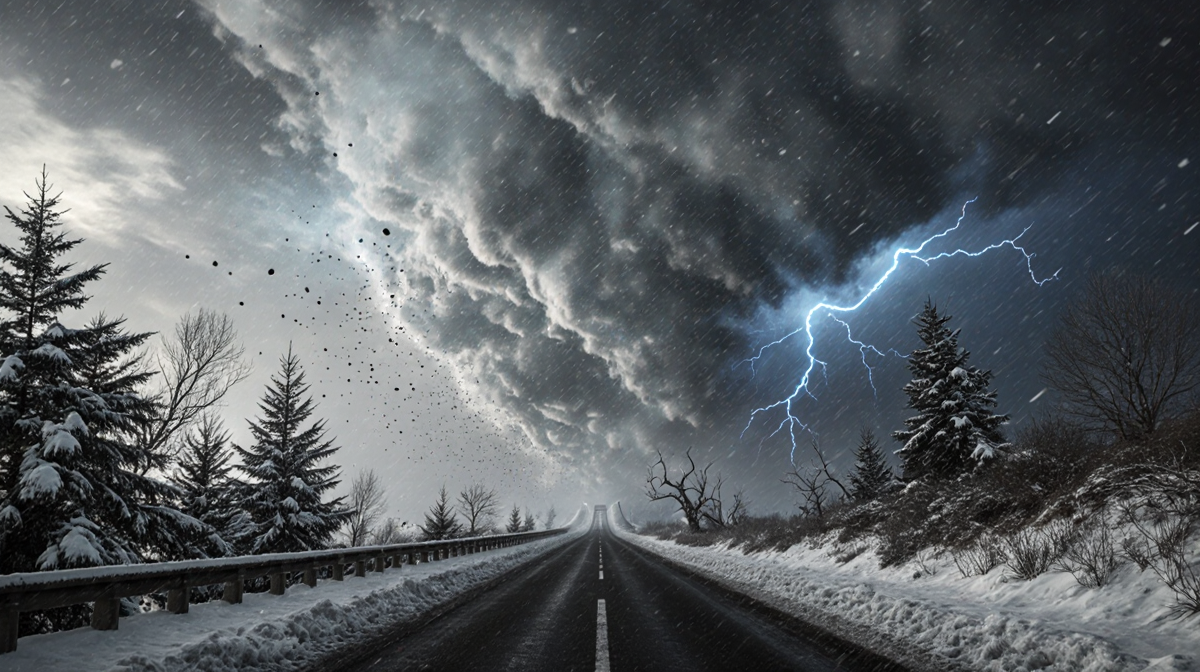
The National Weather Service’s Weather Prediction Center has issued a new forecast for a winter storm that could hit the East Coast from Georgia to Maine in the coming days. The system may develop into a “bomb cyclone,” a rapidly intensifying low-pressure area that can bring heavy snow, strong winds, and coastal flooding.
At a Glance
- A winter storm is expected to move from the Carolinas toward the Mid-Atlantic by January 30.
- The storm could strengthen into a bomb cyclone, increasing wind speeds and flooding risk.
- Heavy snow may fall in southeastern Massachusetts, Delaware, Maryland, and parts of Virginia and North Carolina.
- Why it matters: Residents and travelers should prepare for hazardous road conditions and possible power outages.
Context
The East Coast has just emerged from Winter Storm Fern, which dumped almost two feet of snow in some areas and caused at least 30 deaths across the region. Fern left icy roads and damaged infrastructure, prompting emergency responses and community support.
Storm Mechanics
The forecast describes a low-pressure system that will rapidly develop off the Carolina coast on Saturday, January 31, and track off the Mid-Atlantic coast on Sunday, February 1. The system will interact with a very cold air mass covering much of the country. When a cold air mass collides with a warm air mass and intensifies over 24 hours, meteorologists call the event “bombogenesis.” The National Ocean Service explains that this process can produce a sudden drop in pressure and a surge in wind speeds.
Potential Impact
“While confidence in coastal impacts have risen in the past 24 hours, including strong onshore winds & coastal flooding, there remains a wide range of potential scenarios regarding winter hazards,” the Weather Prediction Center said. The storm could deliver:
- Heavy, wind-whipped snow that may accumulate quickly.
- Coastal flooding driven by onshore winds and a full moon.
- Frigid temperatures that will “remain across the eastern half of the U.S. into next week,” according to the Weather Prediction Center.
Timeline
| Date | Event | Notes |
|---|---|---|
| January 30 | Storm may begin | Possible start of heavy snowfall |
| January 31 | Low pressure develops | Off the Carolina coast |
| February 1 | Storm tracks off Mid-Atlantic | Increased risk of coastal flooding |
| February 2 | Storm could end | End of the forecast window |
Preparedness
Residents in the potential impact zone should:
- Monitor local weather updates and official advisories.
- Keep emergency supplies, including food, water, and blankets, ready.
- Plan alternative routes for travel and avoid non-essential trips.
- Secure outdoor items that could become projectiles in strong winds.
- Check on neighbors, especially the elderly or those with medical needs.
Key Takeaways
The upcoming winter storm is a reminder that the East Coast can experience rapid weather changes even after a major event like Winter Storm Fern. While the exact track and intensity remain uncertain, the potential for a bomb cyclone raises the stakes for coastal flooding and hazardous travel conditions. By staying informed and prepared, residents can reduce risk and respond effectively to the evolving weather.