
At a Glance
- The Clarity Act, passed by the House in July 2025, is now stalled in the Senate.
- Industry leaders warn that failure to pass could trigger a three-year “show-me” period for crypto.
- Recent internal disputes have surfaced, with Coinbase citing concerns over the bill’s provisions.
- Why it matters: The outcome will shape regulatory certainty and market momentum for digital assets.
The Clarity Act, a piece of legislation aimed at providing definitive rules for the U.S. cryptocurrency market, has reached a critical juncture. While the House approved the bill in July 2025, it remains under review in the Senate, where committees are still debating key details. The stakes are high for investors, exchanges, and the broader financial system.
Current Status of the Legislation
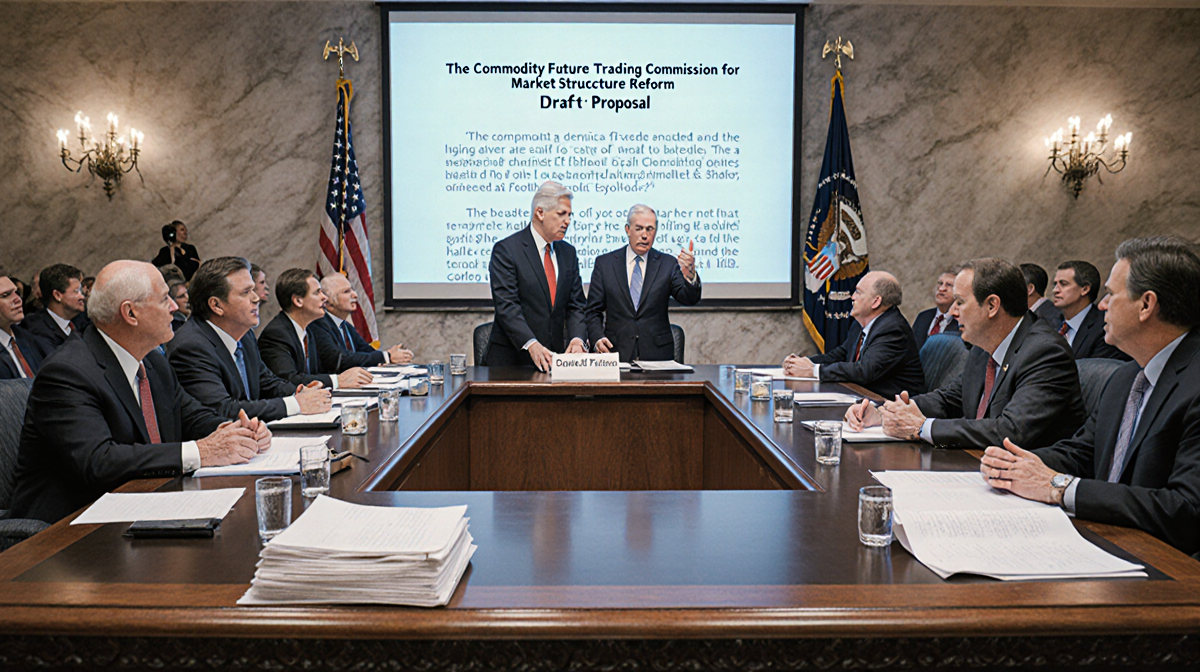
The Senate Committee on Banking, Housing, and Urban Affairs is leading the bill’s examination, with the Senate Agriculture Committee offering input on provisions related to the Commodity Futures Trading Commission. Hearings have taken place, and draft proposals have been released as part of a broader push for market-structure reform. However, markups have been delayed as lawmakers weigh investor safeguards and other concerns.
Differences between the Senate drafts and the House-passed version are still being negotiated. These discrepancies primarily involve the scope of regulatory authority and the specifics of stablecoin oversight. The Senate’s focus on safeguarding investors has led to a more cautious approach, delaying the final vote.
Industry Perspective: Matt Hougan’s Warning
Bitwise Chief Investment Officer Matt Hougan has articulated a clear vision of what could happen if the Act does not pass. He said that the U.S. crypto market would enter a critical “show-me” period, during which the industry would have roughly three years to prove its indispensability to everyday Americans and the traditional financial system.
Hougan explained that without legislative clarity, crypto’s future growth would hinge less on policy expectations and more on demonstrable real-world adoption. He highlighted stablecoins, tokenized securities, and blockchain-based financial infrastructure as use cases that would need to show active, scalable adoption.
He compared the potential scenario to the early years of companies like Uber and Airbnb, which operated in regulatory gray areas before becoming so widely used that lawmakers had to adapt regulations to reflect their realities. According to Hougan, crypto would need to follow a similar path if Clarity fails.
Hougan also cautioned that the outcome would not be guaranteed. If, after several years, crypto remains perceived as operating on the fringes of the financial system, a change in political leadership could lead to serious challenges. In that case, investors would wait for clear proof of real-world adoption before rewarding prices.
What a Pass Would Mean
If the Clarity Act passes in a form that the industry supports, Hougan expects a sharp market rally. He believes that investors would assume the growth of stablecoins, tokenization, and other crypto use cases is locked in. A definitive regulatory framework would reduce uncertainty, encouraging both institutional and retail participation.
The Act would also cement the current pro-crypto regulatory environment into law, protecting it from reversal by a future administration. This would provide a stable foundation for long-term investment and innovation.
Internal Discord Within the Crypto Community
While lawmakers debate the final form of the Clarity Act, reports of growing friction within the industry have surfaced. Earlier this month, Citron Research accused Coinbase CEO Brian Armstrong of opposing the act to protect Coinbase’s stablecoin yield business from increased competition.
The allegations emerged after Coinbase withdrew its support for the bill on January 14. The exchange cited concerns over tokenized equities, DeFi privacy, stablecoin rewards, and the shifting of regulatory authority toward the SEC. Citron claimed that Armstrong feared competition from firms like Securitize.
These tensions illustrate the divergent priorities among crypto stakeholders. Some view the Act as a necessary framework for growth, while others fear that certain provisions could stifle innovation or advantage specific business models.
Timeline of Key Events
| Date | Event |
|---|---|
| July 2025 | House approves the Clarity Act |
| January 2026 | Senate review ongoing; committees hold hearings |
| January 14, 2026 | Coinbase withdraws support for the bill |
| Early 2026 | Citron Research publishes allegations against Coinbase |
| Ongoing | Senate markups delayed due to investor safeguard debates |
The timeline highlights the rapid progression from legislative approval to current uncertainty. It also underscores the industry’s active engagement and the political complexities that shape the Act’s fate.
Takeaways for Market Participants
- The Clarity Act’s passage would provide regulatory certainty, potentially boosting market confidence.
- Failure to pass could trigger a three-year period where real-world adoption must prove its value.
- Internal disagreements, such as Coinbase’s withdrawal, reveal differing views on the Act’s impact.
- Investors should monitor Senate committee actions and industry statements closely, as these will influence market sentiment.
The crypto ecosystem stands at a crossroads. The next few months will determine whether the industry gains a clear, stable regulatory framework or must navigate an uncertain, “show-me” landscape. Stakeholders across the spectrum-investors, exchanges, and policymakers-will be watching the Senate’s decisions with keen interest.
Conclusion
The Clarity Act’s current stalled status in the Senate has turned the U.S. crypto market into a high-stakes waiting game. While the House’s approval signaled strong bipartisan support, the Senate’s cautious approach reflects concerns about investor protection and regulatory scope. The outcome will not only shape the legal environment for digital assets but also influence the pace and direction of innovation in the sector.
With industry leaders like Matt Hougan outlining potential scenarios, the market’s reaction will hinge on the Act’s final form and the clarity it provides. Whether the legislation passes or fails, the crypto community will need to adapt, demonstrating real-world utility and resilience to secure its place in the financial ecosystem.