At a Glance
- Swiatek and Gauff discuss the extensive camera coverage at the Australian Open.
- Players want more privacy during pre-match preparation and post-match moments.
- The tournament’s fan-engagement strategy relies on constant on-camera footage.
- Why it matters: The debate highlights the tension between media access and player privacy in modern tennis.
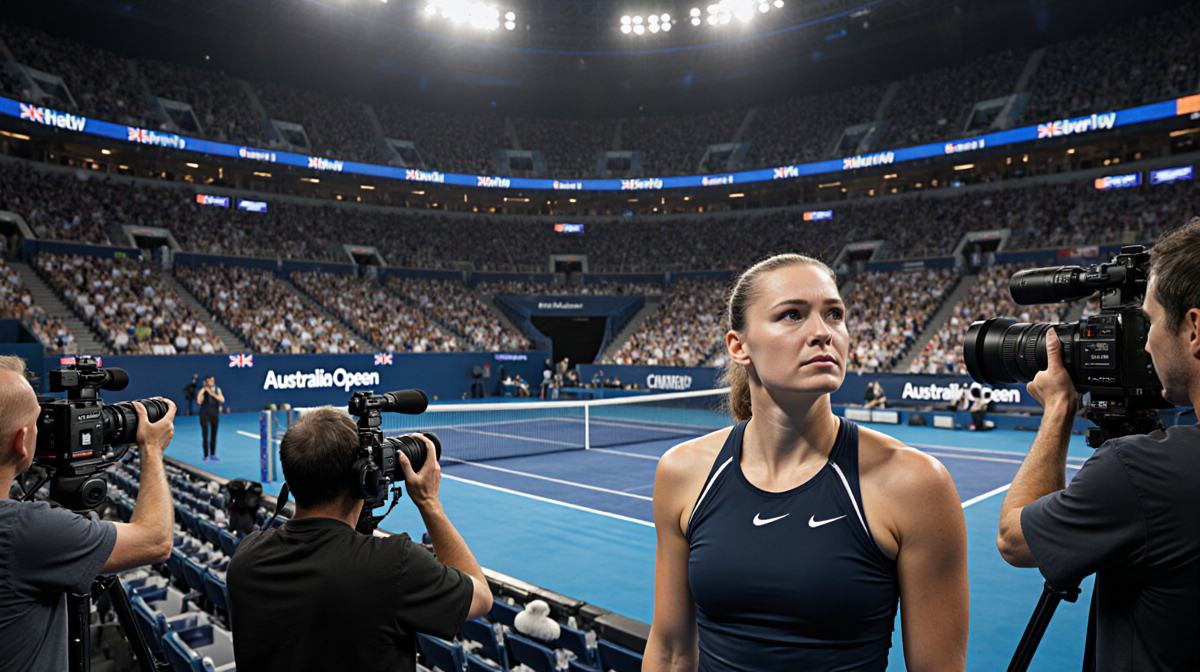
The Australian Open has become a showcase for both high-stakes competition and a media spectacle. After a 7-5, 6-1 quarter-final loss to Elena Rybakina, Swiatek was asked about the lack of off-camera spaces for players. She and fellow top-three player Coco Gauff have voiced concerns that the tournament’s omnipresent cameras may infringe on athletes’ privacy.
Camera Coverage at the Australian Open
The tournament’s organizers have built a three-week festival around the season-opening major, integrating fan-engagement activities and a comprehensive camera network. Cameras track players from locker rooms to the court and, according to players, even monitor moments that happen “everywhere in between.”
- Cameras record players’ movements in all public areas.
- Footage is shared across social media and broadcast platforms.
- Off-court surveillance is not unique to this tournament; it is common at other major events.
The coverage is designed to keep fans connected, but it has led to memes, such as when Swiatek was stopped by security after forgetting her credential.
Swiatek’s Perspective
Swiatek, who has won four French Open titles, Wimbledon, and the U.S. Open, expressed a desire for more privacy:
> “Yeah, the question is, are we tennis players, or are we, like, animals in the zoo where they are observed even when they poop, you know?” she said, adding that the reference was an exaggeration. “It would be nice to have some privacy.”
She added that players need space to practice routines before matches without the world watching:
> “I’d like to have a space where you can do that without the whole world watching.”
Swiatek acknowledged the public nature of the sport:
> “We’re tennis players. We’re meant to be watched on the court, you know, and in the press. That’s our job.”
She also noted that the meme about her credential mishap was funny, but not necessary.
Gauff’s Reaction
Coco Gauff, a two-time major winner, smashed her racket against a concrete ramp after her quarter-final loss to Elina Svitolina. She had been struggling with her serve during a 59-minute match and sought a quiet place to vent.
> “I tried to go somewhere where I thought there wasn’t a camera because I don’t necessarily like breaking rackets.”
>
> “Maybe some conversations can be had because I feel like at this tournament the only private place we have is the locker room.”
Gauff highlighted that certain moments, such as a similar incident involving Aryna Sabalenka, are not worth broadcasting. She emphasized that smashing a racket on the court would be a poor image for fans.
Tournament’s Fan Engagement and Security
The Australian Open’s festival includes activities that rely on constant content creation. While fans appreciate the behind-the-scenes look, the tournament’s security measures-such as stopping players for credential checks-can create awkward situations. The balance between entertainment and player privacy remains a key issue.

- Security checks can interrupt players’ routines.
- The tournament’s fan-engagement strategy depends on camera-captured moments.
- Players argue for designated private spaces.
Broader Context of Player Privacy
The debate over camera coverage reflects a broader trend in professional tennis. Players at other tournaments also face extensive surveillance, but the Australian Open’s high-profile status magnifies the issue. While media access is essential for the sport’s commercial viability, players’ need for personal space is increasingly recognized.
Key points to consider:
| Issue | Current Practice | Player Preference |
|---|---|---|
| Pre-match preparation | Cameras record in locker rooms | Desire for private space |
| Post-match moments | Continuous coverage | Limited privacy |
| Security checks | Mandatory credential verification | Can be disruptive |
Key Takeaways
- Swiatek and Gauff are among the top players expressing concerns about constant camera coverage.
- The Australian Open’s fan-engagement model relies heavily on on-camera footage.
- Players want more private areas for routine practice and emotional release.
- The balance between media access and athlete privacy is a growing conversation in tennis.
The conversation continues as the sport evolves, with stakeholders considering how best to protect player privacy while maintaining the fan experience.