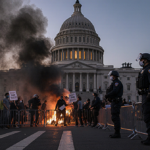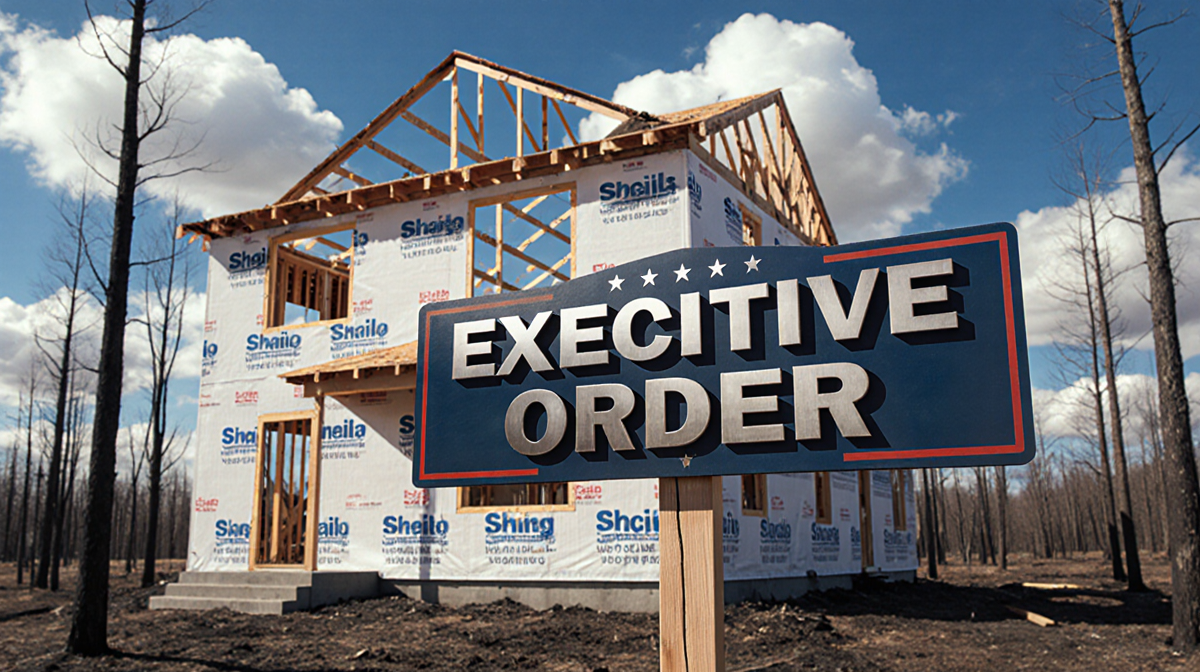
President Donald Trump issued an executive order on Tuesday that bypasses California’s state and local permitting processes, aiming to speed up reconstruction for homes and businesses damaged by last year’s brush fires.
At a Glance
- Trump’s order lets federal-funded rebuilders skip local permits.
- He blames state and city officials for slow fire response.
- Governor Newsom and Mayor Bass criticize the move and call for more FEMA aid.
- Why it matters: The decision could alter how disaster relief is delivered and who controls rebuilding timelines.
The executive order comes amid ongoing recovery efforts after California’s devastating 2023 brush fires that scorched thousands of acres and left many families displaced. Trump’s directive states that reconstruction should not be “frustrated by unnecessary, duplicative, or obstructive permitting requirements” that he claims keep families and businesses from rebuilding.
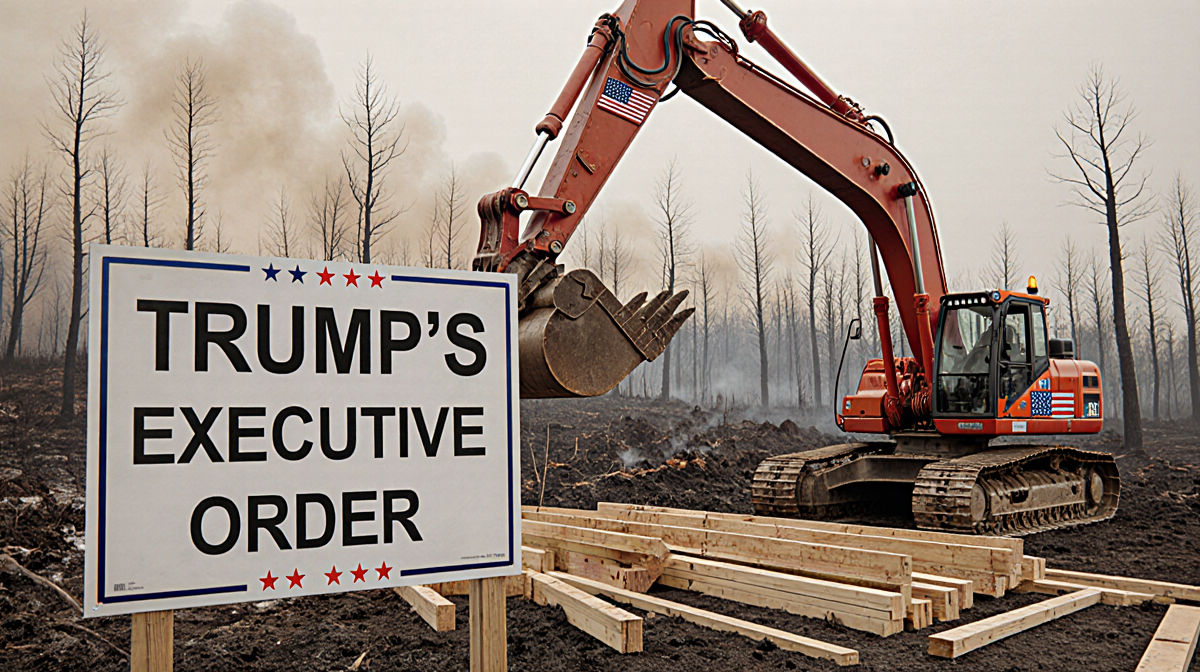
Background of 2023 California Brush Fires
The 2023 season produced several large, fast-moving fires, including the Altadena and Pacific Palisades blazes. These incidents highlighted gaps in forest management, water system maintenance, and evacuation protocols. The fires caused significant property damage and left many residents without homes or income.
Trump’s Executive Order
Key Provisions
The order:
- Allows residents using federal emergency funds to rebuild to bypass local permitting.
- Declares that local permitting should not impede families or businesses.
- Criticizes California and Los Angeles leaders for mismanaging forest resources and evacuation orders.
The White House states the intent is to streamline rebuilding for those already receiving federal aid.
Criticism from State and Local Leaders
Local officials argue that the executive order oversteps federal authority and undermines local governance. They contend that additional FEMA relief would be more beneficial than eliminating permitting laws.
Governor Gavin Newsom’s Response
Gov. Newsom, via his press office, noted that more than 1,600 permits have already been issued for rebuilding. He wrote on X:
> “Donald Trump has signed a useless Executive Order rather than deliver the $34 BILLION California’s taxpayers deserve in wildfire disaster aid to actually rebuild.”
Newsom’s statement frames the order as ineffective and emphasizes the need for substantial financial support.
Los Angeles Mayor Karen Bass’s Response
Mayor Bass echoed Newsom’s criticism and outlined what she believes would help survivors:
> “The President has no authority over the local permitting process, but where he could actually be helpful is by providing the critical FEMA funding we have been asking for, by speeding up FEMA reimbursements, and by regulating the industries that he alone can impact.”
She added:
> “In fact, I’m calling on the President to issue a new Executive Order to demand the insurance industry pay people for their losses so that survivors can afford to rebuild, push the banking industry to extend mortgage forbearance by three years, tack them on to the end of a 30-year mortgage, and bring the banks together to create a special fund to provide no-interest loans to fire survivors.”
Potential Impact and Next Steps
The order’s effectiveness hinges on federal agencies’ willingness to enforce the bypass and on state and local governments’ responses. If implemented, it could:
- Reduce permitting delays for federal-funded projects.
- Create tension between federal and state authorities over jurisdiction.
- Shift the focus from permitting reform to direct financial aid.
Federal agencies are expected to clarify how the order will be applied and whether it will affect all rebuilding projects or only those funded by specific federal programs.
Key Takeaways
- Trump’s executive order seeks to eliminate local permitting barriers for fire-damaged properties.
- State and local leaders criticize the move, advocating for more FEMA aid instead.
- Governor Newsom and Mayor Bass highlight the need for substantial financial support and regulatory changes.
- The outcome will depend on federal enforcement and intergovernmental cooperation.
The decision underscores the ongoing debate over how best to support communities recovering from natural disasters while respecting local governance structures.