At a Glance
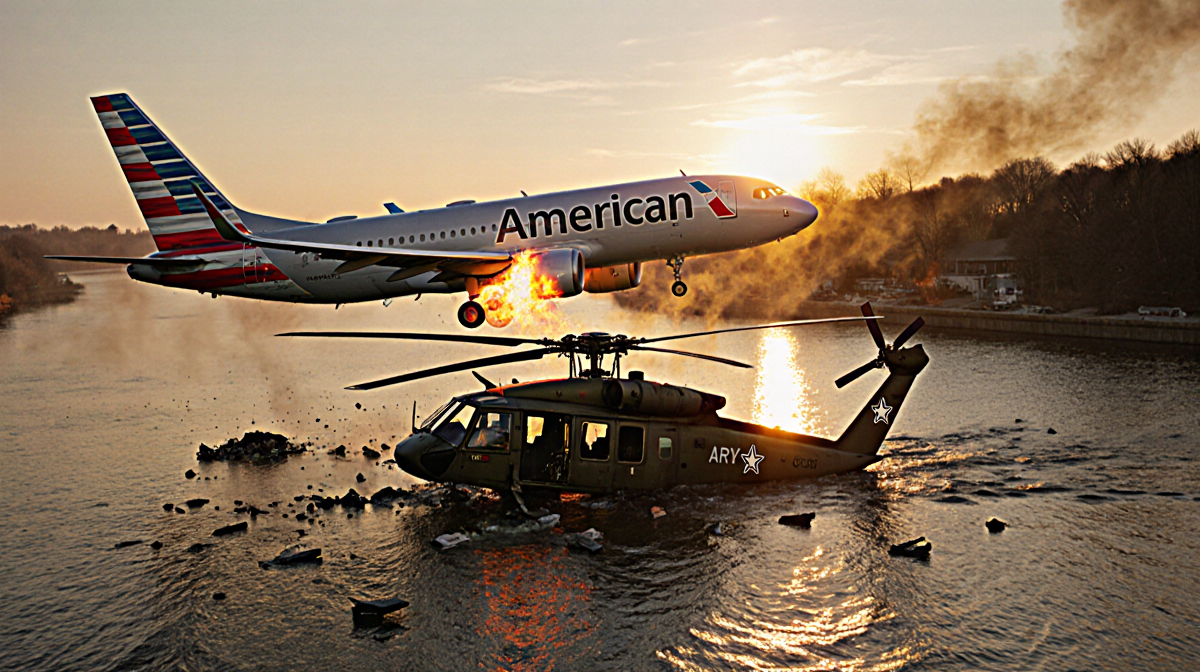
- The National Transportation Safety Board (NTSB) determined the probable cause of the collision between American Airlines Flight 5342 and an Army Black Hawk helicopter.
- The investigation highlighted failures in air-traffic control, helicopter routing, and collision-avoidance technology.
- 67 people died; 90 % of both aircraft were recovered from the Potomac River.
- Why it matters: The findings aim to prevent future tragedies by addressing systemic safety gaps.
The NTSB held a hearing on Tuesday, Jan. 27, 2025, a year after the fatal midair collision outside Ronald Reagan Washington National Airport. The event killed 67 people aboard the American Airlines jet and the Army helicopter. The hearing, chaired by NTSB Chairwoman Jennifer Homendy, focused on determining the probable cause and identifying safety recommendations.
The Hearing’s Structure
The 9 a.m. ET session began with introductions and an overview of the investigation’s scope. The board reviewed testimony from FAA officials, Army representatives, air-traffic controllers, and investigators. Key topics included:
- Decisions by the Federal Aviation Administration (FAA) and the Army.
- Air-traffic control procedures at Reagan.
- The use of helicopter route four.
After a lunch break, the board moved to official findings, followed by a discussion of systemic safety culture issues.
Probable Cause and Key Findings
Homendy announced that the NTSB had determined the probable cause: the use of helicopter route four, which passed close to Reagan, and a faulty attempt by the Army helicopter to fly around Flight 5342. The collision occurred because the Black Hawk was likely looking at the wrong aircraft.
The investigation identified several contributing factors:
- Lack of regular review of helicopter routes near Reagan.
- Loss of situational awareness and degraded performance by air-traffic controllers.
- Unsustainable arrival rate at the airport, increasing controller workload.
- Failures by the Army and FAA to track or implement needed safety reforms.
- Insufficient collision-avoidance technology on both aircraft.
Detailed Findings
The board approved more than 70 official findings. Highlights include:
- The controller responsible for the helicopter and jet should have had another controller to split the workload.
- Radio reception issues prevented the helicopter from hearing key words such as “circling.”
- The helicopter crew did not positively identify Flight 5342 during the initial advisory.
- The Black Hawk’s altimeter system errors caused it to believe it was below the maximum altitude, placing it dangerously close to the jet.
- Flight 5342 did not see the helicopter until it was too late.
- The long-standing practice of “pilot-approved visual separation” increased collision risk.
Safety Culture and Systemic Issues
The hearing delved into broader safety culture concerns. Dr. Jana Price discussed FAA safety data, noting a discrepancy between the 15,214 near-miss events identified and the FAA’s claim of only five. Michael Graham expressed amazement at the amount of data the FAA possessed but questioned why it was not acted upon.
Homendy criticized the FAA’s delayed data provision, stating, “You’re too late.” She also praised the Army’s cooperation and Army Secretary Daniel Driscoll.
Air-Traffic Control Practices
Investigator Brian Soper explained that visual separation is only appropriate when aircraft are at least 1.5 miles apart horizontally or 500 feet vertically. He argued that controllers should have issued a “safety alert” to the passenger jet, which was not done.
Dr. Katherine Wilson highlighted the FAA’s reliance on pilots to perform visual separation, noting that this habit can foster complacency. She suggested that the key controller on the day of the crash lacked full situational awareness due to workload and shift timing.
Technology Gaps
Both the Black Hawk and Flight 5342 lacked Automatic Dependent Surveillance-Broadcast (ADS-B) Out or In. The helicopter’s ADS-B system was turned off, and the jet did not have the corresponding system, despite past NTSB recommendations. The cost of such technology is only about $400 per aircraft.
Visibility and Collision Course
Investigator Brice Banning presented a visibility study. An animation showed that the helicopter should have seen the jet well before the collision, indicating that the crew was either confused or looking at a different aircraft.
The study also confirmed that 90 % of both aircraft were recovered from the Potomac River.
Family Statements and Emotional Impact
During the hearing, families of victims, including Andy Beyer, expressed their grief and emphasized the need for safety changes. Beyer said, “We are never gonna forget what they meant to us.”
Next Steps
The NTSB will finalize the probable cause determination and issue a report in about two weeks. While the board cannot enforce recommendations, it expects that the FAA and Army will implement changes to prevent future collisions.
The hearing underscored the importance of a systems approach to aviation safety, moving beyond individual blame to address root causes.
Key Takeaways
- The collision was largely preventable due to systemic failures.
- Air-traffic control workload and outdated routing contributed significantly.
- Lack of collision-avoidance technology on both aircraft was a critical factor.
- The NTSB’s findings aim to prompt regulatory and procedural changes across the aviation industry.
Conclusion
The NTSB’s hearing on Jan. 27, 2025 provided a comprehensive review of the tragic midair collision. By identifying specific procedural, technological, and cultural shortcomings, the board seeks to ensure that no other family experiences a similar loss.