At a Glance
- The Kennedy Center board added President Donald Trump’s name to the venue, sparking a wave of cancellations.
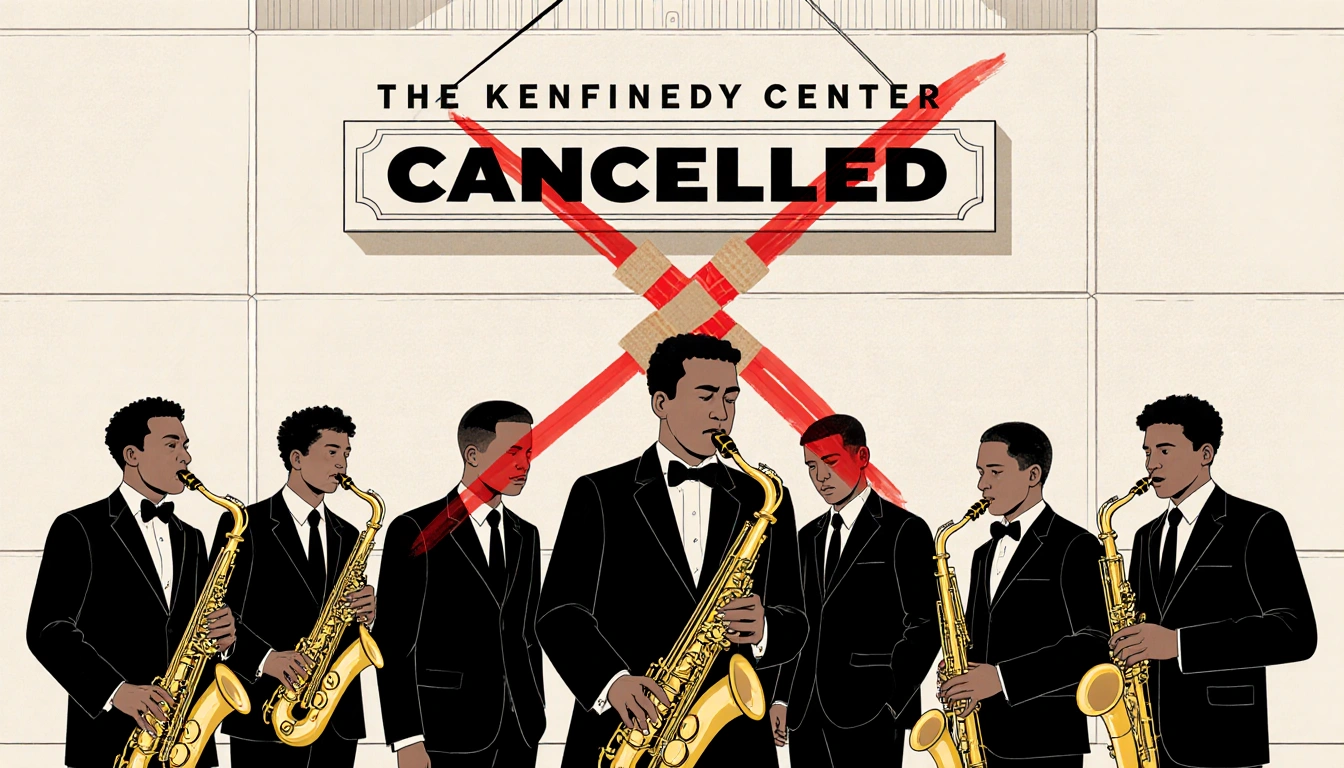
- Jazz band The Cookers, folk singer Kristy Lee, and others pulled shows scheduled for Christmas Eve, New Year’s Eve, and Jan. 14.
- The move has prompted criticism from lawmakers, the Kennedy family, and artists who say the center must remain free from political capture.
- Why it matters: The cancellations signal a clash between artistic integrity and political influence over a national cultural institution.
The Kennedy Center’s board voted this month to rename the performing-arts venue to include President Donald Trump’s name. The next day, the Trump name was affixed to the building’s facade, drawing sharp rebuke from lawmakers and members of the Kennedy family who say the institution was created by Congress to memorialize President John F. Kennedy and cannot be renamed without congressional approval.
Board Renames Kennedy Center
The renaming decision was met with swift backlash. Rep. Joyce Beatty, D-Ohio, sued the Trump administration last week for the renaming, calling it a “flagrant violation of the rule of law.” The Kennedy Center’s president, Richard Grenell, threatened to sue the artists who canceled, calling their decision a “political stunt.”
Artists Respond
The Cookers, a jazz band scheduled to perform Wednesday night, did not cite a specific reason in announcing their decision, but their statement hinted at politics.
The Cookers stated:
> “Jazz was born from struggle and from a relentless insistence on freedom: freedom of thought, of expression, and of the full human voice. Some of us have been making this music for many decades, and that history still shapes us,”
> “Our hope is that this moment will leave space for reflection, not resentment.”
Kristy Lee announced her cancellation on Instagram, saying:
> “but losing my integrity would cost me more than any paycheck.”
She added:
> “When American history starts getting treated like something you can ban, erase, rename, or rebrand for somebody else’s ego, I can’t stand on that stage and sleep right at night.”
Lee’s website statement added:
> “This decision is not directed at the Center’s dedicated staff, artists, or patrons, whose work and commitment to the arts remain deeply respected. Rather, it is a statement in defense of the Center’s founding purpose and the ethical responsibility shared by artists who grace its stage.”
Billy Hart, the Cookers’ drummer, told News Of Los Angeles that the name change “evidently” played a role in their decision to cancel their concert.
Legal and Political Fallout
The Kennedy Center’s president, Richard Grenell, threatened to sue the artists who canceled, calling their decision a “political stunt.” Roma Daravi, the center’s spokesperson, said:
> “Any artist cancelling their show at the Trump Kennedy Center over political differences isn’t courageous or principled-they are selfish, intolerant, and have failed to meet the basic duty of a public artist: to perform for all people.”
Trump has taken numerous steps to assert more control over the center, such as replacing the board with a handpicked set of members who named him chair and removing Pride events.
Impact on Programming
Multiple shows and performers have canceled events at the center since Trump’s takeover began, including the musical “Hamilton” and Issa Rae. The cancellations have also prompted a broader debate about the role of politics in public arts institutions.
| Date | Performer | Event |
|---|---|---|
| Christmas Eve | Chuck Redd | Concert |
| New Year’s Eve | Unspecified | Concert |
| Jan. 14 | Kristy Lee | Concert |
| Wed. night | The Cookers | Concert |
Key Takeaways
- The Kennedy Center board’s renaming to include Trump’s name triggered a wave of artist cancellations.
- Artists cite political capture and loss of institutional integrity as reasons for pulling shows.
- The controversy has sparked lawsuits, political backlash, and a debate over the future of the Kennedy Center’s programming.
The backlash illustrates how a single naming decision can ripple through a nation’s cultural landscape, forcing artists, lawmakers, and the public to confront the intersection of art and politics.