
At a Glance
- Perplexity lets users pull academic research from scholarly databases instead of the web.
- The free version offers a single deep-research query; the Pro plan costs $15/month and unlocks more models and usage.
- A single IVF-related query produced a 10-page PDF with 128 sources.
Why it matters: Researchers and writers can access vetted academic content quickly, reducing hours spent manually searching journals.
The rise of AI assistants has made quick answers easy, but deeper research still requires time. A 37-year-old journalist turned to Perplexity to test its academic-mode capabilities for an IVF-related story. The results showed that the platform could deliver a full research report in about an hour.
Getting Started with Perplexity
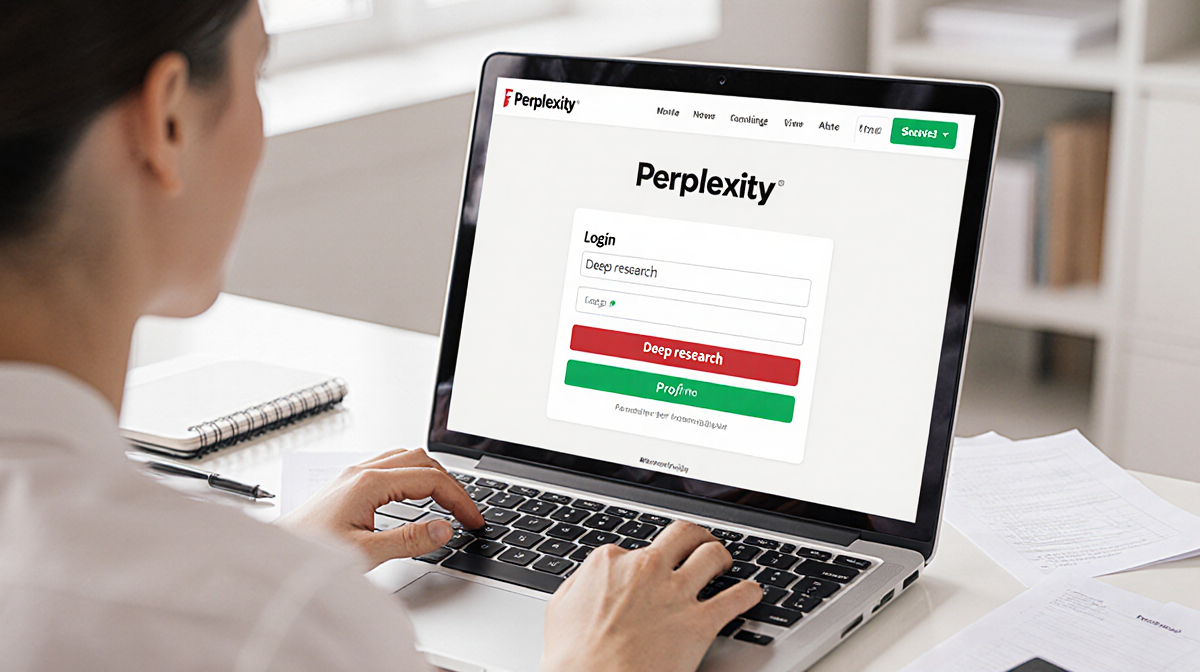
The setup is straightforward. Go to Perplexity’s website and log in. If you need more models or unlimited usage, the Pro version is available for $15/month. Once logged in, select the Deep research tab.
Perplexity shows a single free query slot, but that is enough for a quick test. The interface allows you to choose the source type.
Choosing Academic Sources
By default, Perplexity pulls from the web. The author toggled this off and selected Academic. The platform then says it “prioritizes results from scholarly databases, journals, and reputable academic publications, filtering out non-academic or general web sources.”
This setting is especially useful for work and study, as it keeps the search focused on peer-reviewed material.
Using Perplexity for IVF Research
The journalist, who is researching fertility while undergoing IVF, asked Perplexity a question about geriatric pregnancy. The AI returned an in-depth report that could be downloaded as a PDF.
The report was 10 pages long and contained 128 sources. The author noted that assembling this amount of material manually would have taken hours.
The references were all recent, unlike the older sources that sometimes appear in a quick ChatGPT search. The author spent 10-15 minutes scanning the PDF for new insights.
Key Findings from the Report
Perplexity highlighted several notable points:
- Even with a genetically normal embryo, age still plays a role.
- Success rates drop sharply at age 38, not 35.
- A 2024 study shows that a personalized embryo transfer protocol with further testing can achieve the same outcomes as younger women, provided the embryo is normal.
- Endometrial receptivity declines with age, but it is not irreversible.
- The report described “parallel aging across the reproductive system.”
The author also discovered the term placental aging, a concept not previously mentioned in the literature the journalist was familiar with.
The Verdict on Perplexity
The entire process-from opening Perplexity to identifying new information-took about an hour. For a free tool, that is impressive.
The author appreciated the ability to filter for academic sources, which saved time and made the research feel more interactive. The AI’s summary also drew conclusions with supportive statistics, which helped in drafting the story.
However, the author cautioned readers to click the hyperlinks to verify that the AI accurately reflected the academic findings. AI tools are known to hallucinate or draw the wrong conclusions.
Takeaways for Researchers
- Use the Academic mode to focus on peer-reviewed sources.
- A single query can produce a comprehensive report with dozens of citations.
- Always double-check the references for accuracy.
- The free version is useful for quick checks; the Pro plan offers more flexibility.
By combining AI with academic databases, writers and researchers can accelerate the fact-checking process while maintaining rigor.
Final Thoughts
Perplexity’s deep-research feature demonstrates that AI can assist with scholarly work, not just surface-level answers. When used carefully, it can save hours of manual searching and help uncover nuanced insights.