At a Glance
- The Solos AirGo A5 smart glasses can guide you through known recipes.
- AI chatbots in the glasses hallucinate when searching for new recipes.
- The $250 price is affordable, but audio-only limits usability.
- Why it matters: If you want a hands-free kitchen assistant, these glasses may help, but they’re not a replacement for a full-featured smart display.
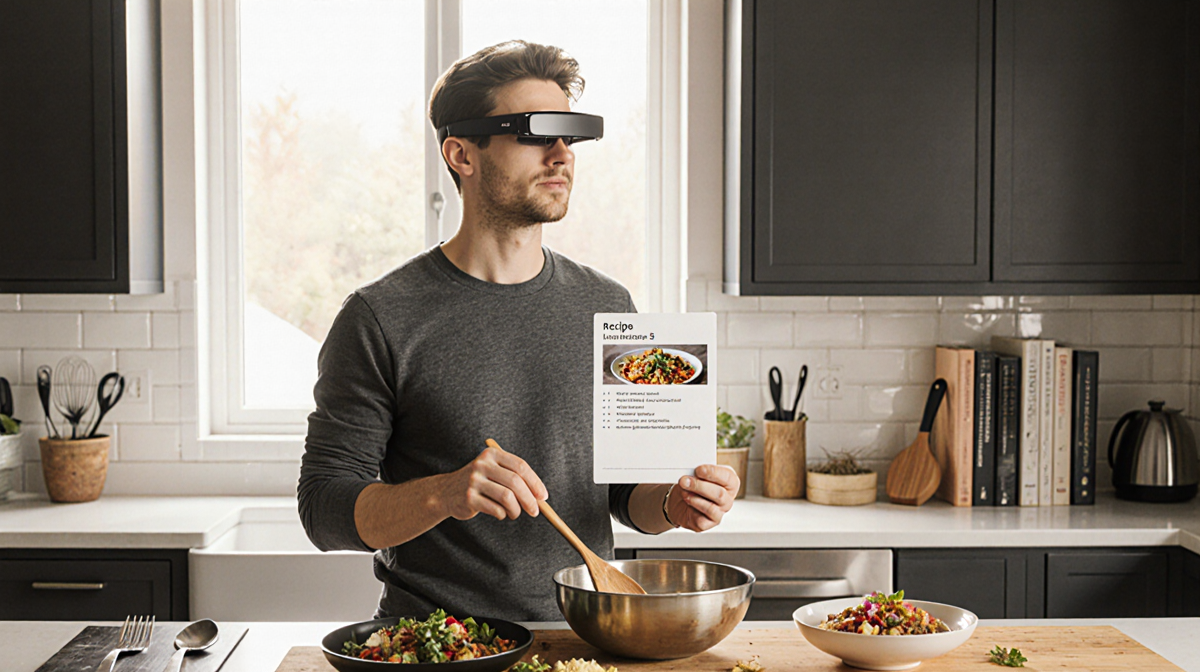
The Solos AirGo A5 smart glasses were put to the test in a kitchen setting to see how well they could assist with cooking tasks. The experiment focused on three scenarios: basic cooking advice, following a known recipe, and learning a new recipe. The results show that the glasses work well for recipe guidance but struggle with new or complex cooking queries.
Smart Glasses in the Kitchen
Smart glasses have long been a curiosity, and their potential in everyday life remains debated. The writer’s goal was to see if the Solos AirGo A5 could serve as a practical kitchen companion.
Testing the Solos AirGo A5
The glasses come with prescription lenses that matched the writer’s normal glasses. They rely on a companion app that functions as an AI chatbot; the device itself has no built-in display or camera.
- Chatbot options: GPT-4o Mini, Claude 3 Haiku, Gemini 2.0 Flash.
- The writer chose Gemini for familiarity.
- The glasses lack a built-in display, so the user interacted via the app’s audio output.
The audio quality was described as slightly robotic compared to Gemini or ChatGPT, but clear and adjustable in speed, tone, and response length.
The glasses use small speakers on the temples, which are not headphones. This means anyone nearby can hear the audio when volume is high.
Basic Cooking Advice
The first set of tests focused on general cooking tips, conversions, and ingredient identification.
- Accuracy: The glasses gave correct answers for boiling eggs, seasoning choices, and measurement conversions.
- Conversion examples: 1/3 cup to teaspoons, cup of cheese to grams.
- Ingredient identification: Recognized a delicata squash but misidentified a stripetti squash as a Korean melon.
However, the chat model occasionally hallucinated, providing article titles and links when asked for sources. When converting fractions like “1/2 cup of cream,” the voice synthesis ignored the slash, resulting in a misinterpretation of 34 cups.
Cooking with a Known Recipe
The glasses excelled when the writer photographed a recipe from a cookbook. The chosen dish was an Alfredo sauce from Betty Crocker’s Bridal Edition.
- The glasses captured all ingredients and instructions accurately.
- The writer could manage multiple recipes simultaneously: sauce, chicken thighs, and a side salad.
- Transitioning between recipes was simple, using prompts like “I’m ready for the next step on the chicken.”
Limitations:
- No timer support; the user had to rely on a separate smart display.
- Fractions were misread by the voice synthesis, leading to unrealistic quantities.
Learning a New Recipe
When the writer asked the glasses to help with a new dish-Nigerian jollof rice-the results were disappointing.
- The glasses provided a list of ingredients supposedly from Dash of Jazz.
- The list included garlic and ginger, which are not part of the original recipe.
- It omitted tomato sauce and white pepper.
- Subsequent requests for quantities added further hallucinated ingredients like cayenne pepper and smoked paprika.
The writer had to purchase only a small amount of fresh ginger, costing 56 cents.
Conclusion
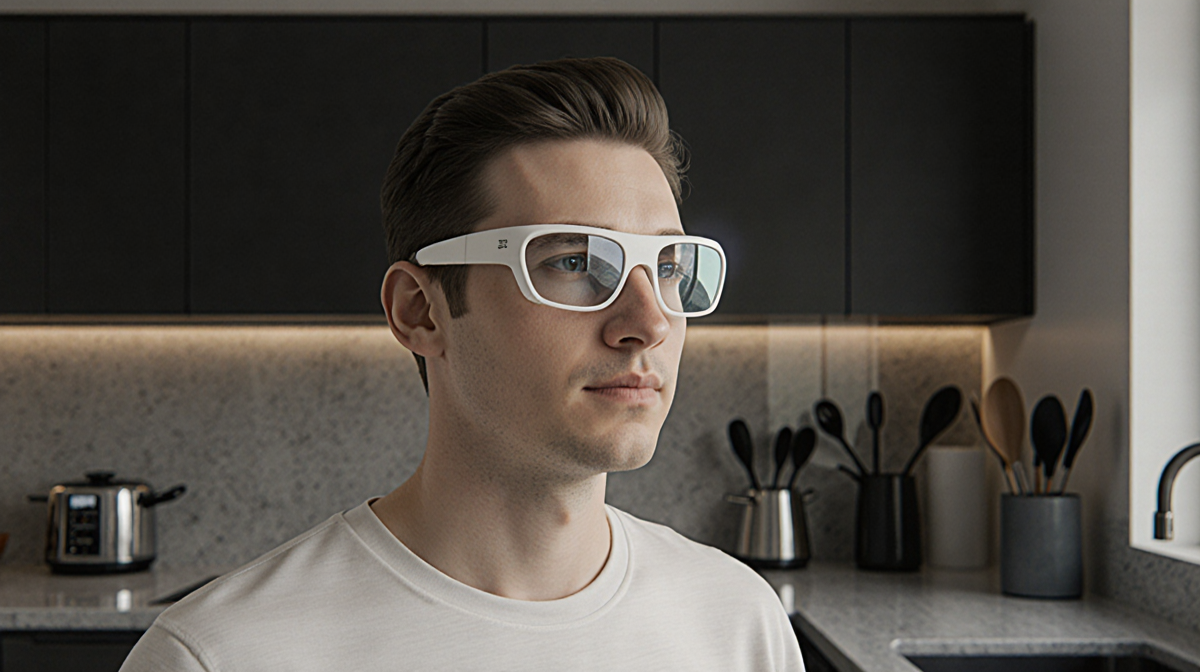
The Solos AirGo A5 smart glasses offer a convenient way to follow existing recipes, thanks to the AI chatbot integration and clear audio guidance. However, they are unreliable for discovering new recipes or detailed cooking techniques, largely because the underlying chatbot can hallucinate.
The glasses are affordable at $250, but the audio-only design and limited on-device controls can be a drawback. Users who prefer a more robust kitchen assistant might find a smart display or separate earbuds more suitable.
Overall, the Solos AirGo A5 is a solid tool for recipe navigation, but its limitations mean it shouldn’t replace a full smart kitchen setup.