At a Glance
- Supermoon lights up January sky, dimming the Quadrantid meteor shower.
- Peak expected <10 meteors per hour due to moonlight.
- Supermoon appears up to 14% larger and 30% brighter than a typical full moon.
- Why it matters: Stargazers will see fewer meteors as the bright moon dominates the night sky.
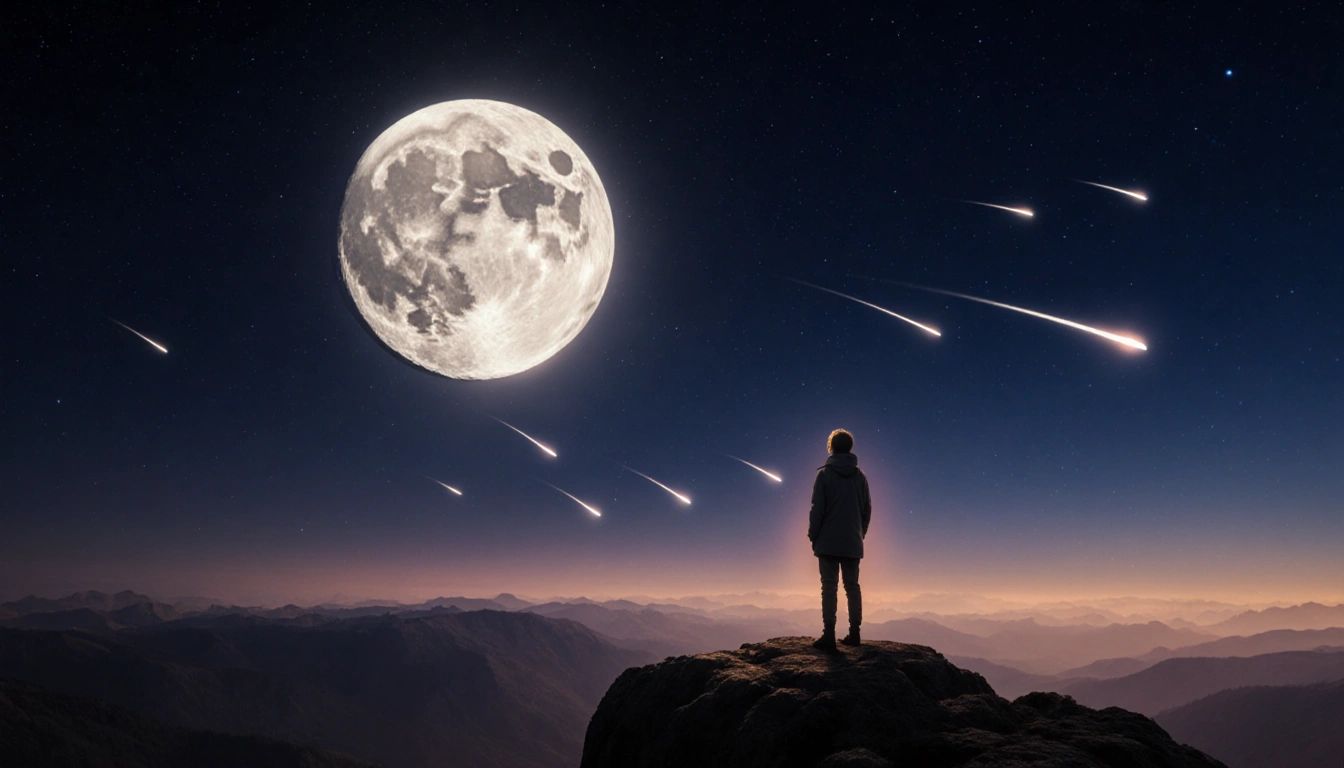
On Saturday night, a supermoon will rise over the United States, brightening the January sky and casting a glare that will reduce the visibility of the Quadrantid meteor shower that peaks Friday night into Saturday morning. While observers normally expect about 25 meteors per hour, the bright moon is predicted to cut that number to fewer than 10.
Supermoon and Meteor Shower Clash
The American Meteor Society reports the Quadrantids will peak Friday night into Saturday morning, with typical rates of around 25 meteors per hour in dark skies. However, the supermoon’s glow is expected to lower the rate to less than 10 per hour.
The Quadrantids are named after the constellation from which the fireballs appear to originate, and the debris comes from asteroid 2003 EH1.
Mike Shanahan said:
> “The biggest enemy of enjoying a meteor shower is the full moon,”
- The supermoon appears up to 14% larger than a typical full moon.
- It can be 30% brighter than the faintest moon of the year.
- Both the supermoon and the Quadrantids can be seen without special equipment.
Viewing Tips
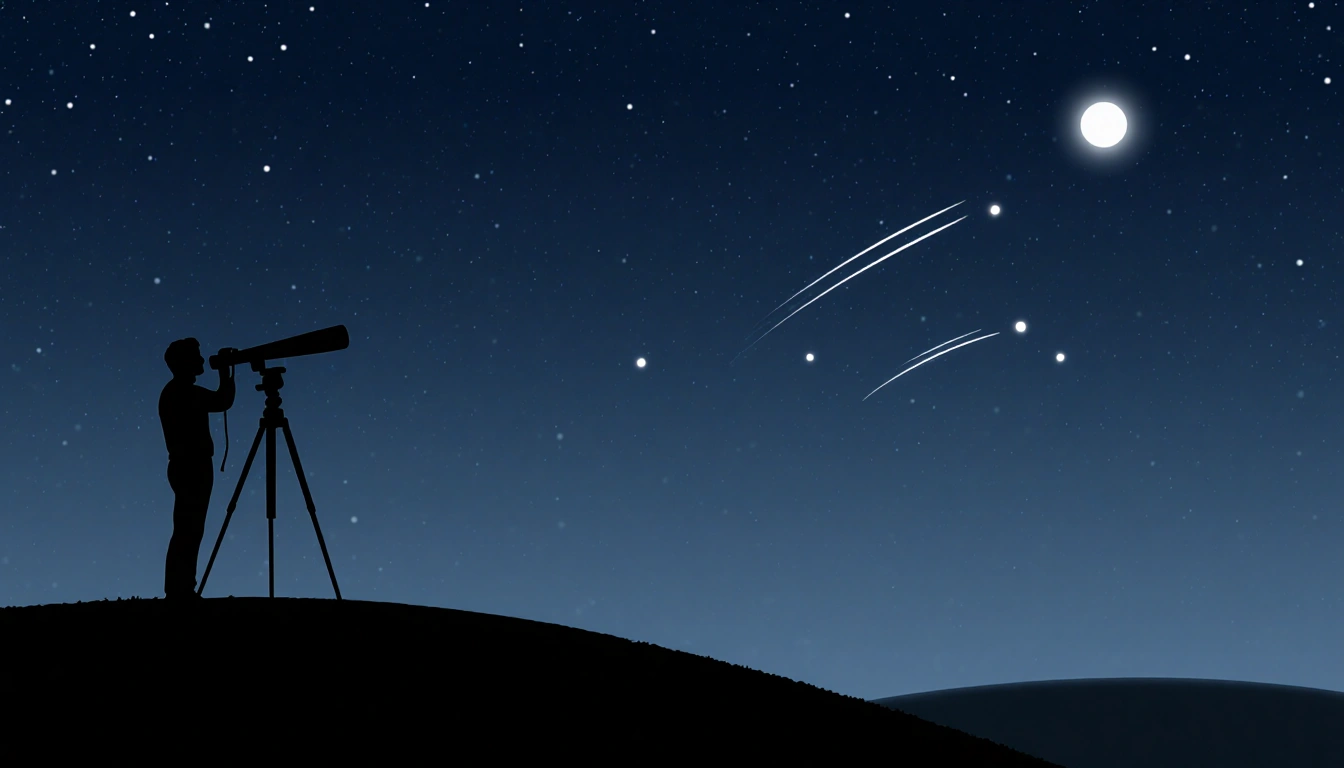
To catch the Quadrantids before the moon takes over, head to a dark spot early in the evening and look for fast-moving white dots across the sky. The Morrison Planetarium’s Jacque Benitez recommends watching before the moon rises or during the early dawn hours on Sunday.
| Feature | Supermoon | Typical Full Moon |
|---|---|---|
| Apparent Size | Up to 14% larger | Baseline |
| Brightness | Up to 30% brighter | Baseline |
Both the supermoon and the Quadrantids are visible without special equipment and can be seen from most clear skies across the Northern Hemisphere.
Key Takeaways
- The bright supermoon will reduce the Quadrantid meteor rate to fewer than 10 per hour.
- The supermoon appears up to 14% larger and 30% brighter than a normal full moon.
- Stargazers should view early evening or dawn to maximize meteor visibility.
While the supermoon will paint the night with its bright glow, stargazers still have a chance to spot the fleeting fireballs of the Quadrantid shower if they time their viewing before the moon rises.