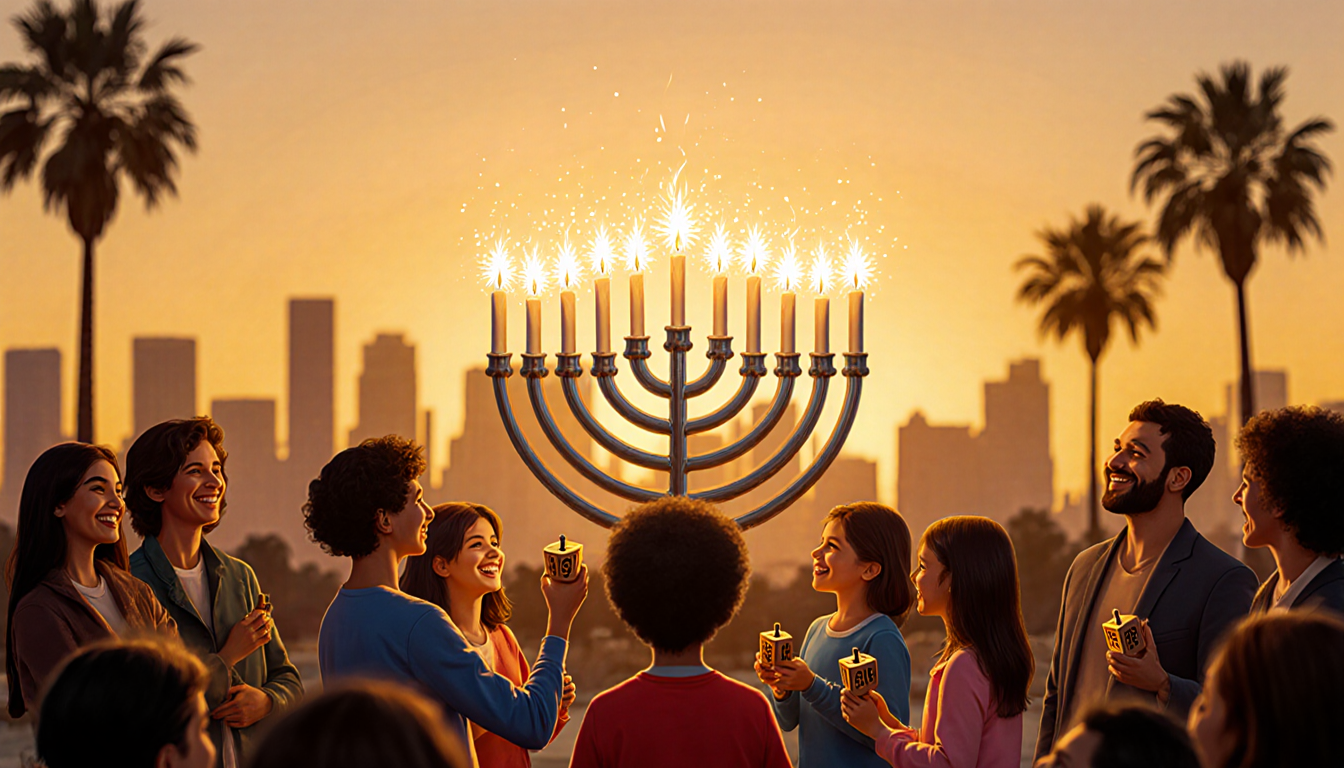
This Sunday, Los Angeles will light its first Hanukkah menorah in Culver City, marking the start of the eight‑day celebration across the region. The free public lightings will take place in Culver City, Santa Monica, Laguna Beach, Newport Beach, Fashion Island, and Beverly Hills.
The highlight in Culver City is a giant menorah lighting at The Culver Steps, scheduled to begin at 4:30 p.m. The ceremony will feature live music, a magic show, latkes, doughnuts, chocolate “gelt,” craft‑making, and a caricature artist. According to the Jewish Community of Culver City‑Chabad, every child in attendance will receive a gift. Free parking will be available for one hour.
Additional menorah lightings in Culver City are set for Monday at 5:00 p.m. at Platform LA, Tuesday at 5:30 p.m. at Ivy Station, and Wednesday at 7:00 p.m. at The Shay Hotel. These events are part of a series of three other Hanukkah celebrations organized by the same community group.
In Santa Monica, nightly menorah lightings will take place at 5:00 p.m. on the 1400 block of the Third Street Promenade. The first lighting begins on Sunday and the ceremony will continue each evening through the eighth and final night of Hanukkah, which falls on the following Sunday.
At Laguna Beach, a surfboard menorah will be lit in the Cobblestone Area of Laguna Main Beach as part of an event that starts at 2:00 p.m. The program includes face painting, craft‑making opportunities for children, latkes, and gelt.
Newport Beach also hosts a free public menorah lighting as part of the regional celebration, though specific details of the event were not provided in the announcement.
Fashion Island’s AtriumGarden Court will hold a menorah‑lighting ceremony from 3:00 to 5:00 p.m. Participants can enjoy doughnuts, craft‑making, face painting, and gifts and treats for children.
On Monday, a menorah‑lighting ceremony will begin at 5:30 p.m. at the Beverly Gardens Park Lily Pond in Beverly Hills, adding another venue to the citywide festivities.
The story of Hanukkah traces back to 165 B.C., when Jews defeated the Hellenist Syrian forces of Antiochus IV at the end of a three‑year rebellion. The temple in Jerusalem, which the occupiers had dedicated to the worship of Zeus, was rededicated by Judah Maccabee, who led the insurgency begun by his father, the high priest Mattathias.
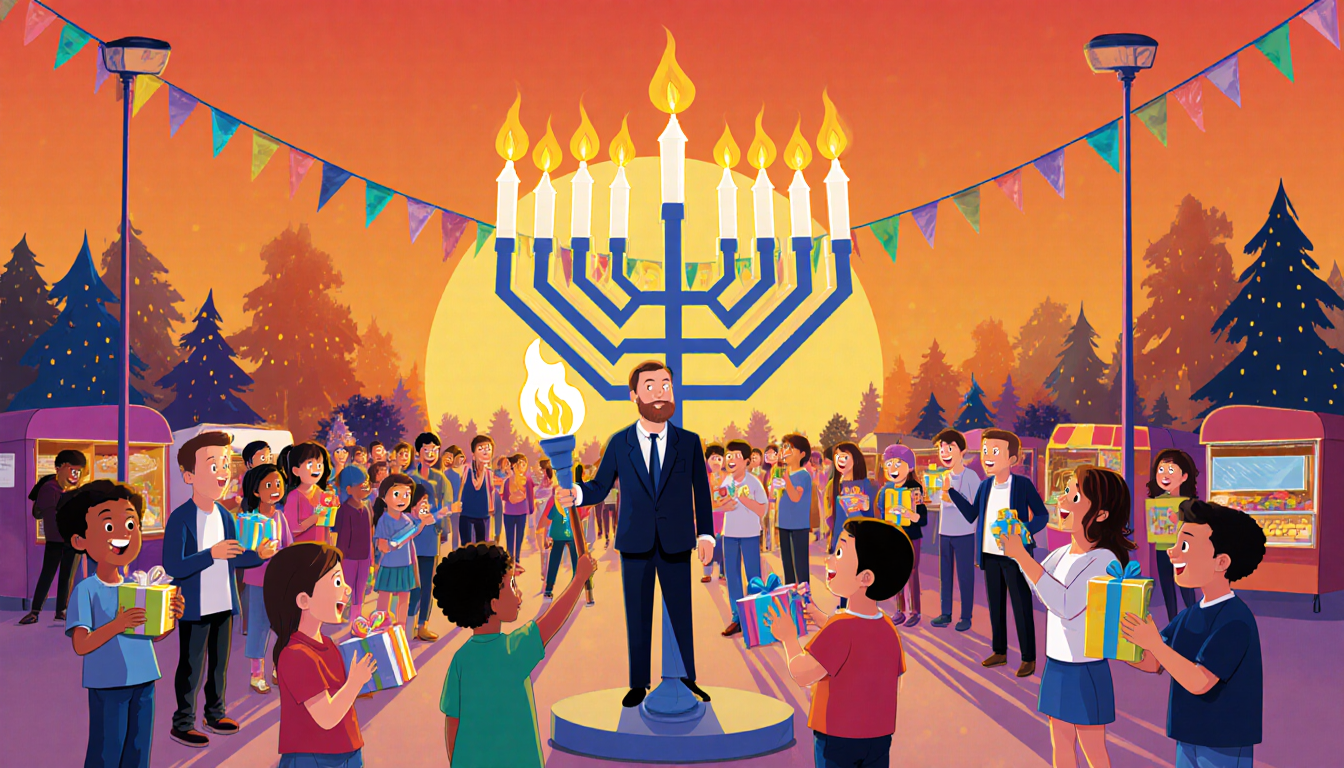
According to the tradition, Maccabee and his soldiers wanted to light the temple’s ceremonial lamp with ritually pure olive oil, but they found only enough oil to burn for one day. The oil, however, burned for eight days in what was considered a miracle. Hanukkah, meaning “dedication” in Hebrew, is observed by lighting candles in a special menorah called a Hanukkiah each day at sundown for eight days, adding a candle each night. The lights serve to remind passersby of the holiday’s miracle.
Other Hanukkah traditions include spinning a dreidel, a four‑sided top that commemorates a game believed to have been played by Jews under Greek domination, and eating foods fried in oil, such as latkes, pancakes of grated raw potatoes, and jelly doughnuts. Children receive Hanukkah “gelt”—the Yiddish word for money—from parents and grandparents. The tradition originated with 17th‑century Polish Jews giving money to their children to give to their teachers during Hanukkah, which led parents to give children money as well. In the United States, the practice has evolved into giving holiday gifts to children and others.
Rabbi Noah Farkas, president & chief executive officer of Jewish Federation Los Angeles, said in a statement to City News Service: “Every Hanukkah, we spin the toy top called a dreidel upon which are inscribed the words, Nes gadol haya sham,' translated as, ‘A great miracle happened there.’ Or, as our family and friends in Israel say, A great miracle happened here,’” He added: “The miracle mentioned on the delightful toy refers to the little jug of lamp oil that had only enough to light the ancient temple for a single night, and yet lasted eight nights.” Farkas continued: “Jews, however, are skeptical of magic. Famously, Rabbi Moses Maimonides said, ‘The faith of Jewish people is not based on the miracles that Moses performed.’ For Jews, miracles are not the basis of truth. The empty belly is not filled by prayers; the wretched are not warmed by fiery speeches. Simply put, Jews don’t rely on miracles. What then, are we to make of miracles during this season so imbued with them?” He went on: “Miracles, in our tradition, are not magic. Rather, the Jewish sense of miracles is to open our hearts to the idea of wonder and to imagine a world better than the one in which we live. Miracles are not found when the world turns upside-down, but fashioned by those who are willing to turn the world upside-down.” Farkas concluded: “They happened in ancient times, when a people oppressed and dispossessed, looked out upon a world of smoldering rubble and said, ‘Let us build again.’ Miracles exist in our actions.”
Key Takeaways
- Los Angeles offers free Hanukkah menorah lightings across multiple venues, from Culver City to Beverly Hills.
- Each event features food, crafts, music, and gifts for children, emphasizing community participation.
- The holiday’s history and traditions, highlighted by Rabbi Farkas, underscore the significance of miracles and collective action.
Los Angeles residents and visitors can join these celebrations to experience the warmth and joy of Hanukkah, while remembering the historical miracle that inspires the lighting of each candle.