At a Glance
- Trump cites Monroe Doctrine to justify Maduro arrest
- Calls operation a “Trump Corollary” to restore U.S. dominance
- Highlights long history of U.S. intervention in Latin America
- Why it matters: It signals a new U.S. strategy to influence Venezuelan politics and regional stability.
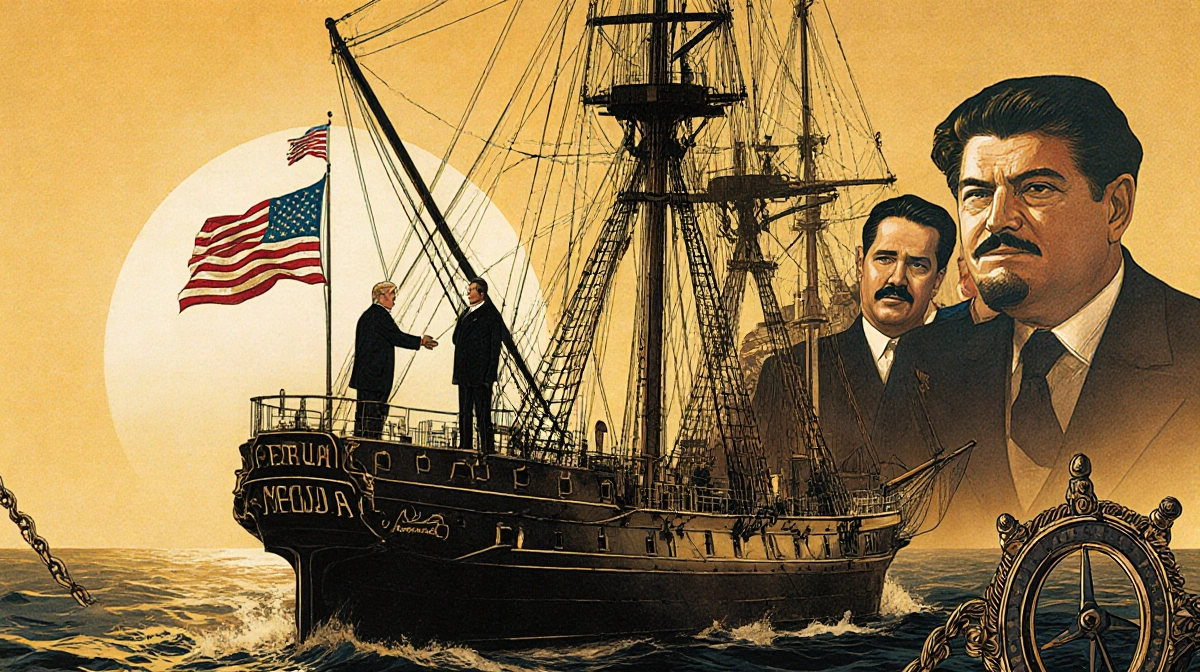
President Donald Trump recently invoked the Monroe Doctrine to justify the arrest of Venezuelan leader Nicolás Maduro, framing the move as a “Trump Corollary” aimed at reasserting American dominance in the Western Hemisphere. The statement follows a broader strategy that includes military strikes on alleged drug trafficking vessels and a new national security policy released in December. The move has drawn comparisons to past U.S. interventions in Latin America.
Monroe Doctrine Roots
The Monroe Doctrine was articulated by President James Monroe in 1823 to ward off European interference in the Western Hemisphere. It also committed the United States to stay out of European wars and internal affairs. The doctrine has been invoked repeatedly by subsequent presidents to justify intervention in the region.
Trump’s Use of the Doctrine
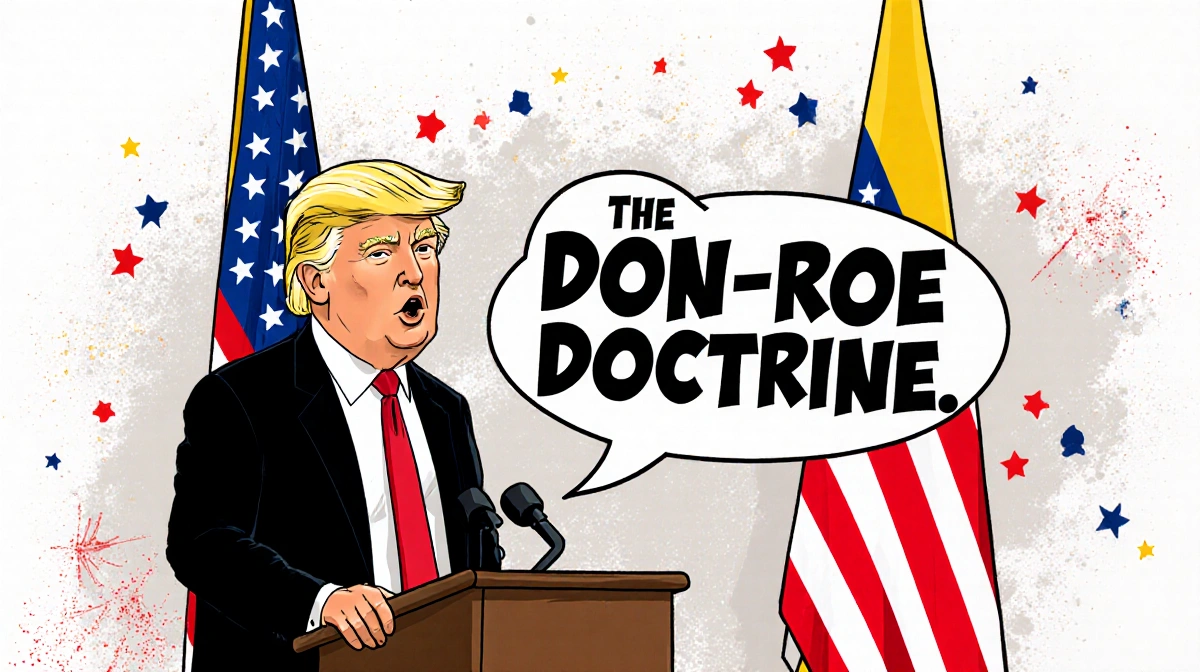
Trump cited the doctrine in a speech, quipping that some now called it “the Don-roe Doctrine.” This remark was part of a broader narrative that framed Maduro’s arrest as a necessary action to protect U.S. interests.
President Trump stated:
> “Trump even quipped that some now called it “the Don-roe Doctrine.””
The Trump Corollary
The administration’s December national security strategy refers to a ‘Trump Corollary’ to the Monroe Doctrine, aimed at restoring American preeminence in the Western Hemisphere. Trump emphasized that under this strategy, “American dominance in the Western Hemisphere will never be questioned again.”
President Trump emphasized:
> “Under our new national security strategy, American dominance in the Western Hemisphere will never be questioned again.”
President Trump added:
> “We want to surround ourselves with good neighbors, we want to surround ourselves with stability, and we want to surround ourselves with energy.”
Gretchen Murphy said:
> “I think Trump is jumping on this familiar pattern – citing the Monroe Doctrine to legitimate interventions that undermine real democracy, and ones where various kinds of interests are served, including commercial interests.”
Jay Sexton stated:
> “This is not just the sort of hit-and-run kind of job where, like in Iran a couple months ago, we dropped the missiles, and then you can then you can go on and carry on as normal.”
| Doctrine | Year | Purpose |
|---|---|---|
| Monroe Doctrine | 1823 | Prevent European interference |
| Roosevelt Corollary | 1904 | Allow U.S. intervention in Latin America |
| Trump Corollary | 2023 | Restore U.S. dominance in the Western Hemisphere |
Key Takeaways
- Trump used the Monroe Doctrine to justify Maduro’s arrest, framing it as a “Trump Corollary.”
- The strategy includes military strikes on drug vessels and a new national security policy.
- Critics say the move mirrors past U.S. interventions that prioritized commercial and strategic interests.
By invoking a century-old doctrine, the Trump administration signals its willingness to use historic justifications to shape contemporary foreign policy in the Western Hemisphere.