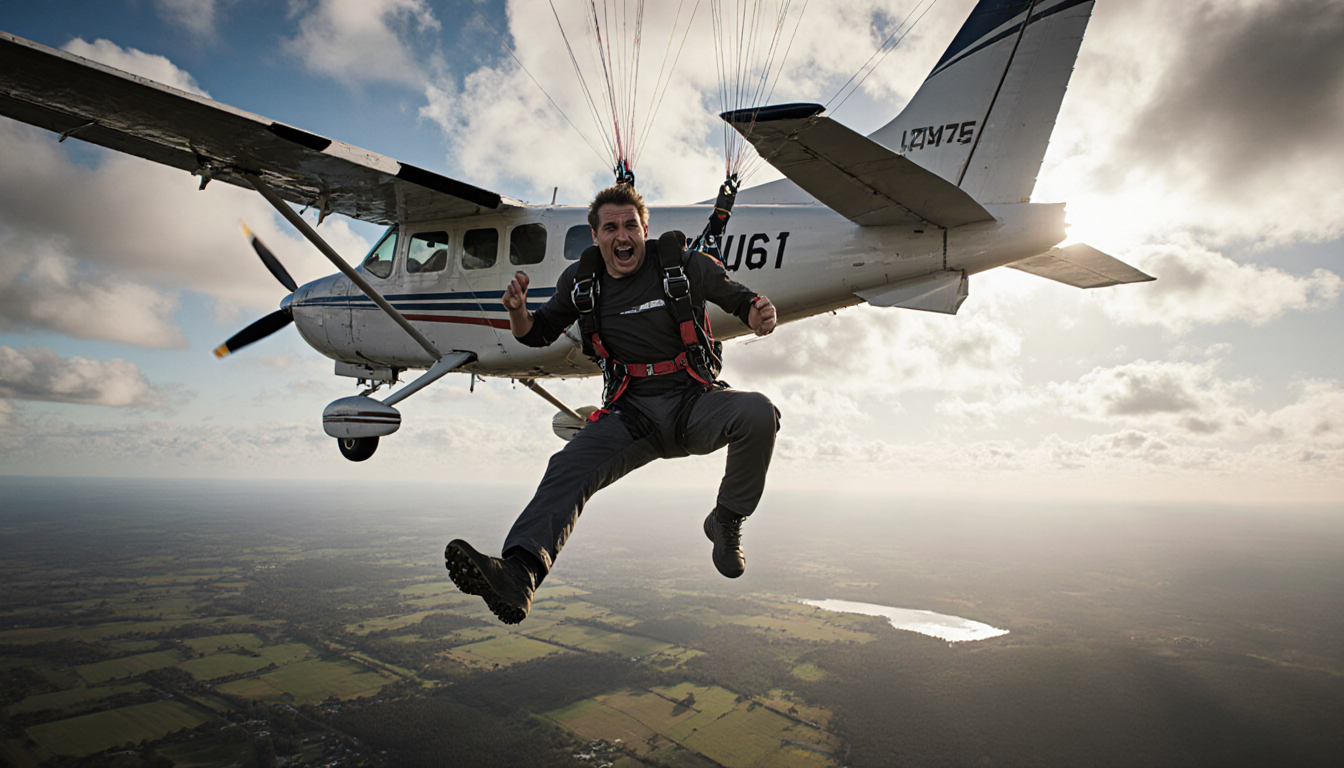
On September 20, 2025, a dramatic skydiving mishap unfolded over Queensland’s Tully Airport, capturing the world’s attention. A reserve parachute became entangled on the tail of a Cessna Caravan, leaving skydiver Adrian Ferguson hanging at 4,500 meters. The pilot was forced to make drastic control inputs to keep the aircraft level. Ferguson survived with minor leg injuries after cutting himself free with a hook knife.
Incident Overview
Skydiving operations at Tully Airport were underway, with a 16‑way formation jump planned for the day. The aircraft carried 17 parachutists, including a video‑recording operator who waited in an open door. All participants except Ferguson jumped as scheduled. The incident began when Ferguson was exiting the plane.
Location and Date
The event took place on September 20, 2025, at Tully Airport in Queensland, Australia. The Cessna Caravan had reached its target altitude for the formation jump. Ferguson’s reserve parachute’s ripcord snagged on a wing flap during his exit. The snag caused the reserve chute to deploy abruptly.
Plane Type and Crew
The aircraft was a Cessna Caravan, a single‑engine turboprop used for skydiving operations. Sixteen parachutists were aboard in addition to Ferguson. The pilot was responsible for maintaining control of the aircraft during the jump. No other crew members were injured in the incident.
Skydiving Plan
The skydivers were executing a 16‑way formation jump, a complex maneuver requiring precise timing. Ferguson’s exit was part of the formation sequence. The plan involved each skydiver deploying their main chute after a brief free fall. The reserve chute was intended as a backup in case of main chute failure.
17th Parachutist
A seventeenth parachutist remained on the aircraft, positioned in an open door to record the jump. This individual was not part of the formation but provided video documentation. The presence of a video operator is common in skydiving events for safety and promotional purposes. The operator was affected by the entanglement during Ferguson’s exit.
The Snag
Ferguson’s reserve parachute ripcord became caught on a wing flap as he left the aircraft. The snag prevented the chute from deploying smoothly. The sudden deployment caused the reserve chute to jerk Ferguson backward. The abrupt motion threw the parachutist off balance.
Chute Release and Jerk
Immediately after deployment, Ferguson’s reserve chute jerked him sharply backward. The motion knocked the camera operator clear of the aircraft. The operator fell into a free fall, separating from the plane. Ferguson’s legs collided with the horizontal stabilizer before the chute tangled around it.
Camera Operator
The camera operator, positioned in an open door, was thrown into a free fall by Ferguson’s sudden backward motion. The operator was not injured but was separated from the aircraft. This incident highlighted the risks to bystanders during skydiving operations. The operator’s fall was captured on video.
Ferguson’s Legs and Stabilizer
Ferguson’s legs struck the horizontal stabilizer of the aircraft before the reserve chute became entangled. The entanglement left him suspended beneath the stabilizer. The parachutist’s position made it difficult for him to deploy his main chute normally. The situation required immediate action to avoid a catastrophic outcome.
Hanging
Suspended beneath the horizontal stabilizer, Ferguson was essentially dangling from the aircraft. The reserve chute remained tangled around the tail, restricting his movement. The pilot was forced to maintain level flight while managing the aircraft’s stability. Ferguson faced a critical decision to free himself.
Knife Cut
Using a hook knife, Ferguson cut 11 lines of the tangled reserve chute. The knife allowed him to sever the lines that were preventing him from falling. This action enabled him to detach from the aircraft’s tail. The use of the knife was crucial to his survival.
Main Chute Release
After cutting the reserve lines, Ferguson released his main parachute. The main chute fully inflated despite the entanglement with remnants of the reserve chute. The parachute provided the necessary lift for a controlled descent. Ferguson was able to descend safely.
Landing
Ferguson landed safely on the ground, sustaining only minor leg injuries. The injuries were a result of the abrupt movements during the entanglement and release. No other injuries were reported among the parachutists. The landing was deemed successful by the investigators.
Other Skydivers
Most of the other skydivers had already jumped before the incident unfolded. The pilot was left with two skydivers aboard who were battling to control the plane. The remaining parachutists had deployed their chutes and were descending safely. Their coordination helped stabilize the aircraft.
Pilot’s Control Inputs
The pilot made significant control inputs to keep the aircraft level during the entanglement. These inputs were necessary to counteract the forces generated by the tangled chute. The pilot’s skill prevented a loss of control. The aircraft remained airborne until the pilot could land.
Mayday Call
Facing a precarious situation, the pilot made a mayday call to air traffic control. He indicated that he was prepared to bail out using an emergency chute. The call was transmitted to Brisbane air traffic authorities. The authorities assessed the situation and advised the pilot.
Air Traffic Decision
Brisbane air traffic authorities decided that the pilot had sufficient control to land safely at Tully. They communicated this assessment to the pilot during the mayday call. The pilot accepted the guidance and continued to maintain control of the aircraft. The decision avoided the need for a bailout.
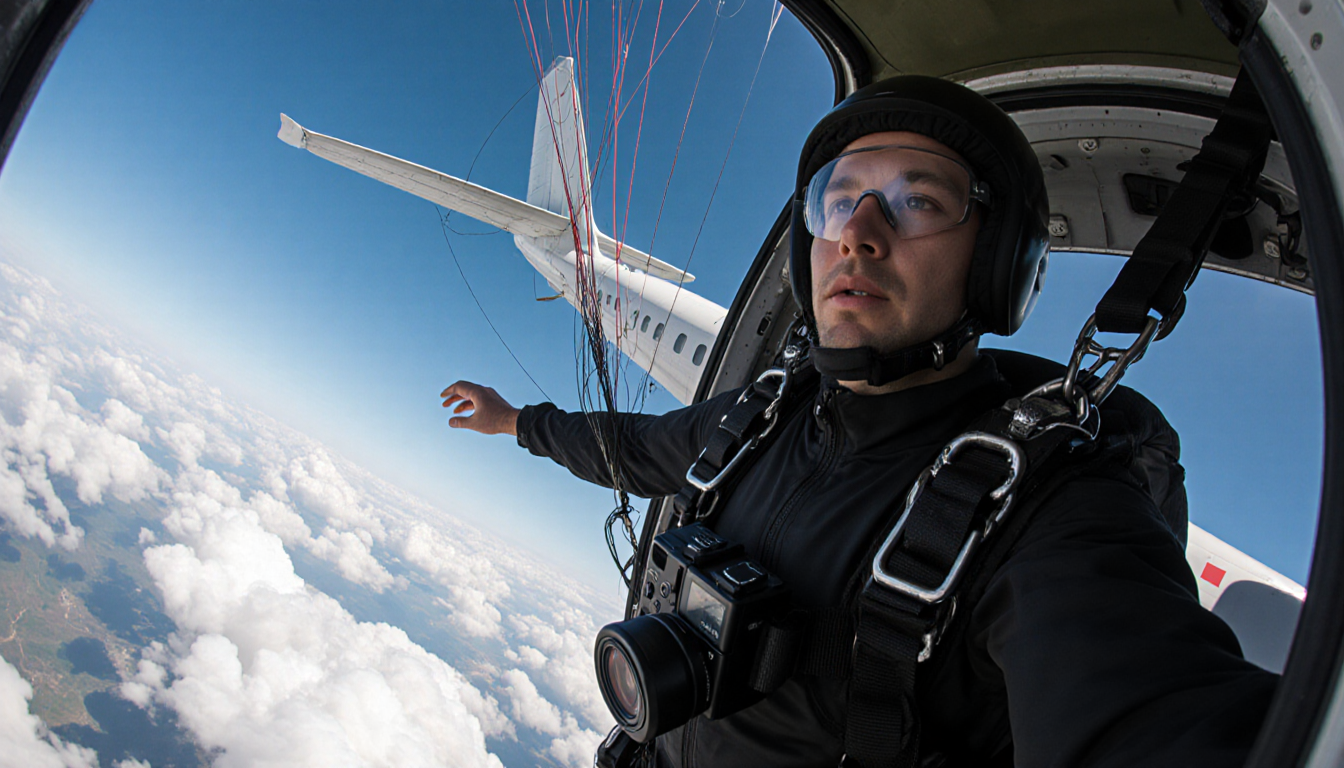
Plane Landed Safely
The Cessna Caravan landed without incident at Tully Airport. The landing was executed under the pilot’s continued control. No injuries were reported among the remaining passengers. The aircraft was inspected after the landing.
ATSB Video Release
The Australian Transport Safety Bureau released a video of the incident as part of its investigation report. The video shows the parachute becoming entangled on the aircraft’s tail. It captures Ferguson’s use of the hook knife to free himself. The video is available to the public through the ATSB website.
Quote
Angus Mitchell, chief commissioner of the Australian Transport Safety Bureau, commented on the incident. He said, “Carrying a hook knife — although it is not a regulatory requirement — could be lifesaving in the event of a premature reserve parachute deployment.” Mitchell’s statement highlights the importance of personal safety equipment. The quote was included in the ATSB report.
Key Takeaways
- The incident involved a reserve parachute snagging on a Cessna Caravan’s tail at 4,500 meters.
- Skydiver Adrian Ferguson survived by cutting the tangled lines with a hook knife.
- The pilot maintained control and landed safely after a mayday call and air‑traffic guidance.
- The Australian Transport Safety Bureau released a video and report, emphasizing the value of a hook knife.
Closing
The incident underscores the unpredictable nature of skydiving operations and the critical role of emergency preparedness. It also illustrates how quick thinking and proper equipment can avert disaster. The Australian Transport Safety Bureau’s release of the video and report provides a transparent account of the event. Skydivers and pilots alike will likely review these findings to enhance safety protocols.
Hook Knife Significance
The use of a hook knife proved essential in Ferguson’s escape from the tangled reserve chute. The knife allowed him to sever multiple lines that would otherwise have prevented a safe descent. While not mandated by regulations, the knife’s presence was a decisive factor in the outcome. The incident may influence future safety recommendations.
ATSB Investigation
The Australian Transport Safety Bureau conducted a thorough investigation into the mishap. The bureau’s report includes a detailed video and analysis of the entanglement. It examines the aircraft’s design, the parachute deployment sequence, and the pilot’s actions. The investigation aims to prevent similar incidents in the future.