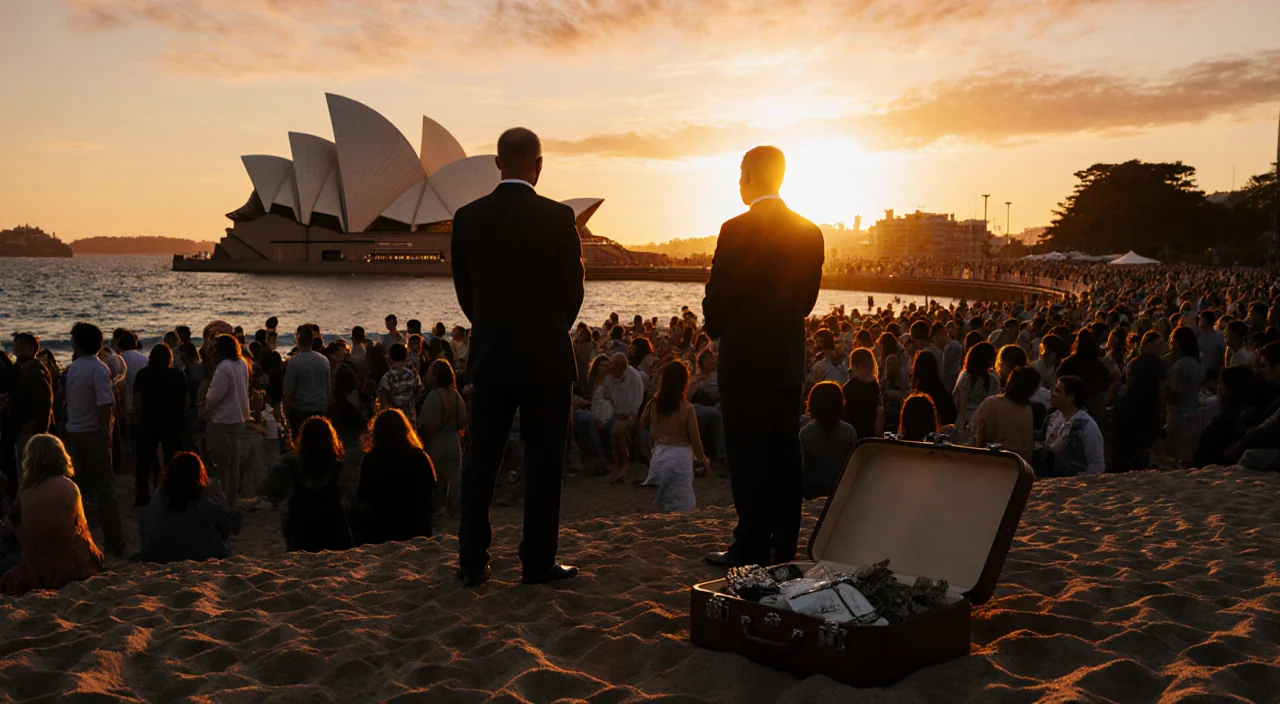
On a bright summer evening, thousands gathered at Sydney’s Bondi Beach for a Hanukkah celebration that drew families of all faiths. The event was interrupted when two men opened fire, killing between 10 and 87 people, including a Holocaust survivor. The attack unfolded in a place known for its relaxed culture and iconic surf scene.
The Tragedy
The gunfire began as children played at the Hanukkah event, called Chanukah by the Sea. Shots rang out for at least seven minutes, with dozens of blasts captured in footage from a hotel room nearby. The violence spread across the beach, forcing people to scramble for cover under tables, into buildings, and into the ocean.
Rebecca, 33, was with her husband and two children when the shooting started. In tears the next morning she told The Associated Press, “I was just praying to God, ‘Please, don’t let us die. Please just keep my son safe,’” She added that she had shielded her 5‑year‑old son with her body under a table. A man lying inches from her was shot in the chest; Rebecca’s 65‑year‑old mother‑in‑law used a piece of cardboard to apply pressure to his wound, but the man died. “One lady was to my side, and she was an elderly woman who couldn’t get down on the floor and they just shot her,” she said.
Victims and Motive
The victims ranged in age from 10 to 87. One of those killed was a Holocaust survivor, according to an Australian newspaper. The attack was identified by authorities as a targeted assault on Australian Jews during a joyous celebration marking the start of Hanukkah. “It’s the Jewish community. We’re all family we’re all one,” Rebecca, who lives in Bondi with her family, said. “We’re such a strong, loving community.”
The men who carried out the shooting have not been named by officials. However, Australia’s leaders said the motive was clear: an antisemitic attack aimed at the Jewish community during a festive event.
The Community’s Response
In the aftermath, Australians highlighted acts of bravery. A fruit seller, identified by local news outlets as Ahmed al Ahmed, tackled and disarmed one gunman before pointing the weapon at him and setting it on the ground. Surf lifeguards, trained to rescue swimmers, ran toward the gunfire barefoot and clutching first aid kits, seeking to help victims.
The beach, normally bustling with joggers, swimmers, and people with takeaway coffees, was eerily quiet under a gray sky and intermittent drizzle. Abandoned blankets, chairs, and coolers lay scattered across the grassy slope overlooking the sea, where moviegoers had been watching an outdoor cinema film when the gunshots began.
Heather Norland, walking back from dinner with her husband and children when she heard the shots, told Australian Broadcasting Corp, “It’s really sad because Bondi is really (as) much about community and about people getting together.” Janine Hall and her daughter laid flowers at a growing tribute spot overlooking the beach before heading down to the sand to swim. “I hope it’s an aberration and not the start of a change,” she told the AP, referring to countries where mass shootings are common, such as the United States. “Everyone keep their heads and don’t fight hatred with more hatred, because that’s just a one‑way ticket to nowhere, for everybody.”
Robert, who declined to give his last name, has lived in Bondi for 17 years. “Australia is untouched by a lot of things,” he said Monday. “No one was expecting this.”
Context and Comparisons
Bondi is an affluent suburb close to downtown Sydney and part of the Waverley local government area, which is the center of Sydney’s Jewish life. A knife attack last year at the nearby Bondi Junction shopping mall was initially feared to be antisemitic, but authorities ruled out any political motive. In that episode, law enforcement shot dead Joel Cauchi, who had a history of mental illness, after he stabbed to death six people and wounded another 12 at the complex on a busy Saturday in April.
Mass shootings in Australia are rare. The death toll from Sunday’s massacre is the highest since a mass shooting in Port Arthur, Tasmania, in 1996, which made it all but impossible for Australians to obtain rapid‑fire rifles. Authorities said Monday that they had recovered six guns that were legally owned by one of the shooters, a 50‑year‑old man who was shot dead. His 24‑year‑old son was being treated at a hospital Monday.
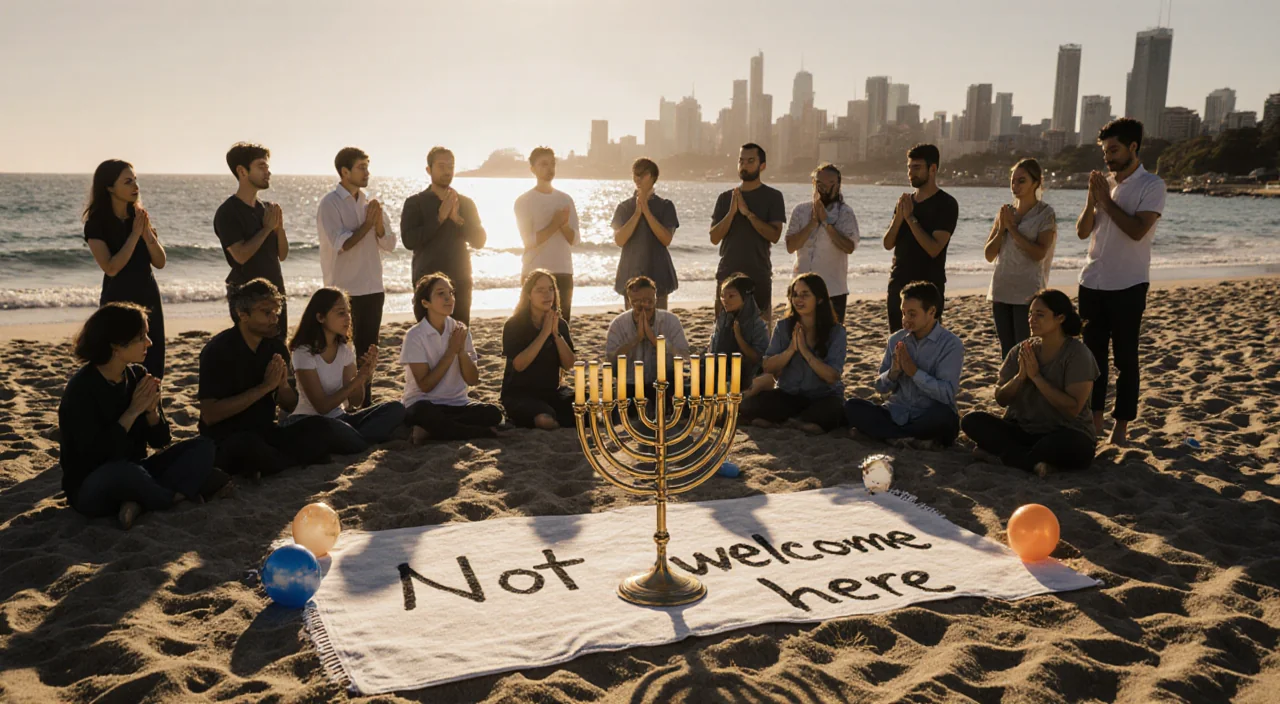
Key Takeaways
- Bondi Beach shooting during a Hanukkah celebration killed between 10 and 87 people, including a Holocaust survivor.
- Six legally owned guns were recovered; one shooter was a 50‑year‑old man shot dead, and his 24‑year‑old son is hospitalized.
- The attack was identified as a targeted antisemitic assault on the Jewish community during a festive event.
The incident has shocked a nation accustomed to low gun violence and has prompted a national conversation about safety, community solidarity, and the protection of vulnerable groups. As authorities investigate the motives and perpetrators, the people of Bondi and Sydney continue to mourn and remember those lost in a place that once symbolized Australia’s laid‑back culture.