
At a Glance
- 11.7% of jobs could already be automated using AI (MIT study)
- Enterprise VCs predict AI will have a major impact on the workforce in 2026
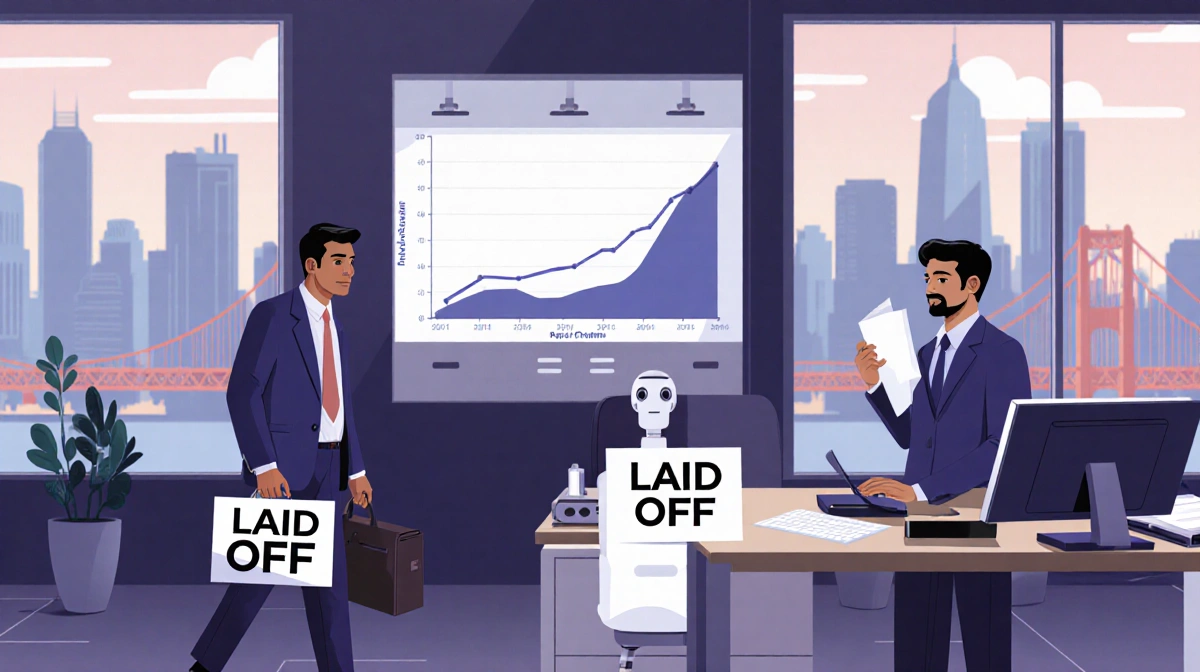
- Companies are citing AI as a reason for layoffs and cutting labor budgets
- Why it matters: The shift could alter hiring practices and employment costs across the U.S. economy.
Concerns about AI’s impact on jobs have grown as new products promise automation, and evidence shows a significant portion of roles are already vulnerable. An MIT study estimated 11.7% of jobs could be automated, while surveys reveal employers are eliminating entry-level positions and blaming AI for layoffs. As firms adopt AI more deeply, they may reassess how many staff they need.
Automation Potential and Current Impact
The MIT study highlighted that a sizable fraction of jobs-about 11.7%-could be automated with current AI. Surveys show that employers are already removing entry-level roles and citing AI as a justification for workforce reductions. These trends suggest the fear of job displacement is grounded in real data.
VC Outlook for 2026
A recent News Of Los Angeles survey of enterprise venture capitalists found that AI will have a significant impact on the workforce by 2026, even though the survey did not explicitly ask about this. Eric Bahn of Hustle Fund said he expects labor effects in 2026 but is unsure of the exact nature. He asked whether AI will lead to layoffs, higher productivity, or simply augment existing labor.
Eric Bahn stated:
> “I want to see what roles that have been known for more repetition get automated, or even more complicated roles with more logic become more automated,” Bahn said. “Is it going to lead to more layoffs? Is there going to be higher productivity? Or will AI just be an augmentation for the existing labor market to be even more productive in the future? All of this seems pretty unanswered, but it seems like something big is going to happen in 2026.”
Company Perspectives on AI and Labor
At a News Of Los Angeles event in San Francisco from October 13-15, 2026, several partners expressed concern that rising AI budgets would coincide with cuts to human labor. Marell Evans of Exceptional Capital warned that increased AI spending would lead to more layoffs and a sharp impact on U.S. employment. Rajeev Dham of Sapphire agreed that 2026 budgets will shift resources from labor to AI.
Marell Evans said:
> “I think on the flip side of seeing an incremental increase in AI budgets, we’ll see more human labor get cut and layoffs will continue to aggressively impact the U.S. employment rate,” Evans said.
Jason Mendel added:
> “2026 will be the year of agents as software expands from making humans more productive to automating work itself, delivering on the human-labor displacement value proposition in some areas,” Mendel said.
Antonia Dean noted:
> “The complexity here is that many enterprises, despite how ready or not they are to successfully use AI solutions, will say that they are increasing their investments in AI to explain why they are cutting back spending in other areas or trimming workforces,” Dean said. “In reality, AI will become the scapegoat for executives looking to cover for past mistakes.”
Industry Debate on Job Displacement
While many AI firms claim their technology shifts workers to higher-skill roles, not everyone accepts this view. Venture capitalists who invest in AI say fears of automation are unlikely to subside by 2026. The debate centers on whether AI truly eliminates jobs or simply changes the nature of work.
Key Takeaways
- 11.7% of jobs could already be automated, per MIT study
- VC survey predicts major workforce impact in 2026
- Companies may cut labor budgets while citing AI for layoffs
As 2026 approaches, the intersection of AI investment and workforce planning will likely become a focal point for both entrepreneurs and policymakers.