At a Glance
- Pennies may be worth far more than a single cent.
- A California auction brought in $16.76 million from 232 sets of three pennies.
- A single set sold for $800,000, while a rare steel 1944 penny fetched $408,000 in 2021.
- Why it matters: Anyone who owns a penny could be holding a hidden treasure.
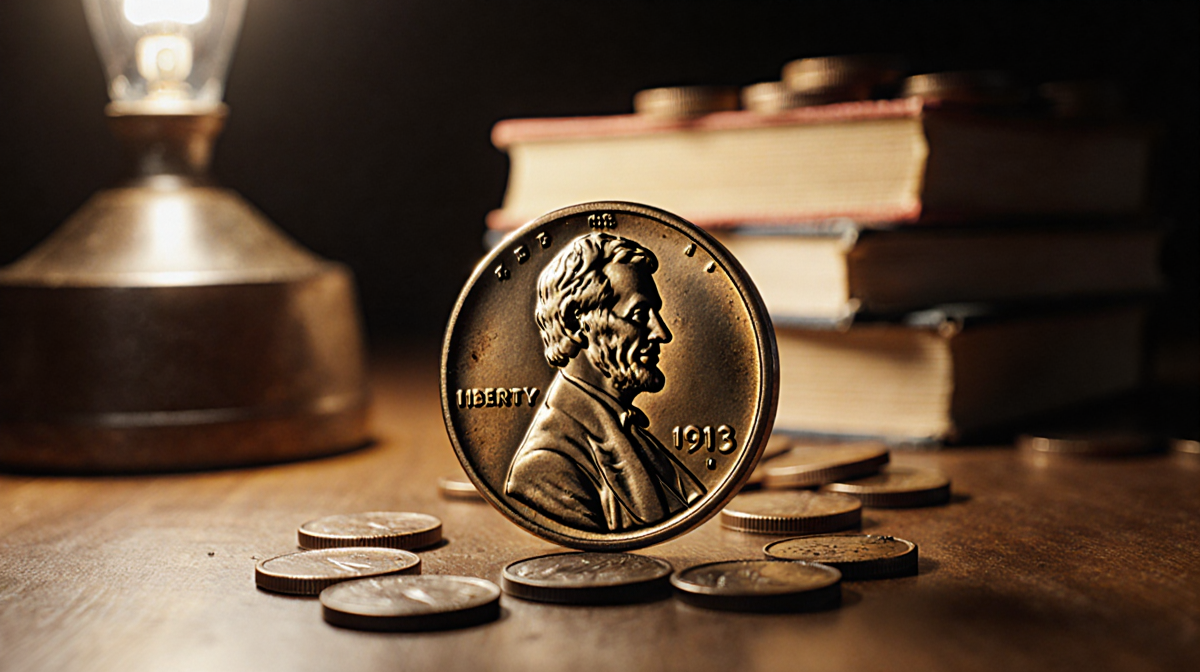
Pennies may be worth far more than a single cent, and a recent auction in California proved that rare U.S. pennies can fetch eye-popping prices. Stack’s Bowers Galleries sold 232 sets of three-penny bundles for a total of $16.76 million, including a record-setting $800,000 set. The event followed the U.S. Mint’s announcement that it would cease producing pennies, with the last coin minted on November 12, 2025.
Auction Highlights
The auction was a special event organized by Stack’s Bowers Galleries on behalf of the U.S. Mint. Held in December 2025, it featured 232 sets of three pennies each. Most sets sold for an average of $72,000, but several fetched $200,000, and one extraordinary bundle sold for $800,000. The total haul of $16.76 million underscored the high demand among collectors for these limited-edition coins. The auction highlighted the value that small variations in minting details can create.
How to Spot a Rare Penny
Collectors can identify potentially valuable pennies by looking for specific features:
- Ω symbol: A Greek omega appears to the left of Abraham Lincoln on the front of 2025 pennies, signaling a special minting run.
- S letter: A small “S” below the year indicates the coin was struck at the San Francisco Mint. Certain years, such as 1931, are known to command premium prices.
- Magnet test: Steel pennies from 1943 and 1944 behave differently when held against a refrigerator magnet.
- 1943: If the penny sticks, it is steel and not considered rare; if it does not stick, it is copper and may be valuable.
- 1944: A penny that sticks is a rare steel coin that can be worth hundreds of thousands. One such coin sold for $408,000 in 2021.
| Year | Magnet Test | Composition | Value Implication |
|---|---|---|---|
| 1943 | Sticks | Steel | Not rare, low value |
| 1943 | Does not stick | Copper | Potentially valuable |
| 1944 | Sticks | Steel | Rare, high value |
| 1944 | Does not stick | Copper | Potentially valuable |
If a penny matches any of these criteria, it may be worth having an expert appraisal. The U.S. Mint’s program encourages owners of potentially valuable coins to seek professional evaluation.
Historical Context
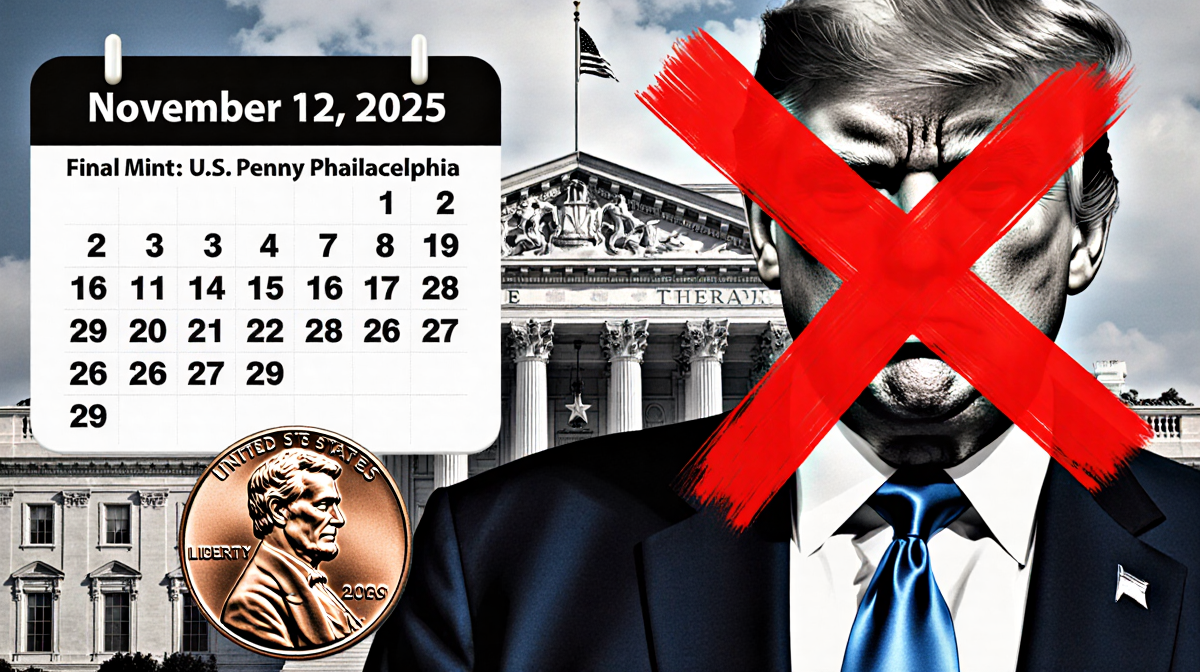
The discontinuation of the penny was announced in February by President Donald Trump, who wrote, “For far too long the United States has minted pennies which literally cost us more than 2 cents,” and added, “This is so wasteful! I have instructed my Secretary of the U.S. Treasury to stop producing new pennies.” Trump’s directive was the first U.S. coin to be discontinued since the half-cent in 1857, according to the Associated Press. The final U.S. Mint penny was struck on November 12, 2025 in Philadelphia, marking the end of a 250-year tradition.
What to Do If You Have One
If you own a penny that displays the Ω symbol, an S mint mark, or is a 1943 or 1944 steel coin, consider the following steps:
- Test with a magnet to determine composition.
- Document the coin’s details: year, mint mark, any distinguishing symbols.
- Consult a reputable numismatic appraiser who specializes in U.S. coinage.
- Check auction records to gauge recent market prices for similar coins.
- Keep the coin in a protective holder until you receive an appraisal.
Owning a potentially valuable penny can be a surprising financial opportunity, especially given the recent auction results.
Key Takeaways
- A California auction brought in $16.76 million from 232 sets of pennies.
- Rare 2025 pennies feature an Ω symbol, and 1931 San Francisco Mint pennies can be highly prized.
- 1943 and 1944 steel pennies have distinct magnet test results that determine rarity.
- The U.S. Mint stopped producing pennies after a February order from President Trump, with the last coin minted on November 12, 2025.
This event reminds collectors that even the most common coin can hold hidden value if it bears the right markings.