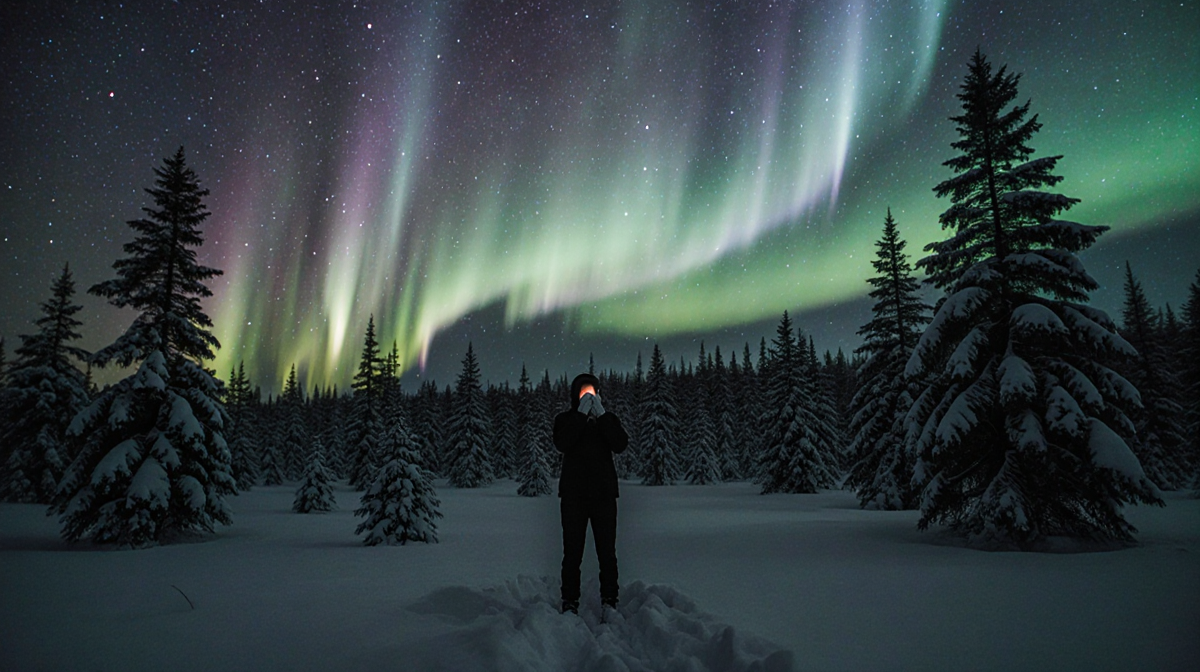
A fresh burst of solar wind is expected to trigger a minor geomagnetic storm, giving another chance to see the aurora borealis from late Jan. 27 into early Jan. 28. NOAA’s Space Weather Prediction Center forecasts a G1-level storm that could light up the night sky across up to 11 U.S. states near the Canadian border. Stargazers are urged to check the 30-minute aurora forecast and watch for clear, dark skies to catch the glow.
At a Glance
- A G1-level geomagnetic storm is predicted for late Jan. 27–Jan. 28.
- The aurora borealis could appear low on the horizon in up to 11 states.
- Visibility depends on clear skies, darkness, and the solar wind’s arrival.
Why it matters: The forecast offers a rare opportunity for mid-latitude viewers to witness the northern lights, a phenomenon that usually appears only at high latitudes.
When Will the Northern Lights Be Visible?
NOAA says a high-speed stream of solar wind is expected to arrive late on Jan. 27 and continue into Jan. 28, bringing a brief period of heightened geomagnetic activity. While the timing can shift hour by hour, the best chances typically unfold after dark, when Earth rotates into the solar wind’s path. Solar wind speeds fluctuate, so patience (and frequent forecast-checking) can pay off.
The Space Weather Prediction Center recommends keeping an eye on its 30-minute aurora forecast, along with real-time space-weather tracking tools and apps that monitor solar wind conditions. One crucial indicator is the interplanetary magnetic field’s Bz component. When it swings south and remains there, solar energy can more easily enter Earth’s magnetosphere, which is often a precursor to auroral activity.
Where Will the Northern Lights Be Visible?
Aurora visibility models suggest the auroras could appear low along the northern horizon in up to 11 U.S. states near the Canadian border. Prime viewing zones include:
| State | Region | Notes |
|---|---|---|
| Alaska | All | Highest probability |
| Washington | Northern | Near border |
| Idaho | Northern | |
| Montana | Northern | |
| Wyoming | Northern | |
| North Dakota | Northern | |
| South Dakota | Northern | |
| Minnesota | Northern | |
| Wisconsin | Northern | |
| Michigan | Northern | |
| Maine | Northern |
These states offer the best chances of seeing the aurora low on the horizon, especially if skies are clear and dark. Rural areas with minimal light pollution provide the best viewing conditions.
How to Watch the Northern Lights
Space weather is notoriously unpredictable, so staying informed is key. NOAA recommends:
- Checking the 30-minute aurora forecast frequently.
- Using real-time space-weather apps to track solar wind.
- Looking for clear, dark skies after sunset.
- Choosing a rural location with minimal light pollution.
If the Bz component of the interplanetary magnetic field stays southward, the likelihood of auroral activity increases. Even a minor storm can produce a beautiful display when the right conditions align.
How to Photograph the Northern Lights
The best part about the northern lights is that you can also capture them on camera. Your smartphone is more than enough, too! All you have to do is:
- Open your camera app.
- Enable Night Mode.
- Point the lens toward the sky.
For more seasoned skywatchers with a DSLR or mirrorless camera, grab a tripod and set your camera to manual mode. Use a wide-angle lens, a low ISO, and a long exposure (10-30 seconds). Don’t forget to stay warm and keep your hands steady.
Tips for Better Photos
- Use a tripod to avoid camera shake.
- Set a low ISO to reduce noise.
- Keep the shutter speed long enough to capture the aurora’s movement.
- Shoot in RAW for maximum post-processing flexibility.
Key Takeaways
- A minor G1-level geomagnetic storm is forecast for late Jan. 27–Jan. 28.
- Up to 11 states near the Canadian border could see the aurora low on the horizon.
- Clear, dark skies and a southward Bz component increase visibility.
- Check NOAA’s 30-minute forecast and use real-time space-weather tools.
- Smartphones can capture the aurora with Night Mode; DSLRs benefit from manual settings and a tripod.
For more detailed information, follow NOAA’s Space Weather Prediction Center and stay tuned for updates as the event approaches.
—
According to Marcus L. Bennett, the aurora borealis forecast offers a unique chance for mid-latitude viewers to witness the lights.