
At a Glance
- Danelle Umstead is a blind Paralympic skier diagnosed with multiple sclerosis in 2010.
- She won three bronze medals across four Paralympic Games.
- MS treatments have improved from 30 % to 70 % efficacy, giving patients better control.
- Why it matters: Her story shows how early diagnosis and high-efficacy therapy can transform life for those with a chronic disease.
In late October 2010, Danelle Umstead, a blind Paralympic skier, experienced sudden paralysis that led to a diagnosis of multiple sclerosis. The diagnosis came after months of misdiagnosis and a series of debilitating episodes. Her journey-from losing vision in her teens to competing on the world stage-highlights the challenges and resilience required to live with MS.
Early Life and Vision Loss
Umstead grew up in Plano, Texas, as the youngest of three daughters to a telemarketer mother and an airline food distributor father who was 80. At age 2 she began wearing thick glasses, and by 13 she was diagnosed with retinitis pigmentosa, a progressive vision-loss condition. She said, “I learned at a very young age that I was going to go blind.” In 1990 she graduated high school and worked as a debt collector, rising to a managerial role. The death of her mother from stage 4 colon cancer in 1999 accelerated her vision loss; by age 28 she had lost all sight, lost her license, her job, and her will to live.
A year later her father invited her to ski in Taos, New Mexico. She described the experience as “the first time since I’d lost my mom and my vision that I felt pure joy.” That trip led to her meeting Rob Umstead in February 2005, a former college ski racer and coach. They married on April 18, 2008 at the top of a mountain in Snowbird, Utah, and began a shared career in adaptive skiing.
Discovering MS
In 2010, during training in Copper Mountain, Colorado, Umstead again felt tingling and paralysis on her right side. She was terrified and told her husband, “My body was something I’d always had control of.” Doctors initially diagnosed her with transverse myelitis, then later with multiple sclerosis after further episodes of numbness. She underwent steroids and physical therapy but had to relearn walking, running, and skiing on her right side.
The diagnosis marked the beginning of a long treatment journey. Over the past decade she has tried more than three medications, stopped all during COVID-19 because of immune suppression, and now faces a crossroads as her insurance changed and her doctor is no longer covered.
Life as a Paralympian
Umstead and Rob competed together in the 2010 Paralympic Games in Vancouver, winning two bronze medals in downhill and super combined. They continued to compete in three more Games, adding one more bronze each time, for a career total of three bronze medals. They also founded the Sisters in Sports Foundation, a nonprofit for disabled female athletes.
Despite MS flare-ups-three significant ones in the past five years, all treated with steroids-Umstead maintains daily workouts, including stretching, walking, and weight training. She also skis with her 18-year-old son Brocton, who is heading to college, and travels for motivational speaking engagements.
Managing MS and Advocacy
Dr. Tanuja Chitnis, a neurologist at Mass General Brigham in Boston, said, “I’ve been practicing for over 25 years, and in the early days, we had one or two treatments with efficacy rates in the 30 percent range. Now we can get up to 70% efficacy. Thankfully, it’s a very different state for patients. Doctors are getting better at using the high-efficacy treatments early on, and this is very important.”
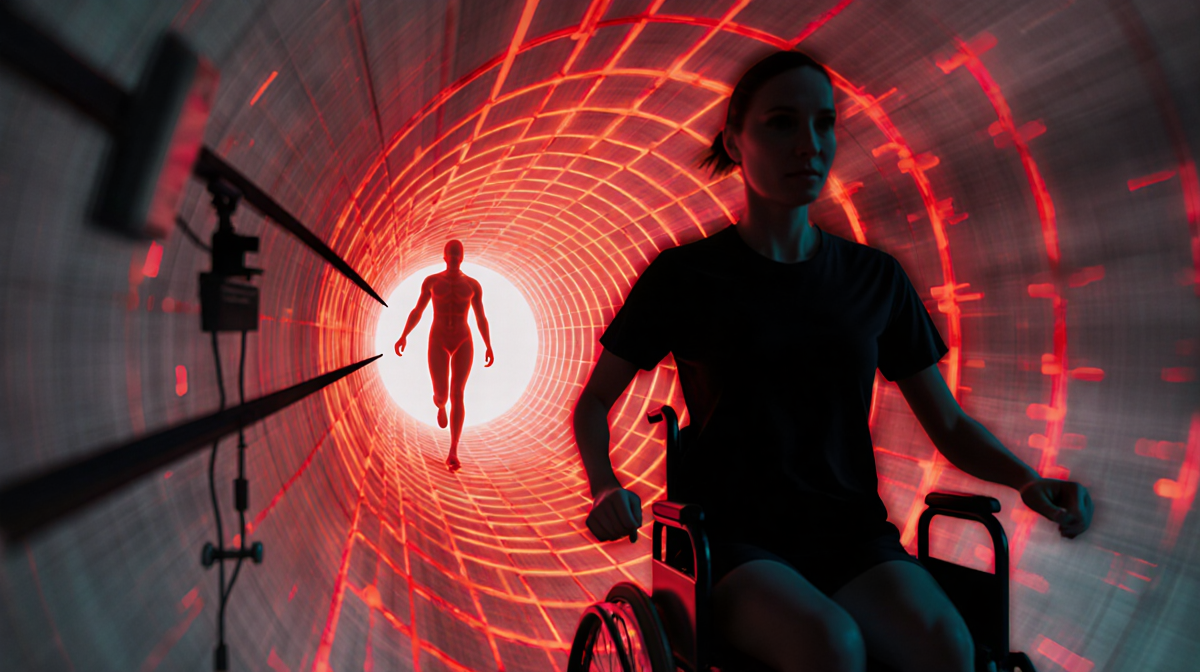
Umstead echoes this optimism, noting that while there is no cure, more than 20 treatments are now available to help patients live longer, fuller lives. She has become a motivational speaker, emphasizing listening to one’s body, slowing down, and adapting rather than fighting.
She says, “Sometimes resilience means resting. Sometimes it means asking for help. I’ve learned a lot from my MS- to step back and give myself time and permission to adapt.”
Key Takeaways
- Early diagnosis and high-efficacy therapy can significantly improve quality of life for people with MS.
- Adaptive sports provide meaningful goals and community for athletes with disabilities.
- Support systems-family, healthcare providers, and nonprofits-are critical for managing chronic conditions.
- Personal advocacy and sharing experiences help raise awareness and inspire others.
Danelle Umstead’s story demonstrates that even with a life-changing diagnosis, determination, support, and evolving treatments can enable continued participation in sport, public speaking, and everyday life.