At a Glance
- Acidic foods like tomatoes, vinegar, citrus, and wine can strip cast iron seasoning
- Metallic taste appears when protective patina dissolves into the dish
- Why it matters: Avoiding these ingredients preserves your skillet’s non-stick surface and stops dinner from tasting like pennies
Cast iron’s reputation for durability masks a hidden weakness: its seasoning dissolves when it meets high-acid ingredients. The result is a pan that sticks, rusts, and taints food with an old-world metallic flavor.
Amanda S. Bennett tested the chemistry with Eric Rowse, a lead chef instructor at the Institute of Culinary Education. Rowse identified the four biggest offenders and the simple steps that keep the coveted non-stick surface intact.
The Chemistry Behind the Damage
Seasoning is a thin layer of polymerized oil, not a coat of paint. Acid breaks those bonds, releasing iron ions into the food.
Rowse explains the reaction: “Highly acidic foods, such as tomato and tomato-based dishes, can be problematic on raw iron, poorly or under-seasoned cast iron. Cooking these foods in neglected cast iron can produce a metallic taste.”
The reaction speed increases with cooking time and temperature. A quick deglaze is safe; a long braise is not.
4 Foods That Destroy Seasoning
1. Tomatoes
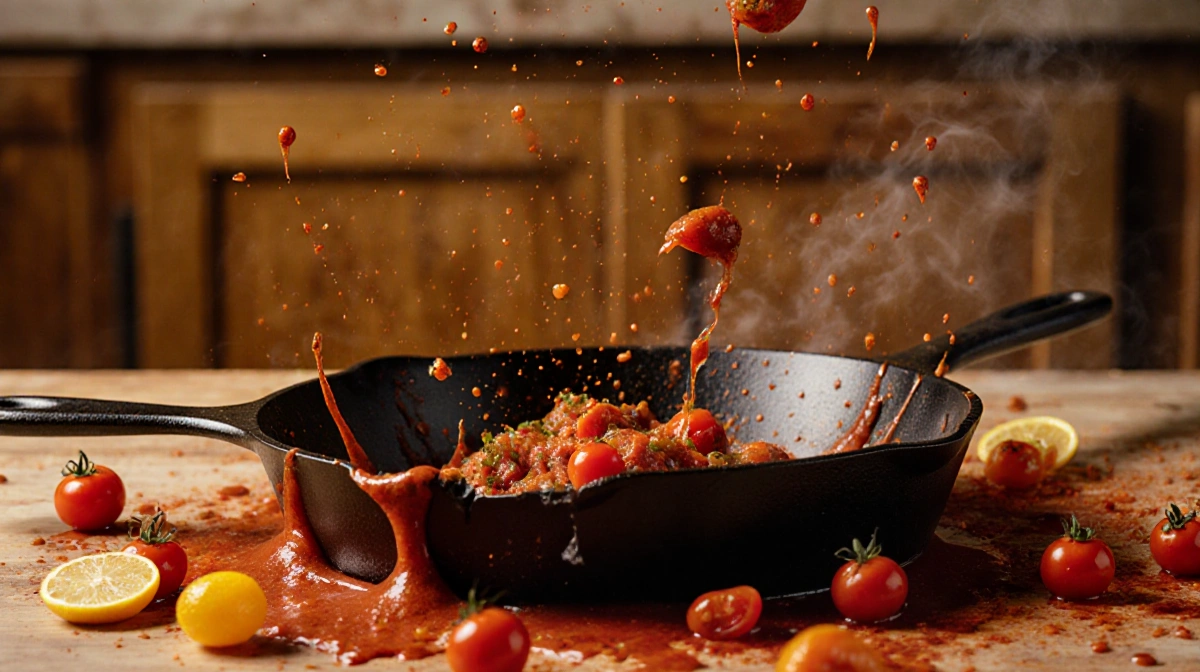
Tomato sauces are the most common culprit. The pH of ripe tomatoes hovers around 4.3-4.9, enough to erode seasoning if the food sits in the pan after cooking.
Safe practice: cook the dish, plate it immediately, then rinse the skillet with hot water. Rowse adds a pro tip: “Cook some bacon in your skillet afterward to give the seasoning extra protection.”
2. Vinegar
Barbecue sauces, adobo, and hot-and-sour broths rely on vinegar for brightness. Acetic acid can drop the pH below 3, accelerating metal leaching.
Rowse warns that vinegar-based foods “shouldn’t sit in a cast-iron pan for long.” Clean the surface right after cooking with hot water, a pinch of salt, and a drop of mild dish soap.
3. Citrus
Lemon and lime juice sit in the same pH danger zone. A finishing spritz is harmless; a citrus-based curry simmered for an hour is not.
Rowse’s rule: “Don’t let citrus juice simmer inside of it for long or your precious patina won’t survive the night.”
4. Wine-based Sauces
Red and white wines carry tartaric and malic acids. Long reductions concentrate those acids, stripping seasoning layer by layer.
Rowse allows wine for quick pan sauces but cautions against “acid-heavy wine braise or simmer in a cast-iron pot or pan for too long.”
Foods You Can Cook-With Caveats
Eggs
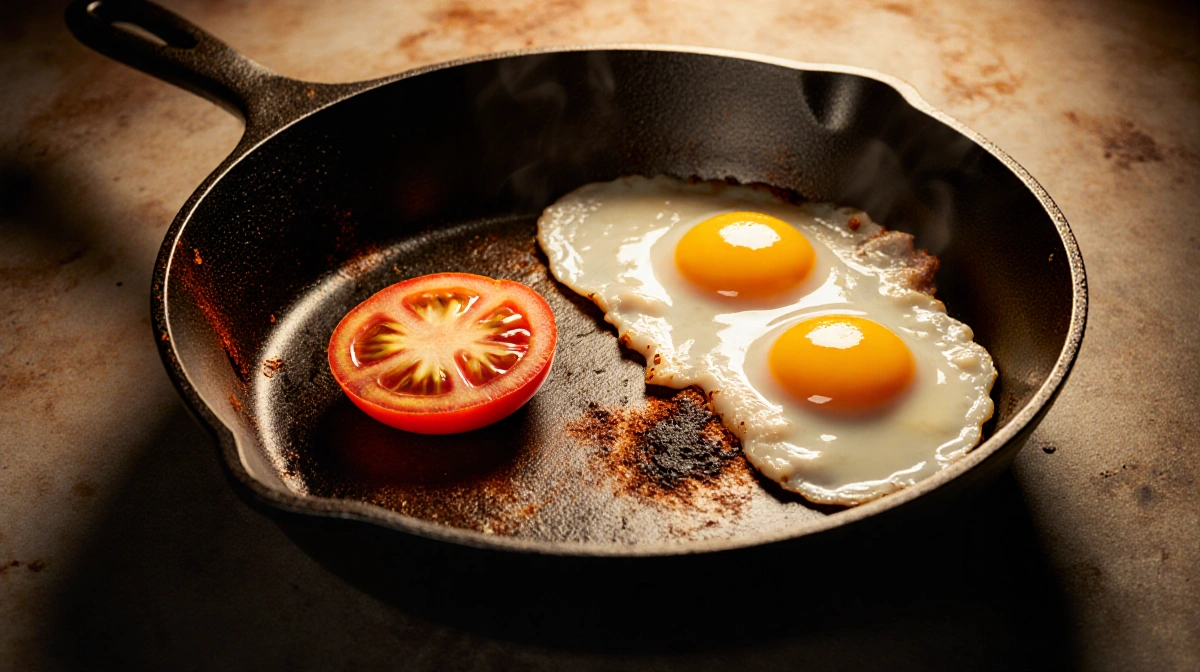
A well-seasoned skillet handles eggs if pre-heated properly. Rowse keeps a 5-inch cast iron for fried eggs, noting that “cast iron can get super hot, but precise control is harder because it retains heat for longer.”
Fish
Delicate fillets stick when the patina is thin or the pan is too cold. Heat management and a slick surface prevent half the halibut from staying behind.
Maintenance Moves That Save the Surface
- Season regularly: thin coats of oil baked past its smoke point build a resilient shield.
- No soaking: water invites rust; dry the pan on a warm burner for 60 seconds.
- Salt scrub: kosher salt plus a splash of water lifts residue without soap overkill.
- Acid shield: if a recipe demands long acidity, swap in enameled cast iron or stainless steel.
## Quick Reference Table
| Food Group | Risk Level | Safe Action |
|---|---|---|
| Tomatoes | Medium | Remove food, rinse immediately |
| Vinegar sauces | High | Clean within minutes of finish |
| Citrus | Medium | Avoid long simmers |
| Wine braises | High | Use enamel or steel instead |
| Eggs | Low | Pre-heat, use adequate fat |
| Fish | Low | Ensure seasoned surface |
Key Takeaways
- Acid, not heat, is cast iron’s real enemy
- Four foods-tomatoes, vinegar, citrus, wine-can dissolve seasoning and flavor your meal with iron
- Quick cooking followed by immediate cleaning keeps the surface safe
- When in doubt, switch to enameled or stainless cookware for long, acidic jobs
Follow these rules and your skillet stays slick, your food tastes clean, and the pan survives to serve the next generation.