
Civil rights pioneer Claudette Colvin has died at age 86, her family confirms. The Alabama native passed away Tuesday morning, Jan. 13, from natural causes, leaving behind a legacy that reshaped American civil rights history.
At a Glance
- Claudette Colvin died Tuesday at 86 of natural causes
- At 15, she refused to give up her bus seat nine months before Rosa Parks
- Her lawsuit ended segregated buses in Montgomery, Alabama
- Why it matters: Her courage as a teenager helped dismantle legal segregation
Colvin’s refusal to surrender her seat on a segregated Montgomery bus on March 2, 1955 came when she was just 15 years old. The act predated Rosa Parks’ famous protest by nine months and became a crucial catalyst in the civil rights movement.
“I said, ‘I’m not getting up,’ ” Colvin told News Of Losangeles in a past interview. “It felt as though Harriet Tubman’s hands were pushing me down on one shoulder, and Sojourner Truth was pushing down on another. History had me glued to the seat.”
The Arrest That Changed History
The incident occurred when a bus driver called police complaining that two Black girls were sitting near two White girls, violating segregation laws. While the other Black girl moved to the rear, Colvin remained seated and was arrested.
Following her arrest, authorities made Colvin a ward of the state and placed her on indefinite probation, according to the Claudette Colvin Foundation’s website.
Family spokesman Ashley D. Roseboro told News Of Losangeles: “They’re grieving her loss but remembering the legacy she left and hoping that through [her] foundation they can continue to live out that legacy.”
The Legal Victory That Ended Bus Segregation
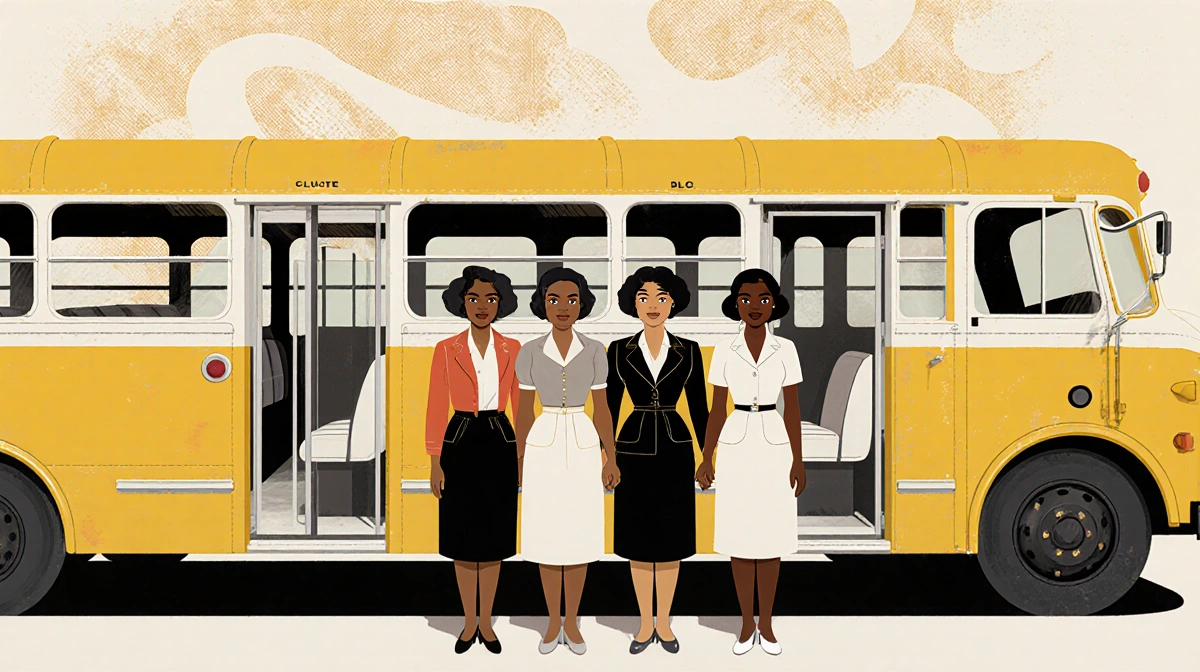
Colvin’s activism extended far beyond her initial protest. She joined three other Black women-Aurelia Browder, Susie McDonald, and Mary Louise Smith-to file the landmark Browder v. Gayle lawsuit challenging segregated bus seating.
The U.S. Supreme Court ruled in 1956 that segregation on Alabama’s public buses was unconstitutional. This decision:
- Upheld a lower court ruling that segregation violated the Fourteenth Amendment’s Equal Protection Clause
- Effectively ended the Montgomery Bus Boycott
- Implicitly overturned the “separate but equal” doctrine from Plessy v. Ferguson
Justice Delayed But Not Denied
Despite her pivotal role in ending bus segregation, Colvin’s criminal record lingered for decades. In 2021, an Alabama family court judge finally granted her petition to expunge her record, clearing her name after 66 years.
“While Claudette was a civil rights hero, they remember her as Claudette Colvin, the mother, the grandmother,” Roseboro emphasized.
Remembering The Woman Behind The Movement
Colvin’s family remembers her not just as a civil rights figure, but as a devoted mother and grandmother. She is survived by:
- Her son Randy
- Her sisters
- Her grandchildren and great-grandchildren
Her older son, Raymond, died in 1993.
The family will schedule her funeral in Birmingham, Alabama, at a later date.
A Legacy Cemented In History
Though often overshadowed by Rosa Parks in popular history, Colvin’s courage as a teenager helped launch the legal battle that dismantled bus segregation. Her refusal to give up her seat wasn’t planned activism-it was spontaneous resistance against injustice that changed American law forever.
The Claudette Colvin Foundation continues her work, ensuring future generations understand how one teenager’s defiance helped reshape civil rights in America.