At a Glance
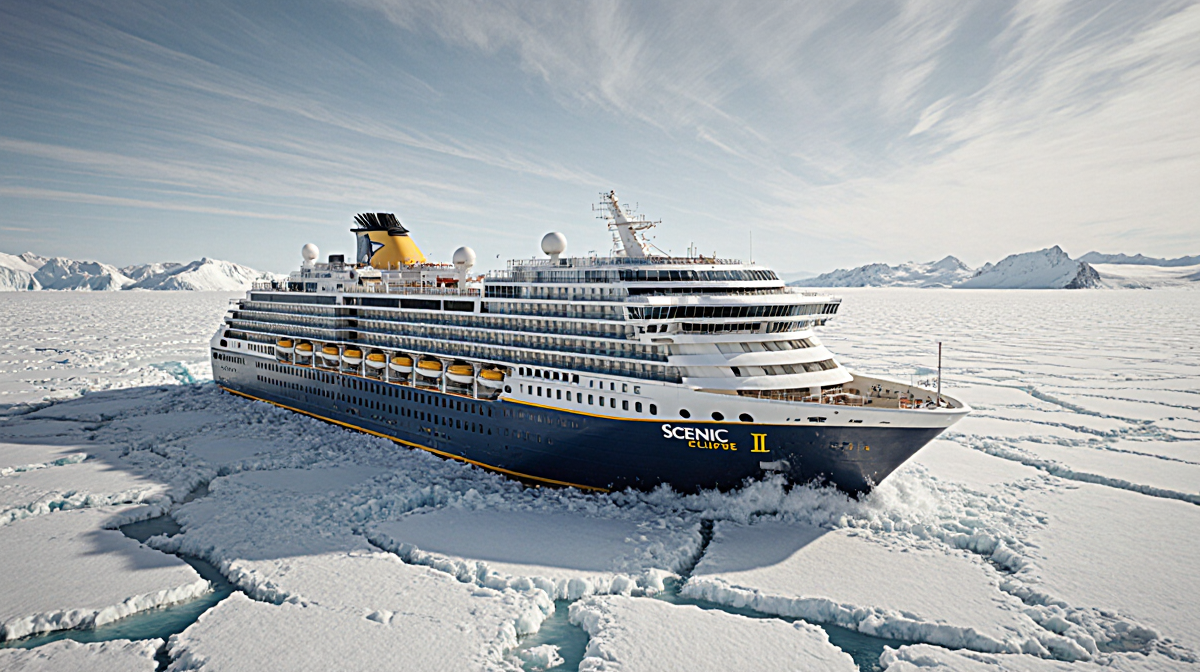
- The luxury cruise ship Scenic Eclipse II was trapped in ice on January 17, 2026.
- The U.S. Coast Guard’s heavy icebreaker, the USCGC Polar Star, broke a channel to free the ship, a rescue that took place on the vessel’s 50th birthday.
- The ship can carry up to 228 passengers and 176 crew members.
- The rescue was part of Operation Deep Freeze 2026.
Why it matters: The incident shows the Coast Guard’s critical role in ensuring safe passage for vessels in Antarctica’s harsh conditions.
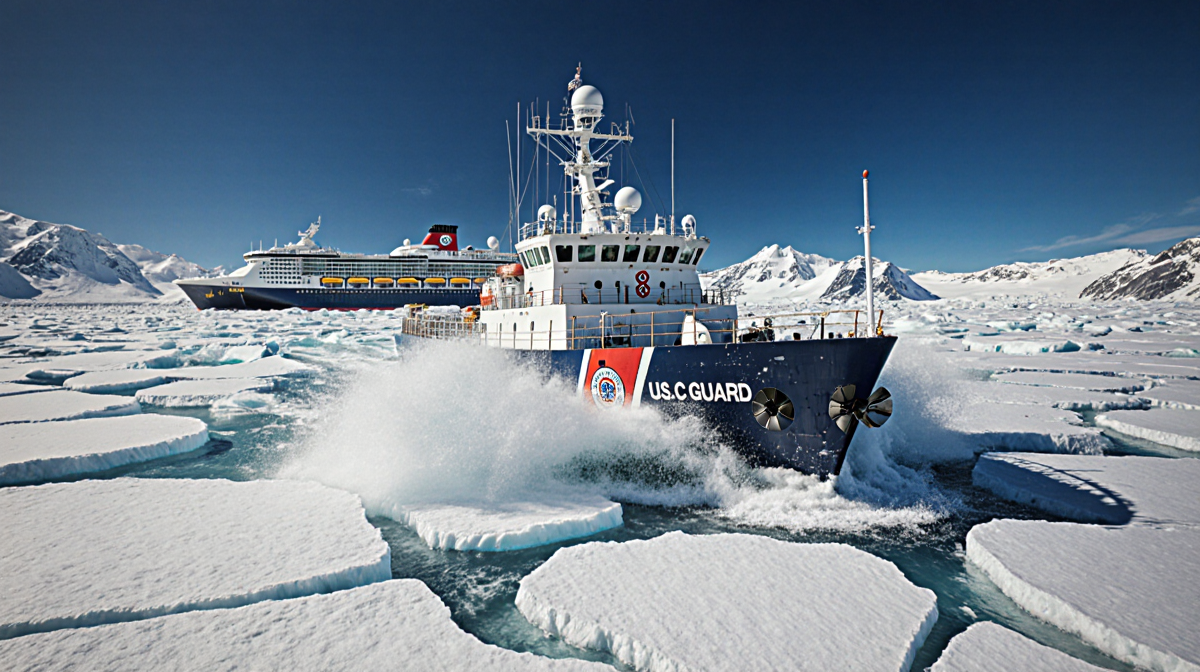
On January 17, 2026, the luxury cruise ship Scenic Eclipse II became trapped in a sheet of ice while sailing the Ross Sea near Antarctica. U.S. Coast Guard heavy icebreaker USCGC Polar Star cut through the ice sheet and freed the vessel, a rescue that coincided with the icebreaker’s 50th birthday and the start of Operation Deep Freeze 2026.
The Incident
The Scenic Eclipse II was sailing through the Ross Sea, a remote stretch of the Southern Ocean that borders Antarctica. On January 17, 2026, the ship encountered a thick sheet of ice that jammed its bow. Video footage obtained by News Of Los Angeles shows the ship stranded, its engines running but unable to move forward.
The vessel, owned by Scenic Luxury Cruises and Tours, can accommodate up to 228 passengers and 176 crew members. Its itinerary had taken it past the South Orkney Islands, a popular route for luxury cruises seeking pristine Antarctic scenery.
The incident prompted an immediate call to the U.S. Coast Guard, which dispatched the heavy icebreaker USCGC Polar Star to the scene.
Key facts about the incident:
- Ship name: Scenic Eclipse II
- Location: Ross Sea, near Antarctica
- Date: January 17, 2026
- Capacity: 228 passengers and 176 crew
The Ross Sea is one of the world’s most remote and icy waters, with temperatures often below freezing and unpredictable sea ice. Ships operating there must rely on specialized ice navigation charts and real-time satellite data.
The Rescue
The USCGC Polar Star, the United States’ only heavy icebreaker, arrived within hours. The icebreaker’s powerful propulsion system and reinforced hull allowed it to cut through the ice sheet, creating a navigable channel.
In the footage, the Polar Star’s bow tears large cracks in the ice, and the ship then circles the stranded cruise vessel. As the icebreaker moves, the Scenic Eclipse II begins to shift, first backward and then forward, indicating that it is gaining traction.
The rescue was completed when the Polar Star reached the ship and guided it out of the ice field. The cruise ship then followed the icebreaker, moving safely toward open water.
The U.S. Coast Guard’s official Instagram account posted a photo of the Polar Star with the caption that the rescue occurred on the vessel’s 50th birthday. The vessel was commissioned on January 17, 1976 and has been active in Antarctic missions for five decades.
The Polar Star’s diesel-electric propulsion system delivers 16,000 horsepower, allowing it to maintain speed in thick ice. Its bow is reinforced with steel plates that can withstand ice pressures of up to 20,000 pounds per square foot.
Rescue details:
- Icebreaker: USCGC Polar Star
- Date of rescue: January 17, 2026
- Event: 50th birthday of the icebreaker
- Operation: Deep Freeze 2026
Operation Deep Freeze
Operation Deep Freeze is an annual U.S. Coast Guard mission that transports personnel and supplies to the U.S. Antarctic Program. The 2026 iteration began when the Polar Star departed Seattle on November 20, 2025.
The mission’s goal is to resupply the National Science Foundation’s (NSF) research stations, including McMurdo Station, the largest and most important U.S. Antarctic hub. The NSF press release dated November 26, 2025 highlighted the importance of the icebreaker’s role in maintaining the logistics chain.
The rescue of the Scenic Eclipse II occurred just days into the mission, underscoring the unpredictable nature of Antarctic operations and the Coast Guard’s readiness to respond.
The NSF’s research stations conduct studies on climate change, glaciology, and marine biology. Without the Polar Star’s support, these scientific endeavors would face significant delays.
The Icebreaker
The USCGC Polar Star has earned the title of the U.S. Coast Guard’s most powerful ship. Its design allows it to break through thick ice, a capability essential for reaching McMurdo Station.
Commissioned on January 17, 1976, the Polar Star celebrated its 50th birthday during the 2026 mission. Its age and experience make it a critical asset for Antarctic logistics.
Since 1976, the Polar Star has completed 29 missions to Antarctica, carrying over 10,000 tons of cargo and supporting more than 200 scientific expeditions.
| Feature | Detail |
|---|---|
| Commissioned | January 17, 1976 |
| Age (2026) | 50 years |
| Role | U.S. Coast Guard’s only heavy icebreaker |
| Power | Most powerful ship in the U.S. Coast Guard |
What This Means
The incident demonstrates the essential role of the U.S. Coast Guard in safeguarding maritime traffic in the Southern Ocean. It also highlights the resilience of luxury cruise operations in remote regions.
Cruise operators must now assess the risks of operating in the Ross Sea, especially during the austral winter when sea ice expands. The incident may prompt revisions to route planning and emergency response protocols.
Key takeaways:
- The Coast Guard’s rapid response saved a luxury cruise ship and its passengers.
- The rescue coincided with the Polar Star’s 50th birthday, a milestone for the U.S. Coast Guard.
- Operation Deep Freeze 2026 continues to rely on heavy icebreakers to support scientific research in Antarctica.