At a Glance
- NASA’s Curiosity rover released a color-enhanced panorama of Mount Sharp on Dec. 30.
- The image combines photos taken on Sol 4,722 and Sol 4,723, showing early morning and late afternoon light.
- It marks the third postcard-style shot from the rover, following 2021 and 2022 releases.
- Why it matters: The photo offers scientists a clearer view of Mars’ geology and showcases the rover’s imaging capabilities.
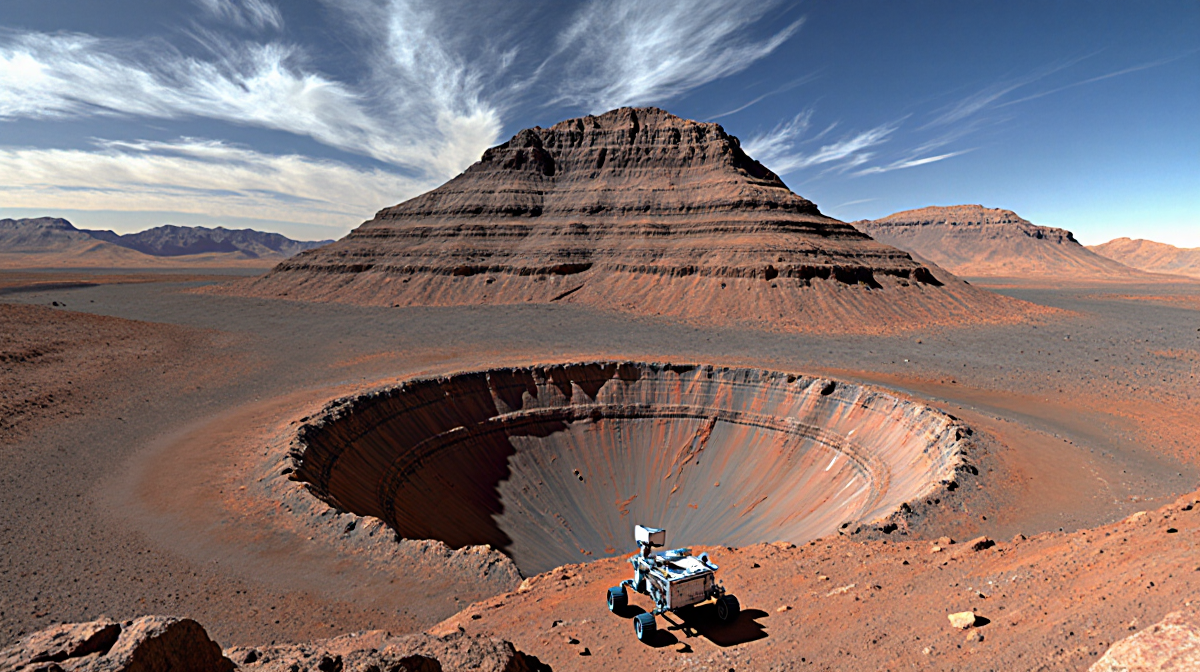
Curiosity’s latest image, posted by NASA on Dec. 30, presents a sweeping view of the foothills of Mount Sharp, a 3-mile-high peak that the rover has been ascending since 2014. The photo looks down the slope toward the floor of Gale Crater, with the crater’s rim visible in the background. Curiosity was near the site to collect samples from Nevado Sajama, a nearby spot.
The Photo and Its Context
The panorama was created by stitching together raw photos taken on two consecutive Martian days. Curiosity captured the first image at 4:15 p.m. on Sol 4,722 and the second at 8:20 a.m. on Sol 4,723. Both Earth dates correspond to Nov. 18.
Mount Sharp and Gale Crater
- Located in the center of Gale Crater.
- Height: 3 miles.
- Rover has been climbing it slowly since 2014.
Curiosity’s Recent Activities
- Visiting Nevado Sajama to gather samples.
- Tracks visible in the photo lead back to Valle de la Luna dig site.
- Valle de la Luna shares its name with Earth landmarks known for wind- and water-eroded rock formations.
Stitching the Panorama
The raw images were merged to create a single composite that shows both early morning and late afternoon lighting. NASA added color to differentiate the landscape and highlight subtle details. The color scheme uses orange tones for the afternoon side and blue tones for the morning side.
| Sol | Time (Mars) | Earth Date | Light Condition |
|---|---|---|---|
| 4,722 | 4:15 p.m. | Nov. 18 | Late afternoon |
| 4,723 | 8:20 a.m. | Nov. 18 | Early morning |
Visual Impact of Colorization
Colorization helps scientists and the public see features that might be lost in raw grayscale images. It also makes the panorama more aesthetically pleasing. NASA noted that the added color differentiates terrain and reveals minor details.
Previous Postcards
This is the third such postcard taken by Curiosity. The first was in November 2021, taken closer to the base of Mount Sharp. The second came from Marker Band Valley, also in the foothills of Mount Sharp.
Key Takeaways
- Curiosity’s image showcases the rover’s ability to capture and process high-resolution panoramas.
- The photo combines data from two sols, illustrating how Mars’ lighting changes across a day.
- Mount Sharp’s 3-mile height and central location in Gale Crater make it a focal point for Mars exploration.
- The color-enhanced image aids in geological analysis and public engagement.
The release of this panorama underscores NASA’s commitment to sharing detailed, accessible views of Mars. By combining images from different times of day and applying color, the agency provides both scientific value and visual appeal.
Add News Of Los Angeles as a preferred Google source.