At a Glance
- AI is increasingly used to produce student assignments.
- Professors notice predictable, soulless writing patterns.
- Teachers can use AI tools and sample writing to spot cheating.
Why it matters: Understanding AI-generated work helps maintain academic integrity.
A recent article by Jonathan P. Miller explores how professors can tell when students use AI tools like ChatGPT to write papers. The piece details red flags, tools, and strategies that help educators spot cheating while maintaining a supportive learning environment.
Red Flags in AI-Generated Writing
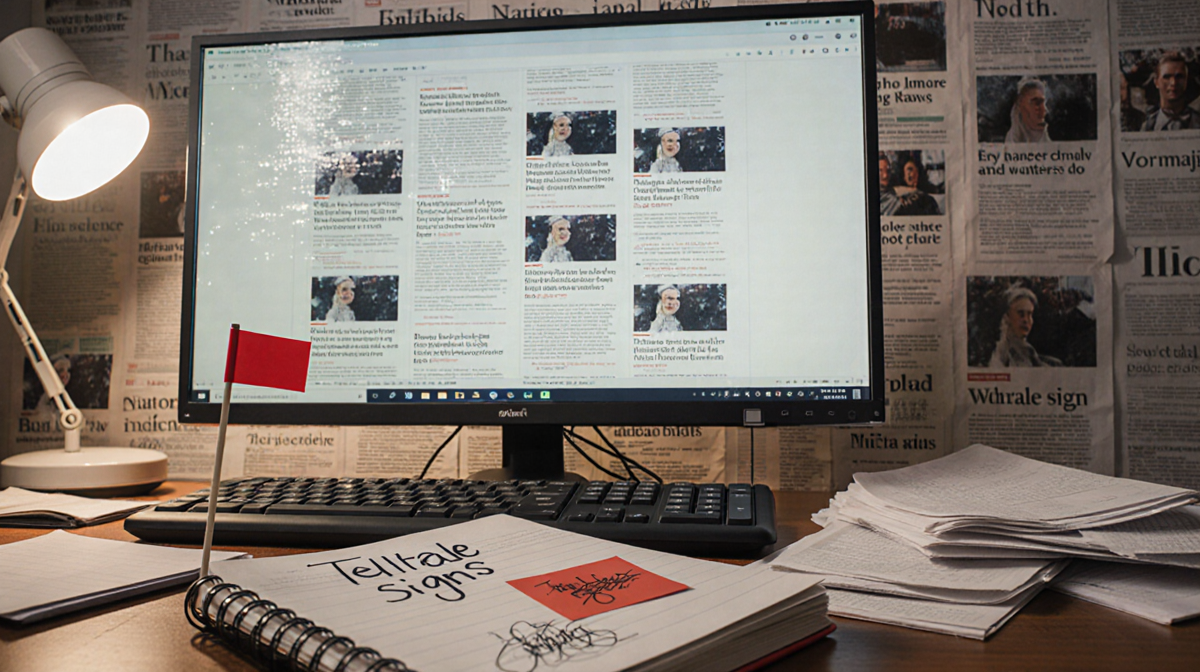
Jonathan P. Miller lists several tell-tale signs that a paper may have been written by a chatbot:
- Repetition of key terms from the assignment prompt.
- Inclusion of inaccurate facts due to the AI’s tendency to hallucinate.
- Sentences that do not sound natural or feel overly formal.
- Generic, repetitive explanations that fail to advance the argument.
- A tone that does not match the student’s usual style.
For example, a student who normally writes in fragments might suddenly submit a “multifaceted analysis” that uses words like “tapestry” or “delve.” Such a sudden shift triggers a professor’s suspicion, as AI often wraps paragraphs with clichéd summaries such as “In conclusion.”
Tools for Spotting AI
There are several AI-detection tools that can help teachers review assignments:
- GPTZero – scans text for patterns typical of language models.
- Smodin – provides a similarity score and highlights suspicious passages.
Jonathan P. Miller notes that familiarizing oneself with these tools is the first step in the “war against AI-driven integrity violations.” By running a student’s paper through one of these scanners, a professor can quickly identify sections that warrant closer inspection.
Strategies to Catch Cheaters
Jonathan P. Miller recommends a proactive approach that mirrors the tactics students might use:
- Do as the cheaters do – before the semester starts, copy the assignment prompt into ChatGPT and generate a sample answer. This gives a baseline of the type of output the AI produces for that question.
- Get a real sample of the student’s writing – ask students to submit a short, personal piece (e.g., 200 words about a favorite toy). This establishes a benchmark of their natural style.
- Ask for a rewrite – if a paper is suspected of AI involvement, feed it to an AI tool and request a rewrite. Often the tool will produce a version that is a lazy synonym swap of the original, revealing the lack of substantive change.
- Maintain a skeptical mindset – keep evidence of suspicious patterns and be prepared to discuss them with students and administration.
### Example of a Suspicious Rewrite
Jonathan P. Miller illustrates how an AI rewrite can expose the lack of depth in a student’s work. The original text, written by a human, contains vivid descriptions and personal anecdotes. After the AI rewrites it, the passage becomes more generic, losing the original’s nuance.
Maintaining Academic Integrity
The article concludes with a reminder that the goal is not to punish but to encourage honest learning. Jonathan P. Miller writes, “Good luck out there in the new AI frontier, fellow teachers. Try not to be offended when a student turns in work written by a robot collaborator. It’s up to us to make the prospect of learning more alluring than the temptation to cheat.”
By combining vigilant observation, AI-detection tools, and thoughtful strategies, educators can uphold integrity while fostering a learning environment that values genuine effort.
Key Takeaways
- AI tools produce predictable, soulless writing that is easy to spot.
- Detection software like GPTZero and Smodin can flag suspicious passages.
- Teachers can use AI themselves to generate baseline samples and rewrite suspected work.
- Maintaining a skeptical but fair approach helps students learn the value of authentic work.
—
Categories
- Tech News
- Education