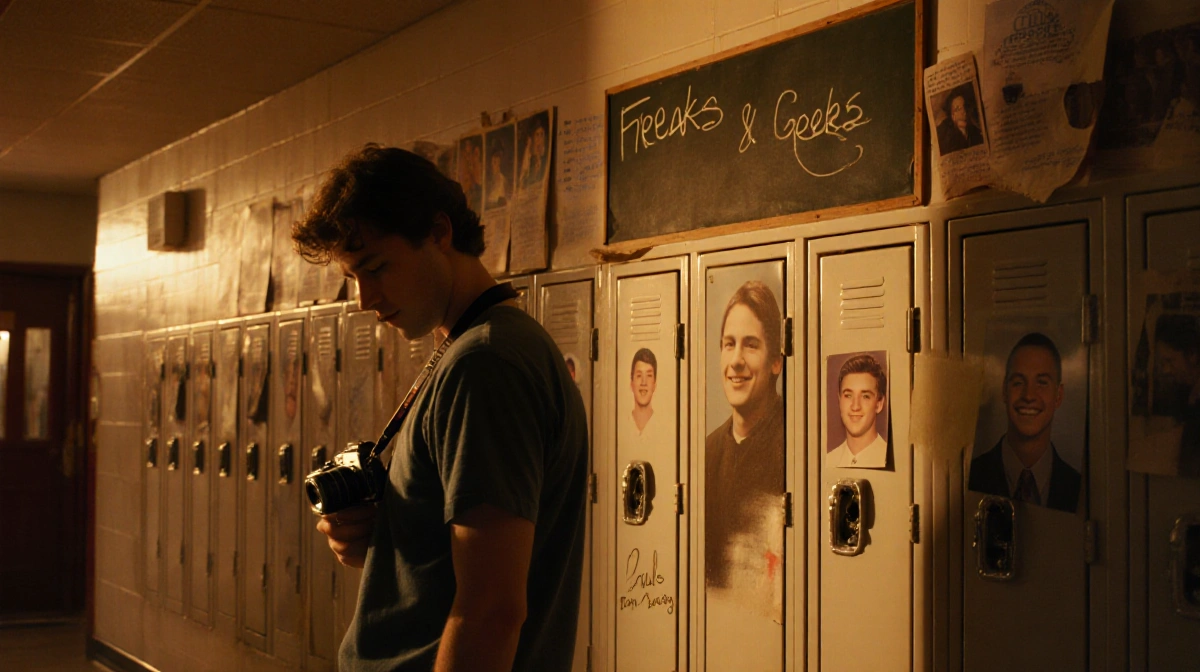
Paul Feig never expected his personal high-school script to become a cult classic-until an old friend stepped in.
At a Glance
- Paul Feig wrote the pilot of Freaks and Geeks as an unpaid spec while touring colleges with an unreleased indie film
- Long-time friend Judd Apatow agreed to produce, turning the hour-long script into NBC’s 1999 launch
- The series lasted 12 aired episodes yet earned three Emmy nods and launched the careers of Seth Rogen, Jason Segel, Linda Cardellini and others
- Feig supplied yearbooks to the design team and vetoed Nike products to keep the 1980 Michigan setting authentic
**Why it matters: Feig’s story shows how a deeply personal, low-expectation project can redefine television comedy and mint future stars.
Feig, now 63, spoke about the journey on the Sibling Revelry with Kate Hudson and Oliver Hudson podcast last month. He recalled cranking out the script between screenings of a low-budget movie he wrote, directed and starred in that never found distribution.
> “I was always writing,” Feig said. “I mean, I’m constantly writing scripts. And, yeah, I’ve always wanted to do something about my high school experience.”
The finished pilot landed in the mailbox of Judd Apatow, a friend since their stand-up days as teens. Apatow’s decision to champion the project surprised Feig, who considered the hour format a mere experiment.
> “All the other things I wrote, I was so into because they were all these movie scripts. And this was the first time I went, like, ‘Maybe I’ll write, like, an hour TV show,'” Feig said.
Networks agreed; NBC picked up the show and premiered it on September 25, 1999. Set in suburban Michigan between 1980 and 1981, Freaks and Geeks followed a group of outsiders navigating adolescence. Feig mined his own Michigan upbringing for story beats and wardrobe choices.
Authenticity Down to the Sneakers
The production team received Feig’s yearbooks so costumes and sets matched late-1970s Detroit suburbs. That commitment extended to footwear: a potential Nike sponsorship was declined because the brand had not yet saturated his hometown.
> “It was just that level of detail,” Feig said.
One episode-featuring a garish disco suit-copied Feig’s real high-school misstep. He bought the outfit at a mall store named Silverman’s, walked into school and immediately regretted the bold fashion statement.
> “The minute I walked in, I realized, ‘Oh my God, I made a huge mistake. I look so different than everybody else. This is just a major swing that should not have been taken.'”
From Cancellation to Cultural Impact
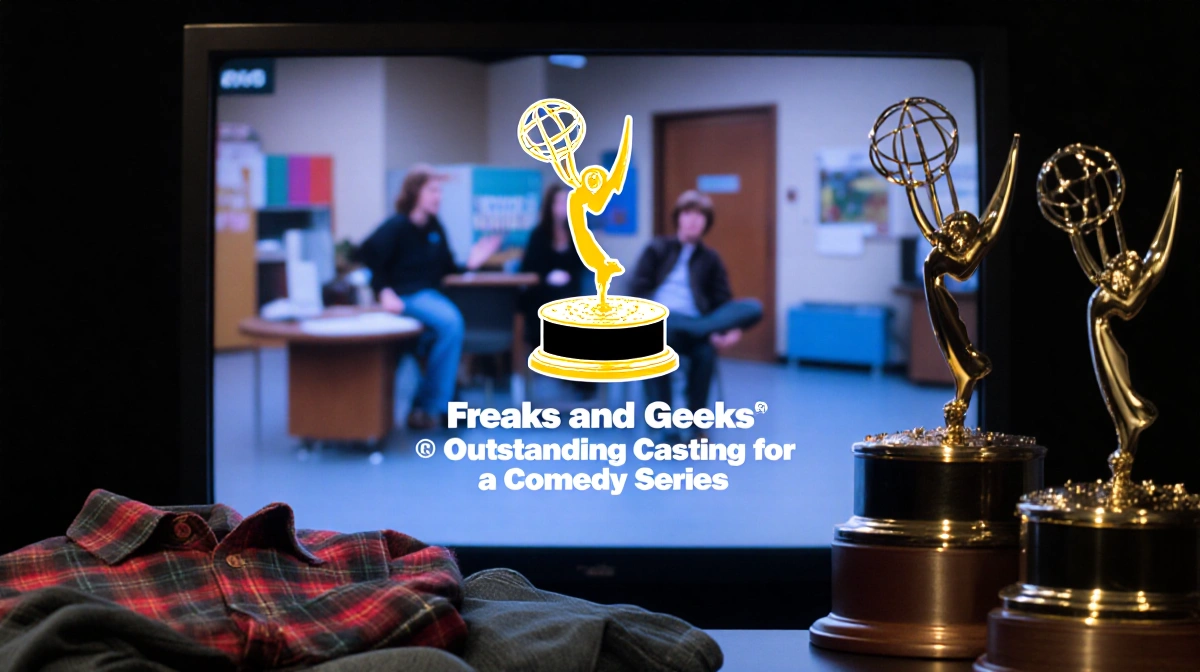
NBC aired only 12 of the 18 produced episodes before canceling the series. Yet the show’s reputation grew, bolstered by three Emmy nominations and a win for Outstanding Casting for a Comedy Series in 2000.
Cast members quickly became Apatow regulars in film and television. Seth Rogen, Jason Segel, Linda Cardellini, James Franco, Busy Philipps and Martin Starr all parlayed the experience into lasting careers.
Feig attributes part of the ensemble chemistry to performers rooted in improvisation rather than stand-up, noting that improv-trained actors tend to be collaborative and adaptable.
> “Comedic actors are great because they’re team players,” he said.
Key Takeaways
- A spec script written without upfront pay became one of television’s most influential single-season shows
- Feig’s personal archive-yearbooks, memories, even mall store names-shaped the series’ grounded realism
- Despite early cancellation, Freaks and Geeks earned Emmy recognition and launched multiple Hollywood A-listers
- The partnership between Feig and Apatow, forged in teenage comedy clubs, proved pivotal to the project’s existence