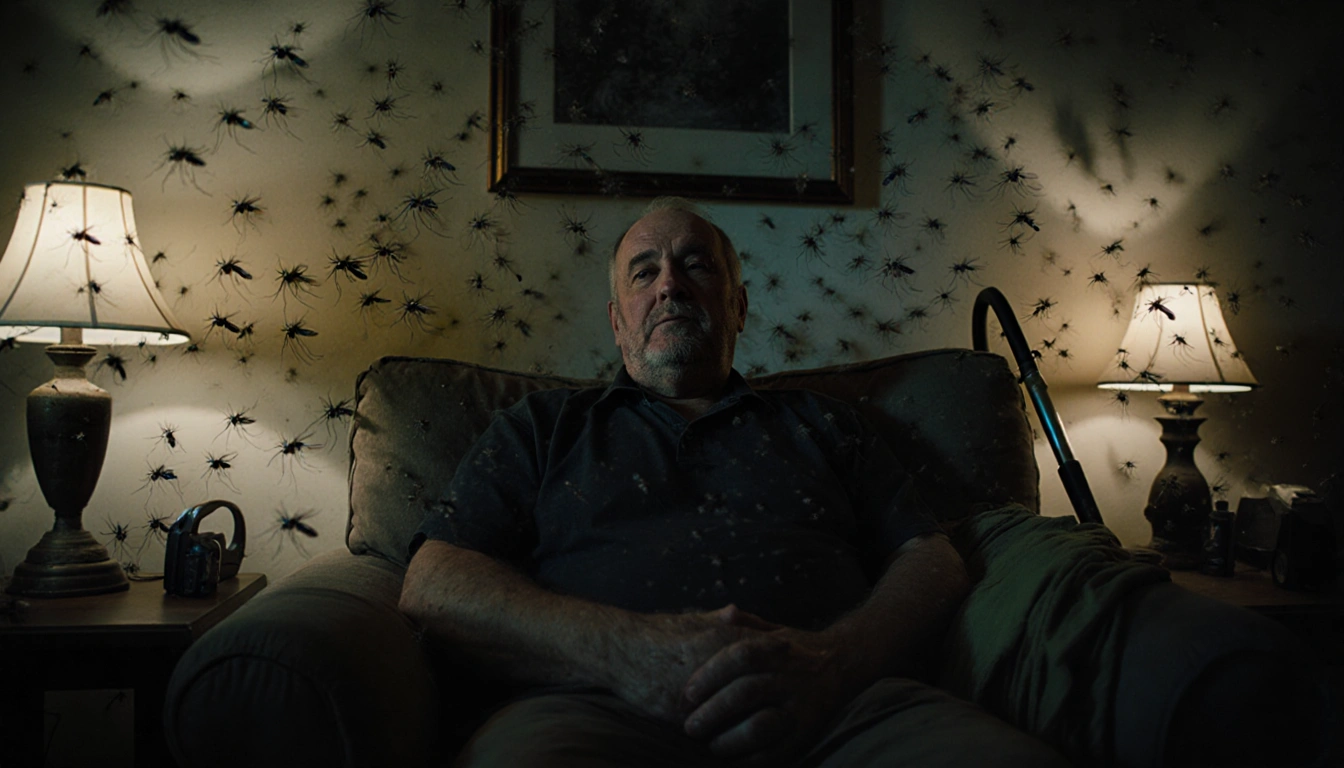
For eight straight weeks Richard Johnson has started each evening the same way: plug in a handheld vacuum, set a bowl of crushed lemongrass on the nightstand, and wait for the buzzing to start.
At a Glance
- Aedes aegypti mosquitoes have swarmed an El Segundo neighborhood since November
- Residents blame a nearby LADWP easement that borders the Hyperion Water Reclamation Plant
- Bites occur indoors and outdoors at any hour, disrupting sleep and delaying school attendance
- Vector control has found no West Nile virus, but nightly spraying and DIY traps bring only spotty relief
The tiny insects are a new breed for Southern California-smaller, stealthier, and far more aggressive than the dusk-loving Culex species locals once battled.
“Look how tiny they are,” Johnson said, holding up a palm-size bug zapper that crackles every few minutes. “They’re just really tiny.”
Across the street Samantha Hedding keeps a similar arsenal: citronella candles, mesh door curtains, and a rotating stock of repellents that rarely work. She estimates her children have missed first period at least six times this month after sleepless nights spent slapping ankles and wrists.
“It’s horrible. We’re living no sleep. The kids are miserable,” she said.
The outbreak began in early November and has intensified with each warm spell. Unlike Culex mosquitoes that prefer birds and outdoor spaces at dawn and dusk, Aedes aegypti-nicknamed “ankle biters”-feed all day, follow people inside, and lay eggs in containers as small as a bottle cap.
Chris Pimentel, mayor of El Segundo and a resident of the affected block, said every household on his street has reported the same pattern: a brief lull after vector-control treatments, then a resurgence within 24 hours. He believes the source lies on a narrow strip of city-owned land separating the neighborhood from the Hyperion Water Reclamation Plant.
“Most, if not all, of the affected neighborhoods directly butt up to the City of LA properties,” Pimentel said, referring to the easement maintained by the Los Angeles Department of Water and Power.
The corridor, less than 40 yards wide in places, channels runoff from the 230-million-gallon-per-day treatment facility toward the ocean. Stagnant pockets along the banks provide ideal breeding habitat for Aedes eggs that can survive dry conditions for more than a year.
Pimentel said his office has coordinated weekly calls with LADWP and the LA County West Vector Control District since December. Field crews have identified several hotspots on the easement, but spraying is complicated by the plant’s sensitive chemistry.
“The tricky part is it’s not ours, right? So you’re coordinating with someone because it’s not our land,” he explained. “And obviously something like a big municipal water treatment plant that treats 230 million gallons of water a day, that’s a sensitive site. The chemistries that go in, you have to make sure it doesn’t affect the chemistries they use for the treatment.”
Vector-control technicians have applied bacterial larvicides that target mosquito larvae without harming the microbial processes used to break down sewage. Results, however, have been uneven.
“If there is a silver lining, vector control, who’s been testing since December, we don’t have any issues with any outbreak pieces. No West Nile in them,” Pimentel said. “It’s cold comfort when you’re living with the welts.”
Data from the district show West Nile-carrying Culex mosquitoes remain at winter lows, yet Aedes counts in the El Segundo trap line have spiked to nine times the county average for January.
Johnson recently paid a contractor to seal every window and door frame with weather stripping. Still, he wakes up each morning with fresh bites on his arms and neck.
“I don’t know how they’re getting in,” he said. “I don’t know how it’s going to end until somebody takes care of it.”
Residents have resorted to DIY measures that border on folklore. Some sprinkle coffee grounds over rain-collecting planter saucers; others hang bundles of lavender from porch rafters. Hedding admits desperation has driven her to experiment with everything from dryer-sheet pockets to dish-soap traps.
“One night will be light, and we’re thinking, ‘Oh great, we got relief.’ And then the next night, right back to square zero,” she said.
According to News Of Los Angeles‘s inquiry, LADWP declined an on-camera interview but issued a statement saying the agency “shares the community’s concern” and is “cooperating fully” with vector control. Crews have removed discarded equipment and trimmed vegetation along the easement, yet standing water persists after each rain.
Pimentel said a joint inspection scheduled for later this week will determine whether additional drains or pumps are needed to eliminate shallow pools. Until then, the city has authorized overtime for vector-control staff to treat the corridor every 48 hours instead of the standard seven-day cycle.
Even if the source is contained, residents face a secondary problem: Aedes eggs already laid in backyard containers can hatch once temperatures rise above 70 degrees. Vector-control entomologists urge homeowners to dump standing water, scrub the inside of containers, and cover rain barrels with mesh fine enough to block a grain of rice.
For Johnson, the advice feels like a band-aid on a broken arm. He has followed every checklist, yet the buzzing returns each dusk.
“Look, we’ll try anything,” he said, pointing to a row of lemongrass plants his wife now waters each morning. “But at some point the city needs to fix the actual source, not just tell us to wear more repellent.”
Key Takeaways
- Aedes aegypti mosquitoes have plagued an El Segundo neighborhood since November, causing sleepless nights and missed school
- Residents trace the outbreak to an LADWP easement adjacent to the Hyperion Water Reclamation Plant
- Vector control has found no West Nile virus, but daily bites continue despite weekly treatments
- Joint city-county inspections this week could lead to additional drainage or larvicide applications