At a Glance
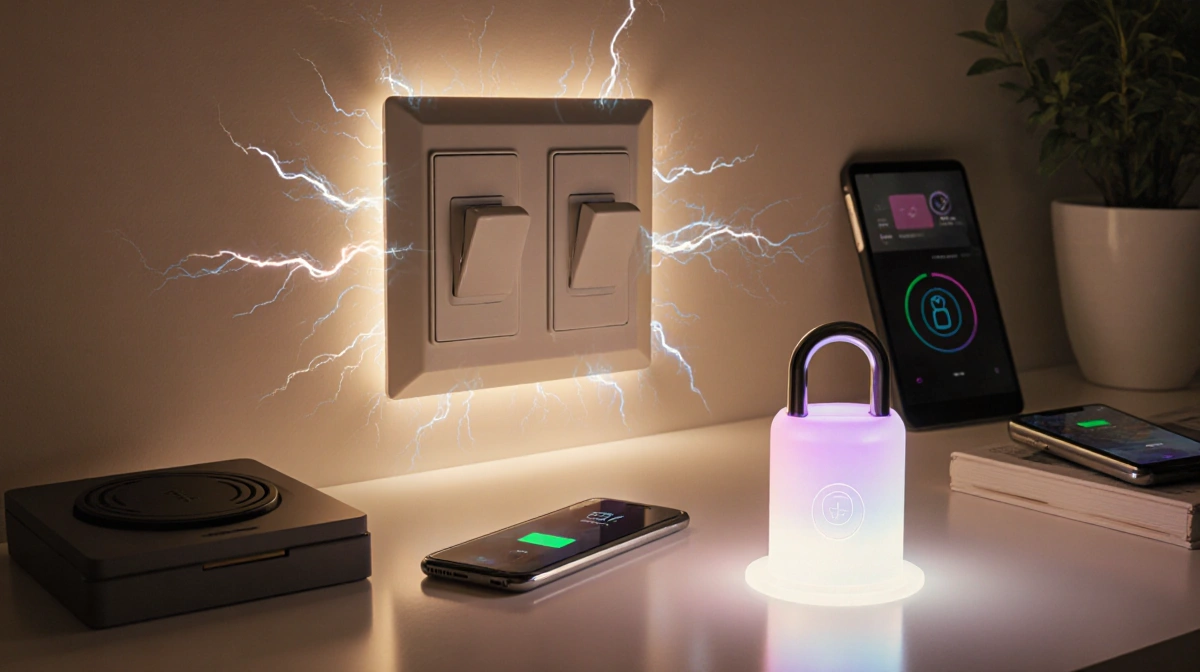
- Gemns showcases magnet-powered switches that generate bursts of electricity.
- Willo demonstrates a wireless charger that can power any device within reach.
- Lockin’s AuraCharge lights up smart locks from 4 meters away.
- Why it matters: These innovations could end the yearly battery-replacement chore for homeowners.
CES 2026 highlighted a wave of battery-free smart-home technology that could change how homeowners power their devices. At the heart of the push are products that harvest energy from motion, light, or wireless fields, eliminating the need for wires or batteries.
Battery-Free Power at CES 2026
Gemns
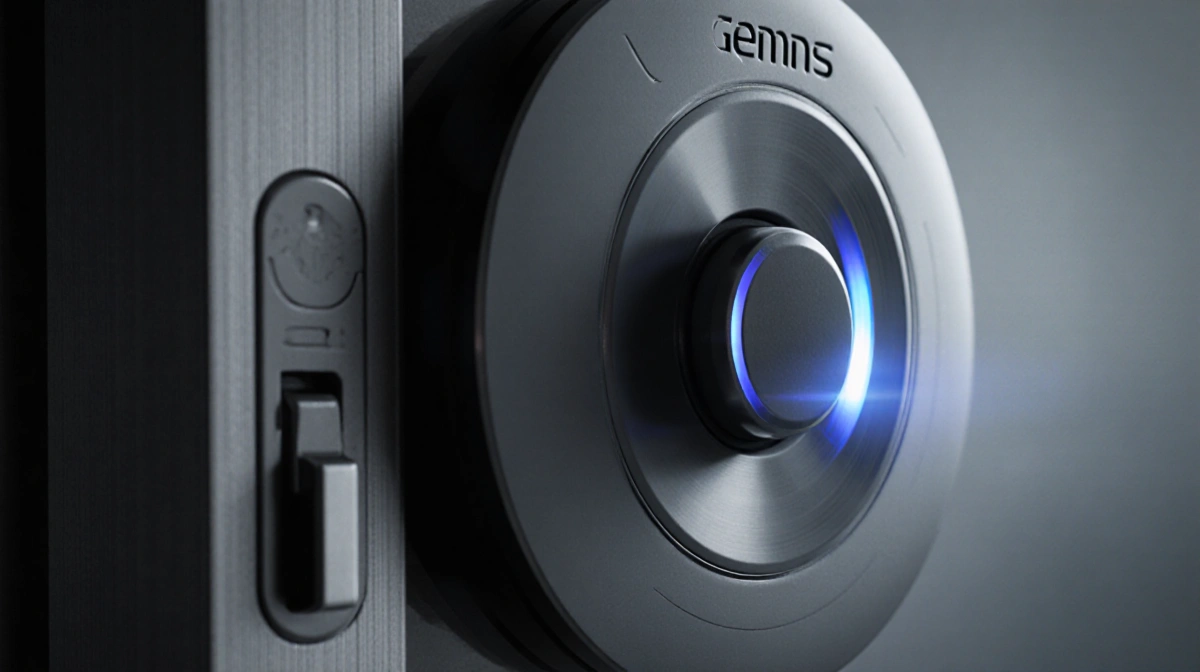
Gemns’ flagship G200 is a tiny, 1 inch-diameter device that turns a simple motion-like turning a doorknob-into a burst of electricity. The magnet spins rapidly, generating a small charge that is stored in capacitors and released for a single, controlled action. The company says the power is enough to scan an ID for a lock or report that a door is open or closed.
- Small, plug-in-style switches that can double as dimmers.
- No battery required; the device is powered entirely by motion.
- The G200 can be installed in existing switch boxes.
Larry Richenstein, founder and CEO, explained the motivation: ‘Everyone’s talked about the Internet of Things and how it’s going to expand into billions and billions of sensors, and it hasn’t quite happened yet. And the reason is batteries. It’s very expensive to put these devices up in places that they’re remote and then have to change the batteries when they run out every year or so.’
Gemns plans to license its technology soon, aiming to make smart-home devices that run without battery changes.
Willo
Willo introduced a truly wireless charging system that can power any device within a range of the charging unit. The demo at CES 2026 was described as ‘mind-blowing’ by a colleague, and the startup received News Of Los Angeles‘s Best of CES Award for Energy Tech.
- No charging pad needed; the system works over a distance.
- Designed to keep devices powered in high-traffic areas.
- Potential to replace traditional battery packs.
Lockin
Lockin’s AuraCharge technology powers smart locks using a beam of light. The system can transmit power over a clear line of sight up to 4 meters, making it possible to power a lock from a distance.
- Beam-based power eliminates the need for batteries in the lock.
- Works only with a clear line of sight.
- The range is 4 meters, ideal for typical door placements.
Solar-Powered Sensors
Other exhibitors showcased solar panels that capture ambient light to keep low-power sensors charged. While not as dramatic as magnet-driven switches, the solar approach provides a steady power source for devices that need to stay online.
| Power Source | How It Works | Range | Typical Use |
|---|---|---|---|
| Magnet-driven | Rapid spin generates a burst of electricity captured in capacitors | N/A | Switches, dimmers, proximity sensors |
| Wireless charging | Resonant inductive coupling to power any device within range | N/A | Devices on a charging pad |
| Light beam | Beam of light powers lock via AuraCharge | 4 meters | Smart locks, keyless entry |
| Solar | Ambient light captured by photovoltaic cells | N/A | Battery charging, low-power sensors |
Smart home devices typically rely on small batteries, but the cost and inconvenience of replacing them can add up. Gemns’ G200 can be installed in existing switch boxes, while Willo’s system can keep devices powered without a charging pad. Lockin’s AuraCharge beam allows a lock to operate from a distance, and solar panels keep sensors charged by the light that already fills a room.
The convergence of these technologies points to a future where smart-home devices are powered by their environment rather than batteries. While the energy consumption of individual devices is low, the convenience of never having to replace a battery could save homeowners time and money.
The CES 2026 showcases suggest that battery-free solutions are moving from niche prototypes to commercial products. As Gemns, Willo, and Lockin continue to refine their offerings, homeowners may soon see a wave of devices that stay powered simply by being in motion, in light, or within a wireless field.