A Scottish father is pleading for awareness after his daughter was diagnosed with a rare form of childhood dementia the day before her fourth birthday.
At a Glance
- Sophia Scott, now 15, lost speech and mobility due to Sanfilippo syndrome
- Diagnosis came on the eve of her fourth birthday
- About 1 in 70,000 children worldwide receive this diagnosis yearly
- Why it matters: Families face scarce funding, research, and support compared with adult dementia or childhood cancers
Sophia appeared to develop normally until teachers noticed her reading skills slipping at age three, prompting her parents to arrange glasses and routine tests. The concerns escalated, leading to genetic testing at a Glasgow hospital.
On the eve of Sophia’s fourth birthday, doctors delivered the crushing news: she had Sanfilippo syndrome, a rare genetic condition that causes childhood dementia and is typically fatal before adulthood.
“It was delivered like a complete thunderbolt,” said her father, Darren Scott, 46, in an interview with Sky News. “We were told … there was nothing they could do. It was a moment that broke us, shattered our lives. We have never recovered.”
The consultation ended with hospital staff handing the parents a single sheet of paper about the disorder and sending them home.
“We were left on the street, vomiting outside the hospital, collapsing, being told our daughter was going to die,” Darren said.
From Ballet to Wheelchair
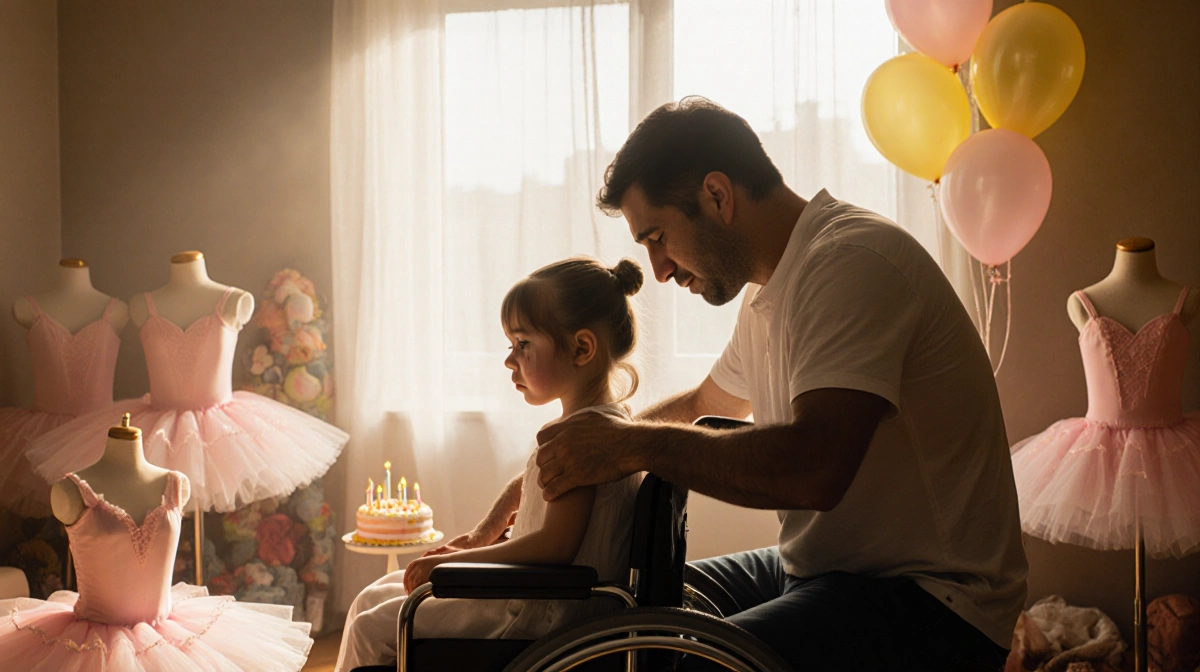
Sophia continued meeting milestones until around age six. Then the regression accelerated. She lost speech, mobility, and the ability to perform basic tasks.
“Life has been robbed and stolen from Sophia. My little girl, who was all singing, all dancing, ballet, swimming, skiing … is having her life slowly and surely drained from her every day,” Darren said.
Today Sophia requires full-time care. Her father recalls clinging to her last words as her voice faded, a memory that grows more distant each year.
Stark Gap in Support
Darren says the family’s trauma is amplified by the near-absence of resources for Sanfilippo syndrome.
“There is no support, there is no funding, there is no research, there are no trials,” he said.
He contrasts the scant attention with the vast research networks and funding streams available for adult dementia or childhood cancers.
Funding Campaign
To ease Sophia’s daily struggles and spotlight the disorder, Darren launched a GoFundMe campaign. The page details more than 30 symptoms Sophia manages, including:
- Sleep apnea and seizures
- Double scoliosis
- Severe bowel issues
“Yet we live the fullest life possible, smile, laugh and live for the day, whilst holding onto hope for a future,” he wrote.
As of Friday, Jan. 16, donations reached $280 toward a $3,350 goal.
Call for Recognition
Darren urges the public and policymakers to place childhood dementia on par with other serious conditions.
“Therefore, we fight for our daughter and others like her to be recognized, supported and cared for in the same way dementia is in adults or other terrible childhood conditions like cancer,” he wrote.
He argues that broader awareness would trigger funding, research, and clinical trials, offering families “hope” amid a race against time.
“Families like mine are losing the battles against time,” he warned.
The Sanfilippo Children’s Foundation estimates roughly 1 in 70,000 children worldwide receive a Sanfilippo diagnosis each year, underscoring both the rarity and the global impact.
Key Takeaways
- Childhood dementia exists in rare genetic forms such as Sanfilippo syndrome
- Families often receive little medical guidance at diagnosis
- Research funding lags far behind that of adult dementia or childhood cancers
- Grass-roots campaigns aim to fill the awareness and financial gaps