> At a Glance
> – Chilean team nets up to 10 liters of water per square meter daily from fog
> – Low-tech mesh panels could supply 10,000 residents near the Atacama Desert
> – Why it matters: Climate-driven shortages push cities to harvest water from the air
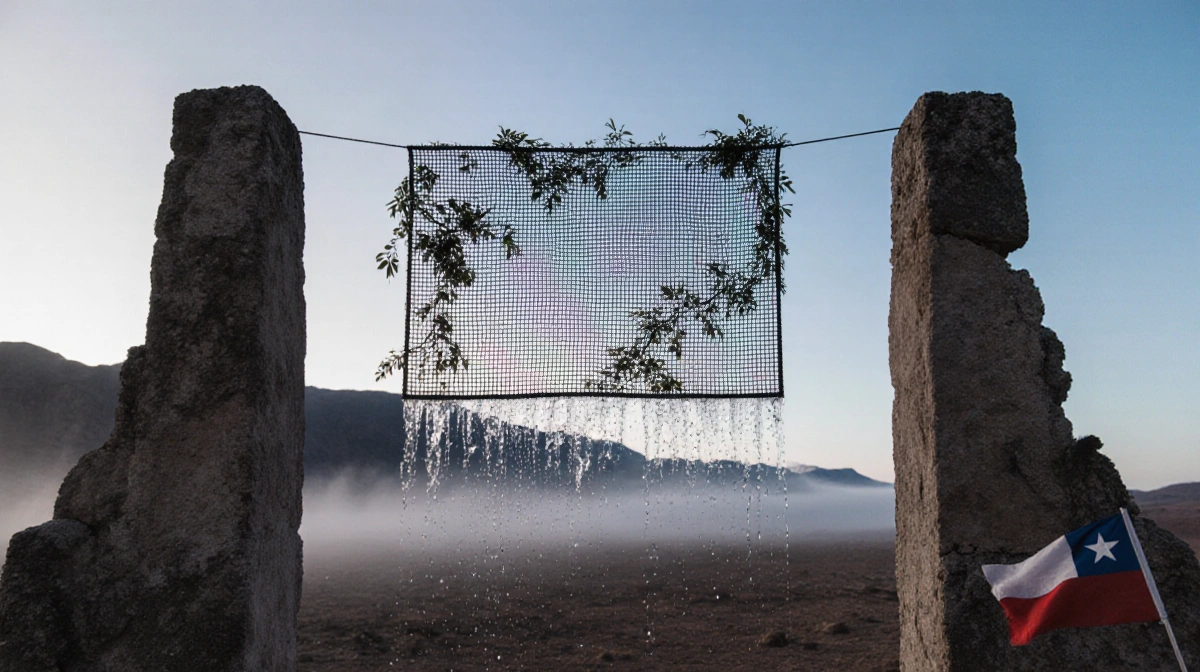
A year-long test on the edge of the Atacama shows fog catching is no longer just a rural hack. The panels could soon irrigate parks, farms, and taps in Alto Hospicio, one of the planet’s driest fast-growing cities.
How the Mesh Works
Panels of simple nylon or polypropylene mesh hang between posts on ridgelines. Fog drifts through, droplets stick, merge, and roll into gutters that feed storage tanks-no pumps, no power, no chemicals.
- 100% passive system
- Peak yield: 10 L/m² per day
- Lowest cost per liter of any local source
Scaling to City Size
The team mapped where fog is thickest and wind angles are ideal. They found 17,000 m² of panels-about 4.2 acres-could cover the city’s entire weekly demand.
| Metric | Requirement |
|---|---|
| Area needed | 17,000 m² |
| Residents served | ~10,000 |
| Peak daily yield | 10 L/m² |
Not every slope qualified; collection soared above 700 m elevation where fog is reliable.
From Rural Trick to Urban Tap
Dr. Virginia Carter Gamberini, Universidad Mayor and co-author, says the trial flips the narrative:
> “This represents a notable shift in the perception of fog water use-from a rural, rather small-scale solution to a practical water resource for cities.”
She wants the approach written into national water plans before climate variability deepens.
Limits and Next Steps
- Needs consistent fog corridors
- Requires elevated terrain
- Seasonal swings in yield
Still, with 2 billion people lacking safe drinking water, the panels offer a buffer against failing wells and shrinking reservoirs.
Key Takeaways
- Fog harvesters hit 10 L/m² daily in Alto Hospicio
- 4.2 acres of mesh could meet weekly municipal demand
- No electricity or advanced parts required
- Cities can fold fog into climate-resilient water portfolios
If policy makers act, the next glass of water in the Atacama might come straight from the sky.