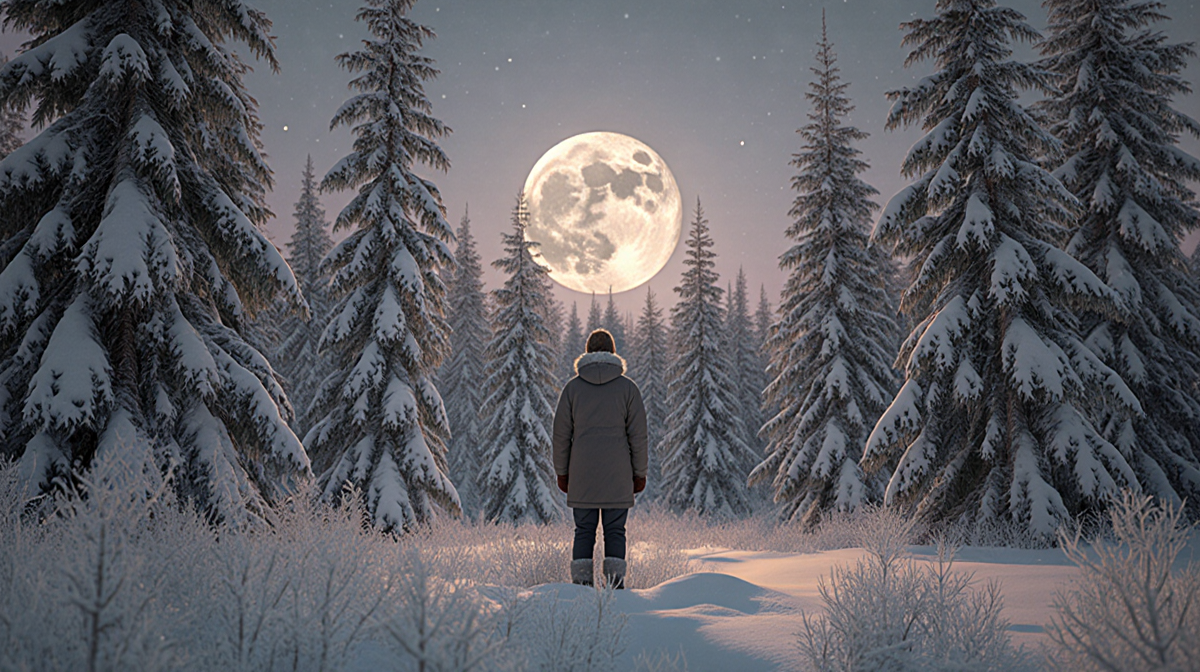
The second full moon of 2026, known as the Full Snow Moon, is set to light up the sky on the evening of February 1. With much of the United States covered in snow from Winter Storm Fern, the moon’s glow will be especially striking. The event offers a rare chance to witness one of the brightest nights of the year.
At a Glance
- Date: February 1, 2026
- Peak illumination: 5:09 p.m. ET
- Why it matters: Snow-covered landscapes will reflect the moonlight, creating a dazzling display.
Why it matters
The combination of a full moon and widespread snow will produce a night sky brighter than any of the supermoons later in 2026.
When Does the Full Snow Moon Occur?
The moon will reach its peak illumination at 5:09 p.m. ET on Sunday, just before sunset. At that moment the moon is below the horizon for most of the Northern Hemisphere, so the public will not see it at its absolute peak. It rises over the eastern horizon shortly after 6:00 p.m. local time and streaks across the sky before setting on the western horizon at sunrise.
| Time (Local) | Event |
|---|---|
| 5:09 p.m. ET | Peak illumination |
| 6:00 p.m. | Moon rises over east |
| 6:30 p.m. | Moon visible across sky |
| Sunrise | Moon sets on west |
The full moon will be visible for several hours, offering ample opportunity for observation.
What Makes the Snow Moon Bright?
Snow is an excellent reflector of light, boasting an albedo of up to 90 %. This high reflectivity means that almost all sunlight-and moonlight, which is simply reflected sunlight-bounces back toward the sky. NASA’s Vi Nguyen explained:
> “That should provide quite a show all on its own,” said NASA/Vi Nguyen.
Because the moonlight is already bright, the snow amplifies its glow, creating a scene that many describe as the brightest night of the year.
Key points about albedo and reflection
- Snow reflects 90 % of solar radiation.
- Moonlight is sunlight reflected off the moon’s surface.
- The combination results in a luminous winter sky.
Why It’s Called the Snow Moon
The name derives from historical snowfall patterns. According to The Old Farmer’s Almanac, February was the snowiest month in the days before the Revolutionary War, giving rise to the name. The Weather Channel notes that the East Coast still receives most of its snowfall in February, reinforcing the connection.
- Historical context: February was once the snowiest month.
- Modern data: East Coast sees most February snowfall.
- Naming origin: The name reflects historical snowfall trends.
What to Expect Tonight
- Visibility: The moon will be visible for several hours after sunset.
- Brightness: The reflected light off the snow will create a spectacular glow.
- No special equipment needed: The full moon is the brightest object in the night sky.
If you’re in the Midwest or Northeast, you may even see the moon without a flashlight, simply by stepping outside after dark.
How to Observe the Moon
- Check the weather: Clear skies are essential for the best view.
- Find a location with minimal light pollution: Rural areas or parks provide optimal conditions.
- Use a camera with a wide aperture: Capture the full extent of the moon’s glow.
- Bring a blanket or chair: Comfort is key for a long night of stargazing.
### Quick Observation Tips
- Look for the moon rising just after 6 p.m.
- Notice how the snow reflects the light, creating a halo effect.
- Compare the brightness to other full moons you’ve seen.
Key Takeaways
- The Full Snow Moon will illuminate the sky on February 1, 2026.
- Snow’s high albedo amplifies the moonlight, creating a bright winter night.
- The event is historically named after February’s snowy past.
- No special equipment is needed; clear skies and a dark location are sufficient.
Enjoy the celestial display and share your photos with friends and family!