At a Glance
- Griffith Observatory debuts its first major exhibit in 19 years on Jan. 27 at noon
- The 800-pound bronze Celestial Globe features 43 classical constellations
- Admission is free and the globe rotates, echoing ancient astronomy traditions
- Why it matters: Visitors get a rare new permanent attraction at one of LA’s most beloved landmarks
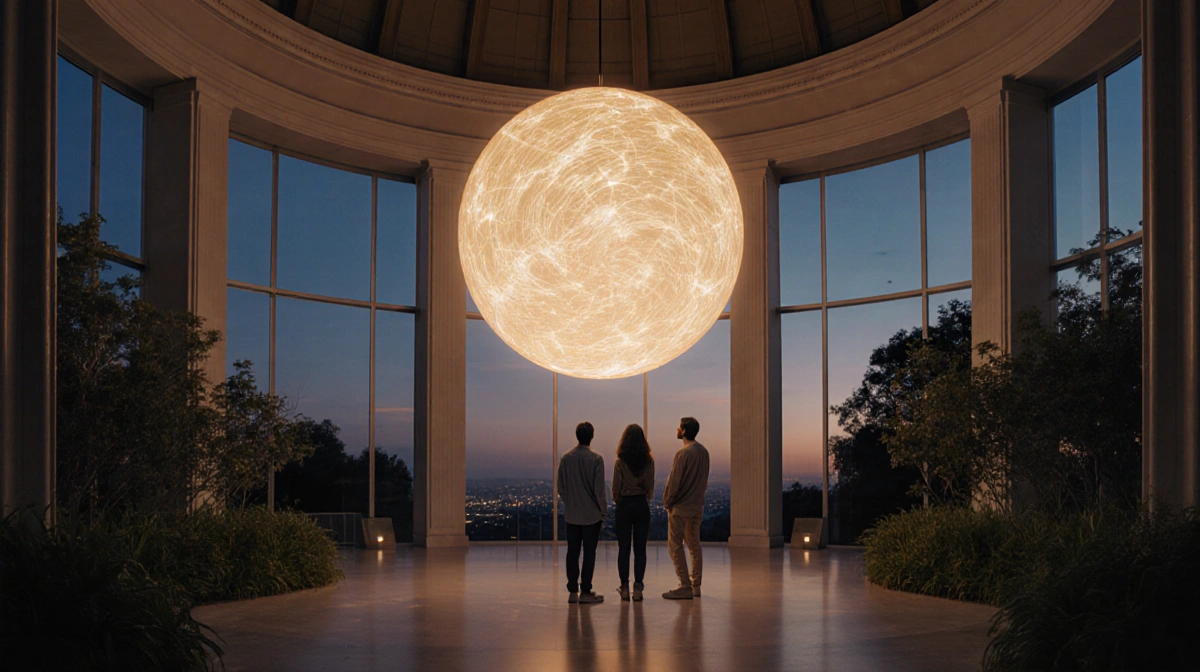
Griffith Observatory will add a dramatic new piece to its hilltop perch on January 27 when the Celestial Globe-an 800-pound bronze sphere-goes on permanent display in Gravity’s Stairway. The installation marks the observatory’s first major exhibit in more than 19 years, a span that covers roughly one-fifth of the institution’s 90-year history.
A Modern Link to Ancient Skies
Los Angeles-based designer Cindy Ingraham Keefer created the globe to give visitors “a striking encounter with the ancient origins of astronomy and the enduring human effort to understand the sky.” Cast using a blend of centuries-old wax-casting and modern 3-D printing, the sculpture depicts 43 classical constellations in high-relief bronze.
How to See It
- Opening day: Jan. 27, noon
- Location: Gravity’s Stairway, Griffith Observatory
- Cost: Free
- Hours: Tuesday-Sunday (closed Mondays)
The globe’s motorized rotation invites viewers to experience “how the ancients imagined the heavens turned in Atlas’s grip,” evoking the famed second-century Roman sculpture Farnese Atlas that bears the celestial sphere on his shoulders.
Support Behind the Sphere
The Griffith Observatory Foundation spearheaded the project. Financial backing came from The Eisenberg Foundation and The Ahmanson Foundation.
Key Takeaways
- A 19-year exhibit drought ends with a monumental artwork that bridges ancient and modern astronomy.
- Free admission keeps the observatory accessible while offering Angelenos a fresh cosmic attraction.
- The rotating bronze globe cements Griffith Observatory’s role as a place where science, art and mythology meet.