At a Glance
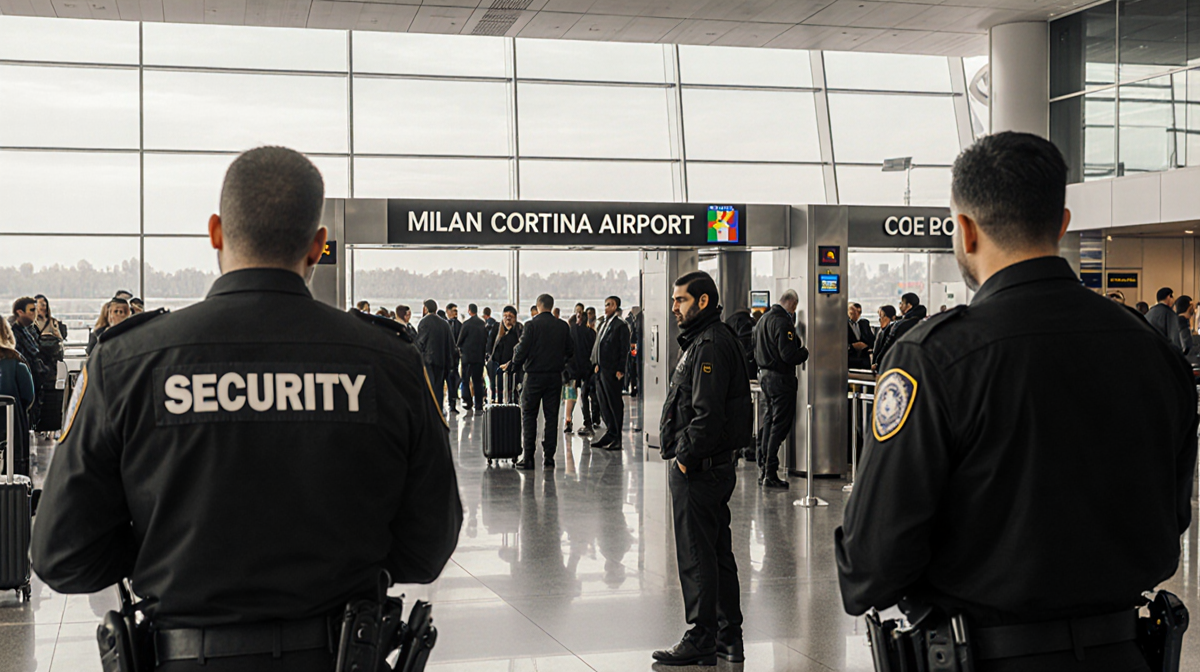
- ICE agents will support diplomatic security for the U.S. delegation at the Milan Cortina Winter Games.
- The agency will not conduct immigration enforcement during the event.
- Milan Mayor Giuseppe Sala publicly stated that ICE is not welcome in the city.
- Why it matters: The move highlights tensions between U.S. security agencies and local governments amid global scrutiny of ICE actions.
The United States Immigration and Customs Enforcement (ICE) agency is slated to provide a security role for U.S. officials attending the Milan Cortina Winter Games, a decision confirmed by two U.S. Embassy sources in Rome. ICE agents will assist diplomatic security details but will not carry out any immigration enforcement activities during the Feb. 6-22 Games.
ICE’s Role in Milan Winter Games
ICE agents will:
- Support diplomatic security details for the U.S. delegation.
- Operate under a purely security capacity, with no enforcement duties.
During previous Olympics, ICE’s investigative arm, Homeland Security Investigations, has participated in diplomatic security. The U.S. Embassy sources who confirmed the role could not be named due to authorization limits.
Local Reactions
Milan Mayor Giuseppe Sala expressed strong opposition to ICE’s presence:
> “This is a militia that kills, a militia that enters into the homes of people, signing their own permission slips. It is clear they are not welcome in Milan, without a doubt,” Sala told RTL Radio 102 before ICE’s deployment was confirmed.
Italian Interior Minister Matteo Piantedosi issued a statement on Saturday saying he had not received confirmation of ICE’s deployment but added:
> “I don’t see what the problem would be,” the news agency ANSA reported.
The Interior Ministry on Tuesday reiterated that the U.S. has not confirmed the makeup of its security detail and stressed that there are currently no indications that ICE will act as an escort for the American delegation.
International Context
The announcement came after RAI state TV aired footage on Sunday of ICE agents threatening to break the glass on a vehicle belonging to a RAI crew in Minneapolis. The clip drew criticism amid recent protests in Minneapolis, where ICE operations had sparked demonstrations and resulted in the shooting and killing of two protesters in the past three weeks.
U.S. Delegation and Security Arrangements
The U.S. delegation, headed by Vice President JD Vance, will attend the opening ceremony on Feb. 6. The delegation also includes Second Lady Usha Vance and Secretary of State Marco Rubio, as announced by the White House earlier this month.
Timeline of Key Events
| Date | Event |
|---|---|
| Feb. 6-22 | Milan Cortina Winter Games |
| Feb. 6 | Opening ceremony attended by U.S. delegation |
| Saturday (date unspecified) | Interior Minister Piantedosi comments on ICE deployment |
| Sunday (date unspecified) | RAI footage of ICE agents in Minneapolis aired |
| Tuesday (date unspecified) | U.S. Embassy sources confirm ICE security role |
Background on ICE and Olympic Security
ICE is a federal law-enforcement agency that handles immigration enforcement, customs, and border security. The agency’s investigative component, Homeland Security Investigations, has historically assisted in protecting U.S. diplomats during international events.
The decision to involve ICE in Milan follows a broader pattern of U.S. federal agencies providing security support for American officials abroad. However, the agency’s controversial domestic operations have led to heightened scrutiny and criticism from local authorities and civil-rights groups.
Key Takeaways
- ICE agents will provide security support, not enforcement, during the Milan Winter Games.
- Milan’s mayor and interior minister have expressed skepticism and concern over ICE’s presence.
- The U.S. delegation, led by Vice President Vance, will attend the opening ceremony on Feb. 6.
- The announcement follows recent controversies involving ICE operations in Minneapolis.
The involvement of ICE in the Milan Winter Games underscores the complex relationship between U.S. federal agencies and host cities during high-profile international events.
Jonathan P. Miller contributed to the story.