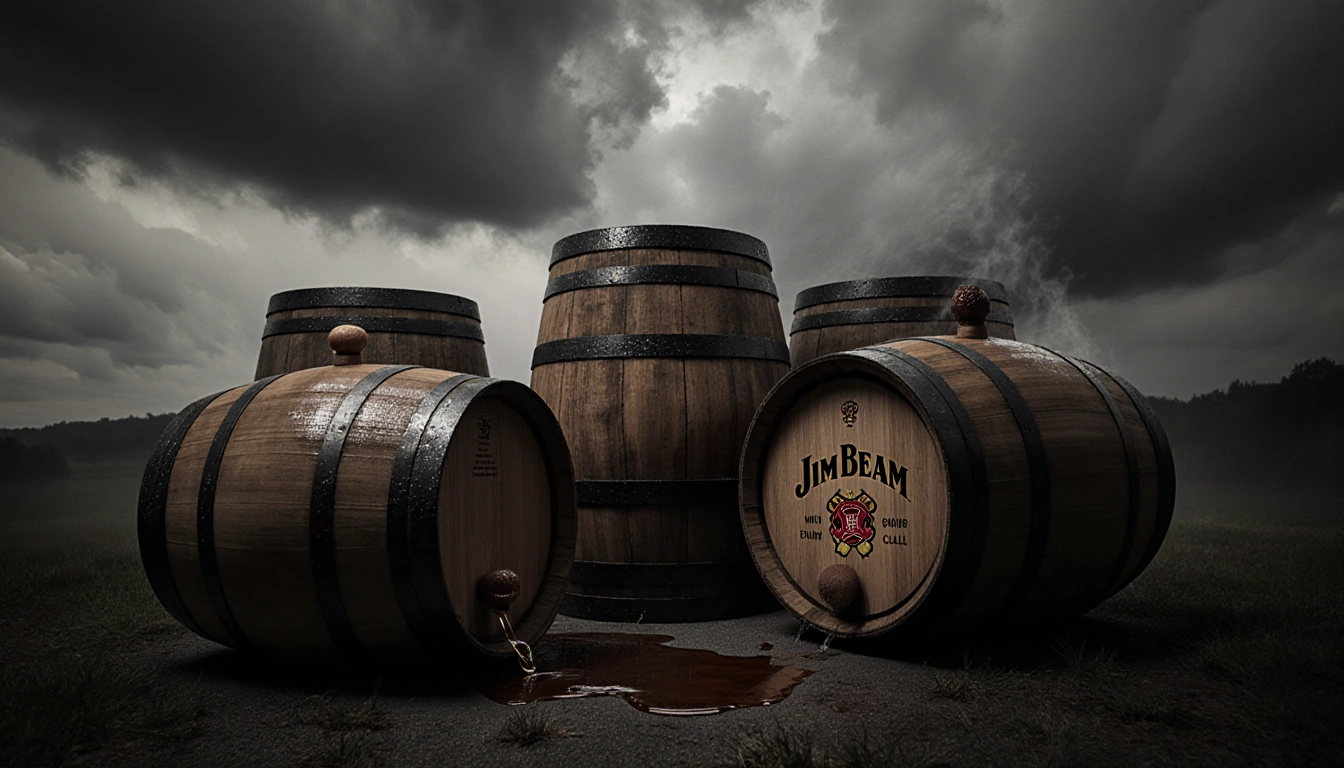
Jim Beam has announced a pause in bourbon production at its Clermont distillery in Kentucky for at least a year, a decision that reflects the company’s response to external pressures and internal strategic planning.
The pause will begin in 2026, giving the distillery time to invest in improvements that could enhance efficiency and product quality while the company reassesses its production schedule.
Because bourbon must mature in barrels for a minimum of four years before it can be bottled, any interruption in the production line has long-term implications for inventory and sales.
Despite the halt in distilling, the Clermont site will keep its bottling and warehouse facilities operational, ensuring that finished products can still be processed and stored.
Additionally, the James B. Beam Distilling Co. visitors center and restaurant will remain open, allowing tourists and locals to experience the brand’s heritage and culinary offerings.
The larger distillery located in Boston, Kentucky, will continue its operations, providing a buffer for the company’s overall production capacity and helping to meet ongoing consumer demand.
Jim Beam’s decision comes at a time when the whiskey industry is grappling with tariffs imposed by the Trump administration, as well as a broader decline in demand for products that require years of aging.
Tariff disputes have unfolded in both Europe and Canada, the latter of which experienced an 85% drop in U.S. spirits exports during the April-through-June quarter of 2025.
Overall, American spirits exports fell 9% in the second quarter of 2025 compared with the same period a year earlier, according to the Distilled Spirits Council of the United States.
Meanwhile, bourbon production has grown significantly in recent years; as of January, Kentucky warehouses held about 16 million barrels of bourbon, more than triple the amount held 15 years ago, according to the Kentucky Distillers’ Association.
Despite this growth, sales figures and polling data indicate that Americans are drinking less bourbon than they have in decades, suggesting a shift in consumer preferences.
Industry estimates show that approximately 95% of all bourbon produced in the United States originates from Kentucky, a state that the trade group credits with creating more than 23,000 jobs and contributing $2.2 billion to the state’s economy.
The company’s statement added, “We are always assessing production levels to best meet consumer demand,” the company said, and noted that it is engaging with the distillery’s union to determine whether there will be layoffs or other reductions.
These discussions reflect the broader labor concerns that have surfaced across the bourbon sector as companies adjust to market realities and regulatory changes.
President Donald Trump’s declaration that he would impose a 200% tariff on all European alcoholic beverages has heightened anxiety among South Florida liquor and wine sellers, illustrating the far-reaching impact of trade policy on the spirits industry.
While the Clermont pause may seem like a temporary setback, it underscores the complex balance between maintaining a heritage product and navigating a fluctuating global market.
Visitors to the Clermont distillery will still be able to tour the site and dine at the restaurant, offering a glimpse into the brand’s storied past while the distillery works on future upgrades.
Looking ahead, the bourbon industry must reconcile the long lead times required for aging with the need to respond swiftly to changing consumer tastes and trade environments.
Key Takeaways
- Jim Beam will halt bourbon production at Clermont for at least a year to invest in improvements.
- The company will keep bottling, warehousing, the visitors center, and restaurant operational.
- U.S. spirits exports fell 9% in Q2 2025, with Canada experiencing an 85% drop.
In summary, Jim Beam’s strategic pause at Clermont reflects a cautious approach to production amid tariff pressures and shifting demand, while the company maintains other operational facets to support its brand and workforce.