
Judge Paul A. Engelmayer slammed Ghislaine Maxwell Monday for inserting confidential victim names into court filings. The judge warned that any such documents would be sealed and reviewed for redactions. Maxwell filed her habeas petition on her own, without a lawyer. The court will keep all exhibits under seal until they are appropriately redacted.
Engelmayer ordered that any future papers Maxwell files must also be submitted under seal. He reminded Maxwell, in strong terms, that she is prohibited from including victim information. This applies to any victim not publicly identified by name during her trial. The judge’s ruling aims to protect survivors’ identities from public exposure.
Maxwell filed the petition last Wednesday, two days before the Justice Department began releasing investigative records. The release aligns with the recently enacted Epstein Files Transparency Act. Maxwell claims that withheld information led to her wrongful conviction. She alleges false testimony was presented to the jury, causing a miscarriage of justice.
Engelmayer gave Maxwell until Feb. 17, 2026, to notify him about including Epstein files. She must file an amended version by March 31, 2026. These deadlines are part of the court’s effort to manage sensitive material. Failure to comply could result in further legal consequences for Maxwell.
The Justice Department plans to release records on a rolling basis by the end of the year. The delay is attributed to the time-consuming process of obscuring victims’ names. So far, the department has not provided notice when new records arrive. This lack of transparency has drawn criticism from accusers and members of Congress.
Accusers and Congress members who pushed for the transparency act are frustrated by the incremental release. Released records, such as photographs and transcripts, were heavily blacked out. Many lacked necessary context, diminishing their usefulness to the public. The Senate’s top Democrat urged legal action over the heavily redacted release.
Minority Leader Chuck Schumer introduced a resolution to direct the Senate to file or join lawsuits. The goal is to force the Justice Department to comply with the Epstein Files Transparency Act. The act required disclosure of records by last Friday. Schumer’s resolution is largely symbolic due to the Senate’s recess until Jan. 5.
Schumer said, “Instead of transparency, the Trump administration released a tiny fraction of the files and blacked out massive portions.” He added, “This is a blatant cover-up.” The statement reflects the frustration of those who expected full disclosure. Schumer’s comments highlight the ongoing debate over the Department’s release pace.
The Senate is off until Jan. 5, more than two weeks after the deadline. Even then, the resolution will likely face an uphill battle for passage. Nonetheless, it allows Democrats to continue a pressure campaign for disclosure. Republican support for the resolution remains minimal, keeping the effort symbolic.
The tens of thousands of pages released so far contain few new revelations. Eagerly awaited records, such as FBI victim interviews, are missing. Internal memos shedding light on charging decisions have not been released. No mentions of powerful figures like Britain’s former Prince Andrew appear in the files.
Deputy Attorney General Todd Blanche defended the Department’s decision to release just a fraction of the files. He said the release was necessary to protect survivors of sexual abuse. Blanche pledged that the Trump administration would meet its obligation required by law. He emphasized that caution is needed when making thousands of documents public.
Blanche also defended the decision to remove several files from the public webpage. The removal included a photograph showing President Trump, less than a day after it was posted. The files were removed because they might show victims of Epstein. Blanche said the documents would be reposted once redactions were made to protect survivors.
The Trump photograph was returned to the public webpage without alterations Sunday. The Department determined that concerns about victims in the picture were unfounded. Blanche told NBC’s “Meet the Press” that no redactions were needed. He stated, “We are not redacting information around President Trump, around any other individual involved with Mr. Epstein, and that narrative, which is not based on fact at all, is completely false,” Blanche told NBC’s “Meet the Press.”
Blanche described the narrative that the Department is hiding information about Trump as completely false. He said, “The Epstein files existed for years and years and years and you did not hear a peep out of a single Democrat for the past four years.” Blanche added, “And yet, lo and behold, all of a sudden, out of the blue, Senator Schumer suddenly cares about the Epstein files.” He called this the hoax, implying political motivation behind the scrutiny.
Associated Press reporter Kevin Freking in Washington contributed to this report. Freking provided additional context on the Department’s release schedule. He highlighted the legal precedent that allows for extended deadlines to protect privacy. Freking’s reporting underscores the complexity of balancing transparency and victim protection.
Key Takeaways
- Maxwell’s petition includes confidential victim names, prompting sealed documents and strict deadlines.
- The Justice Department’s release of Epstein files is slow, heavily redacted, and has drawn congressional criticism.
- Senator Schumer’s resolution seeks to compel full disclosure, though it faces procedural hurdles.
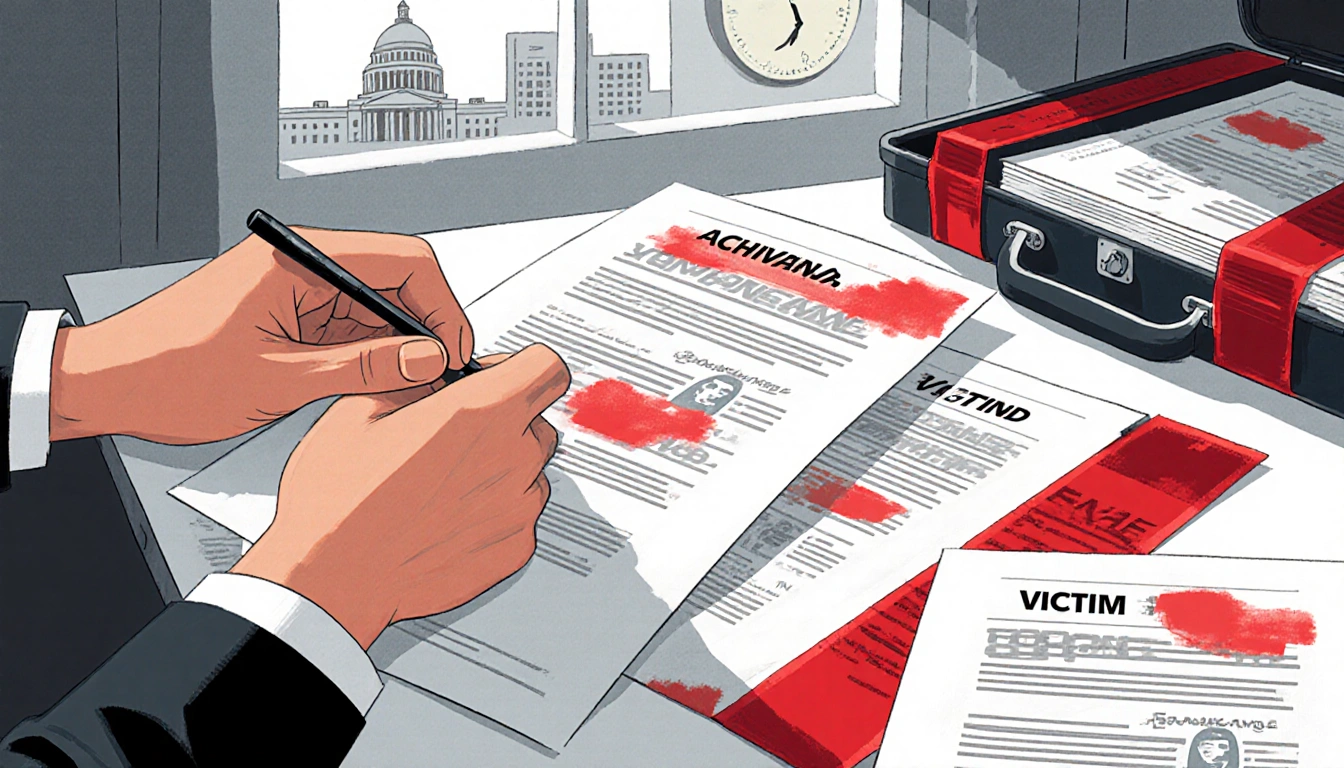
The clash over the Epstein files illustrates the tension between legal transparency and victim privacy. As the Department continues to release documents, courts and lawmakers will monitor compliance. The outcome will shape how future investigations balance public interest with protecting survivors. For now, Maxwell’s case and the Department’s release remain under close scrutiny.