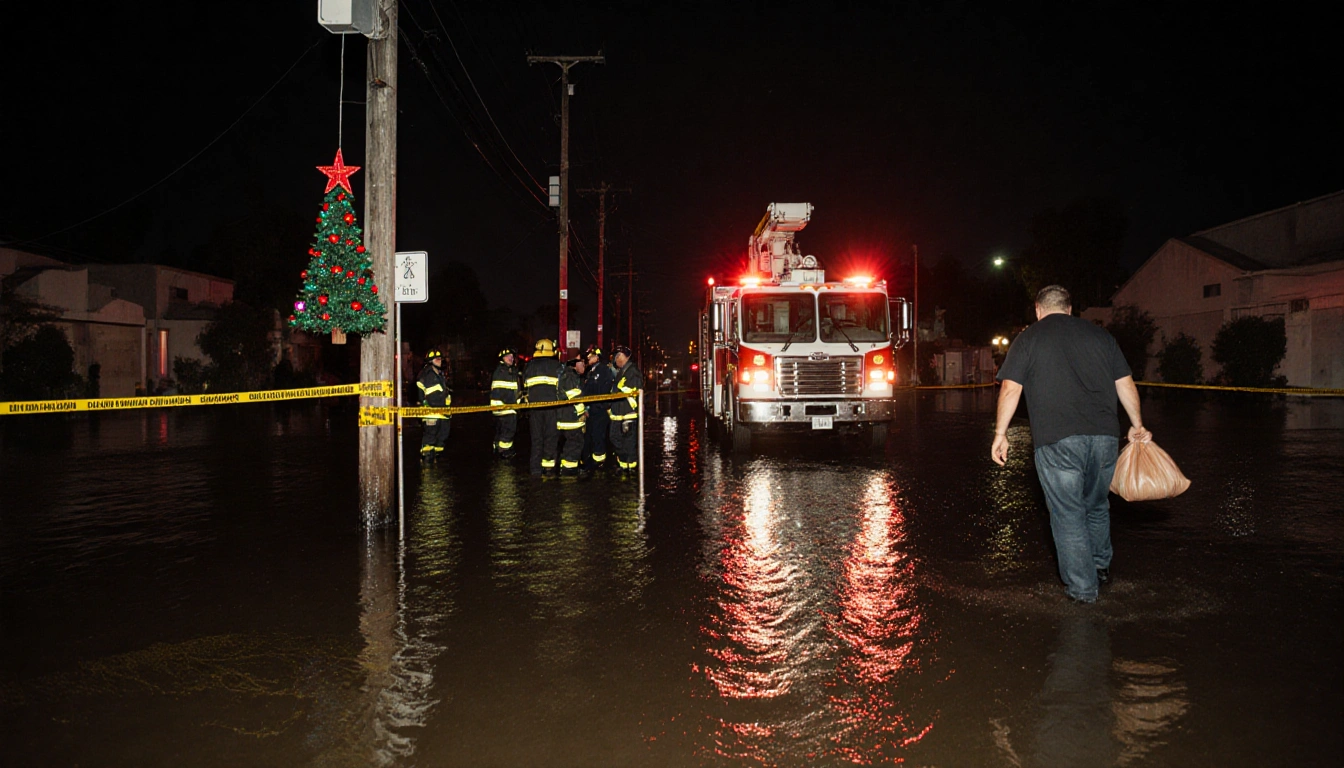
Holiday storms have left the city and county of Los Angeles in a state of local emergency, prompting a massive response from city officials. More than 350 car crashes, over 600 tree emergencies, and thousands of power outages have been reported, according to the mayor’s office.
Emergency Response and Infrastructure
City crews received requests for more than 600 tree emergencies citywide, including downed trees and fallen branches, as stated by the mayor’s office. The LA Department of Water and Power worked through Christmas Day to restore electricity to thousands of homes and businesses, with about 4,000 power outages still reported at 6 p.m. Thursday. Meanwhile, the LA Department of Transportation dispatched crews to fix traffic signals, and as of Thursday evening, two traffic signals were still out.
Evacuations and Flood Watch
An evacuation order was issued for the Riverwood community of Sunland-Tujunga as water was released from the Tujunga Dam. This intentional release by LA County Public Works aimed to prevent flooding in the surrounding area as the reservoir could become swelled by rain. An evacuation warning was also extended in the Pacific Palisades and Malibu area, covering communities affected by the Palisades, Sunset, and Hurst wildfires. A flood watch remains in effect for the city of Los Angeles, indicating that flooding is still possible.
Free Sandbags and Emergency Supplies
The city is providing free sandbags to help residents protect their properties:
- Los Angeles County Public Works Fleet Maintenance Yard, 224 Mountain View St., Altadena, CA 91001
- Malibu Library parking lot, 23519 West Civic Center Way, Malibu, CA 90265
- Pasadena Fire Station 37, 3430 E. Foothill Blvd. (8 a.m.-5 p.m.)
- Pasadena Fire Station 38, 1150 Linda Vista Ave. (8 a.m.-5 p.m.)
Fire stations across Los Angeles County also offer free sandbags; addresses and phone numbers are available online.
Emergency Kit Checklist
Officials urge families to prepare their emergency kits before a disaster occurs. A recommended list includes:
- Water: one gallon per person per day for at least three days
- Food: at least a three-day supply of non-perishable food that does not require heating or cooking
- Water and food for all pets
- Battery-powered or hand-crank radio and a NOAA Weather Radio with tone alert
- Flashlight
- First-aid kit
- Essential medicines
- Extra clothing and shoes, including safety-soled or construction shoes
- Extra batteries
- Whistle (to signal for help)
- Dust mask (to filter contaminated air)
- Plastic sheeting and duct tape (for shelter in place)
- Moist towelettes, garbage bags, and plastic ties (for personal sanitation)
- Tools to turn off water and gas lines (only if leaks or damage are suspected)
- Manual can opener (for food)
- Local maps
- Cell phone with chargers and a backup battery
To keep costs low, people can look for deals at garage sales or thrift stores for camping gear, tools, and cookware, and add older clothing to disaster kits.
Winter Shelters for the Homeless
The city and county of Los Angeles are offering overnight shelters that provide three meals a day and showers. Those experiencing homelessness can access the shelters 24 hours a day by calling 211 or visiting the official winter shelters list online. Residents staying at the winter shelters are expected to follow COVID-19 and monkeypox protocols.

Key Takeaways
- Los Angeles remains in a local emergency with 350+ crashes, 600 tree emergencies, and 4,000 power outages.
- Evacuation orders cover Riverwood, Pacific Palisades, and Malibu, and a flood watch is active.
- Free sandbags, emergency kit guidelines, and winter shelters are available to residents.
The city’s comprehensive response underscores the importance of preparedness and community cooperation during severe weather events.