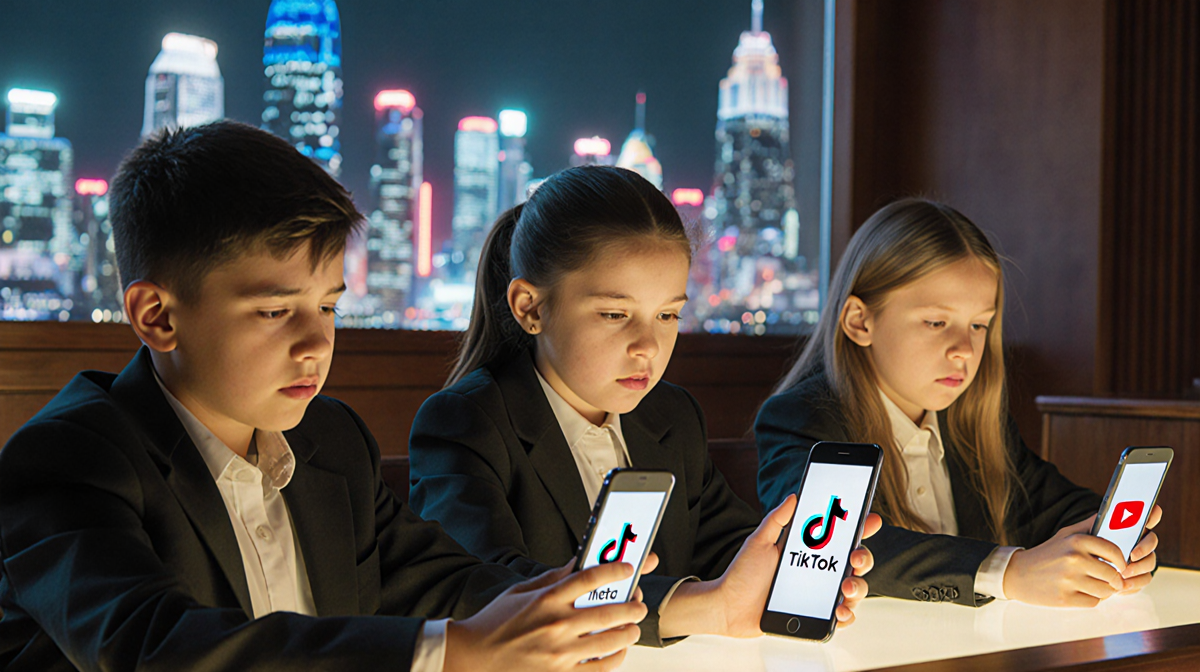
Three of the world’s biggest tech companies face a landmark trial in Los Angeles over claims that their platforms deliberately addict and harm children. Jury selection begins this week in the Los Angeles County Superior Court, marking the first time Meta, TikTok, and YouTube will argue before a jury. The outcome could reshape how these companies handle child users and influence future regulation.
At a Glance
- Jury selection starts this week, with 75 potential jurors questioned daily.
- The trial will last 6 to 8 weeks and may set precedent for similar lawsuits.
- 40 state attorneys general have already sued Meta, and TikTok faces comparable suits.
Why it matters: The case could determine whether tech giants are liable for the mental health impacts of their design choices on children.
Trial Overview
The lawsuit, filed this year, targets Instagram, TikTok, and YouTube for allegedly embedding addictive features that exploit children’s brains. The court will hear arguments from the companies and three plaintiffs, including a 19-year-old identified only as “KGM.”
The jury selection process is expected to take several days, with at least 75 potential jurors questioned each day through Thursday. A fourth defendant, Snap Inc., settled the case last week for an undisclosed sum.
Key Plaintiffs and Claims
KGM claims that early and continuous use of the platforms led to addiction, depression, and suicidal thoughts. The lawsuit alleges that the companies deliberately designed features to keep children engaged for advertising revenue.
> The lawsuit says, “Borrowing heavily from the behavioral and neurobiological techniques used by slot machines and exploited by the cigarette industry, Defendants deliberately embedded in their products an array of design features aimed at maximizing youth engagement to drive advertising revenue.”
> The lawsuit adds, “Plaintiffs are not merely the collateral damage of Defendants’ products. They are the direct victims of the intentional product design choices made by each Defendant.”
Clay Calvert, a senior fellow at the American Enterprise Institute, notes that KGM and two other plaintiffs were chosen for bellwether trials to gauge damages and legal arguments.
Companies’ Defense
Meta, YouTube, and TikTok argue that they have added safeguards over the years and are not liable for third-party content. Meta’s blog post counters that blaming mental-health struggles solely on social media oversimplifies a complex issue.
> Meta said in a recent blog post, “Recently, a number of lawsuits have attempted to place the blame for teen mental health struggles squarely on social media companies. But this oversimplifies a serious issue.”
The companies also emphasize that they are not responsible for content posted by users.
Broader Legal Context
This trial is part of a wave of lawsuits seeking to hold social media companies accountable for children’s mental well-being. A federal bellwether trial in June in Oakland will involve school districts suing platforms over similar harms.
More than 40 state attorneys general have sued Meta, alleging deliberate design of addictive features. TikTok faces comparable lawsuits in over a dozen states.
| Date | Event |
|---|---|
| This week | Jury selection begins in Los Angeles |
| June | Federal bellwether trial in Oakland |
| Last week | Snap Inc. settles for undisclosed sum |
What Happens Next
Executives, including Meta CEO Mark Zuckerberg, are expected to testify. The trial will last 6 to 8 weeks, with potential damages awarded if the plaintiffs succeed.
If the lawsuit succeeds, it could sidestep the First Amendment shield and Section 230 protections that currently shield tech companies from liability for user-generated content.
The case’s outcome may influence regulatory approaches and corporate policies nationwide.
Key Takeaways
- The trial tests whether design choices that increase child engagement can be deemed harmful.
- A verdict could reshape liability protections for tech giants.
- The lawsuit is part of a broader movement of state and federal suits targeting social media’s impact on youth.
The trial’s conclusion will be closely watched by lawmakers, regulators, and the public as it may set a new standard for how digital platforms manage child users.