At a Glance
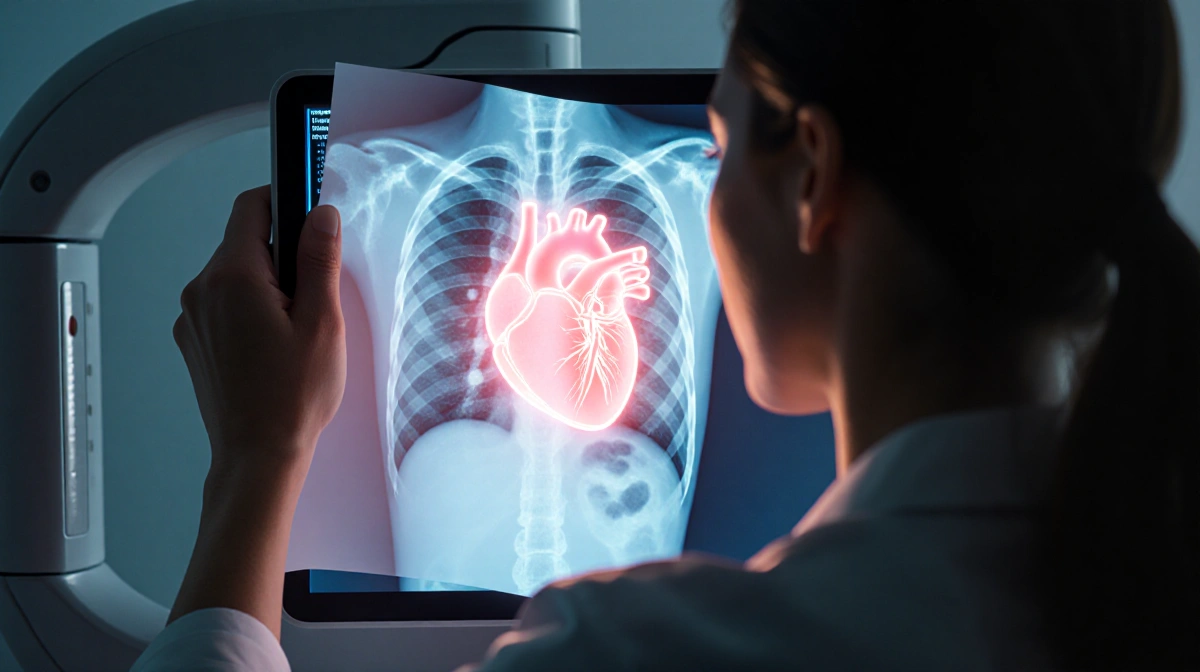
- A routine mammogram in Oct 2024 revealed breast arterial calcifications that led to a life-saving quintuple bypass surgery for a 67-year-old woman.
- The finding triggered a cardiac stress test that uncovered multivessel coronary artery disease.
- The diagnosis led to a quintuple bypass surgery, saving her life.
- Why it matters: Breast imaging may reveal hidden heart risk, prompting early intervention.
A routine breast cancer screening in New York City turned into a lifesaving heart diagnosis when a 67-year-old woman’s mammogram revealed calcium deposits in her breast arteries. The discovery prompted a cardiac stress test that uncovered multivessel coronary artery disease, leading to a quintuple bypass surgery last summer.
From Mammogram to Heart Surgery
Nancy Preston, a yoga enthusiast with controlled hypertension and type 2 diabetes, had no chest symptoms.
When Mount Sinai doctors noted breast arterial calcifications (BAC) on her October 2024 mammogram, they alerted her to the possibility of heart disease.
- Family history: mother had heart attack and double bypass; sister had heart attack and pacemaker.
- Controlled high blood pressure and Type 2 diabetes.
- No chest discomfort, only mild fatigue.
The Mount Sinai behavioral study was designed to see how women react to BAC notifications. Preston, a study participant, was told about her BAC and immediately scheduled for a cardiac stress test.
Nancy Preston said:
> “It was just something horrible waiting to happen,”
Dr. Mary Ann McLaughlin explained the test results.
Dr. Mary Ann McLaughlin said:
> “In [Preston’s] case, her heart function was very strong at rest, but during the stress portion, part of her heart muscle was not squeezing appropriately,”
Dr. Mary Ann McLaughlin said:
> “The only reason that Nancy went ahead with a stress test was because she was a participant in the study,”
Nancy Preston expressed relief at being informed.
Nancy Preston said:
> “Thank God this BAC was shared with me,”
The Mount Sinai BAC Study
The study began recruiting women 40 and older in 2021 and now includes 14,875 participants.
Margolies estimates 12.5% of women in the health system have BAC.
| Metric | Value |
|---|---|
| Total participants | 14,875 |
| Women with BAC | 1,888 |
| BAC prevalence | 12.5% |
| Study start year | 2021 |
| Results expected | Early 2027 |
The study’s second phase randomly splits the 1,888 women with BAC into two groups. One group receives immediate notification, education, and a cardiology referral; the other gets a standard mammography letter and is notified of BAC after six months.
- 10% of mammograms show BAC.
- BAC indicates potential heart disease.
- Women with BAC should be evaluated for heart risk.
Expert Views on BAC and Heart Health
Dr. Laurie Margolies, chief of breast imaging at Mount Sinai, says BAC findings are common and should be reported.
Dr. Laurie Margolies said:
> “In over 10% of mammograms, you will see calcified arteries, and people are always surprised,”
Dr. Naomi Ko of NYU Langone emphasizes the need for lifestyle counseling.
Dr. Naomi Ko said:
> “Give me an opportunity to counsel my patients toward better lifestyle choices, and I’ll take it,”
She noted the uncertainty around BAC’s significance.
Dr. Naomi Ko said:
> “It’s not a slam dunk,”
Dr. Naomi Ko said:
> “We know these calcifications are associated with cardiovascular challenges, but we’re not 100% certain about what that could mean for every single individual patient,”
Dr. Naomi Ko added:
> “This is one data point about your body,”
Dr. Melanie Chellman, a Cleveland Clinic breast radiologist, notes that mammograms already target women at high heart-disease risk.
Dr. Steven Isakoff, co-clinical director at Mass General Brigham, says provider education is a hurdle.
Dr. Steven Isakoff said:
> “Most of my colleagues, I would bet, are not aware of the association between breast arterial calcifications [and heart disease],”
Dr. Steven Isakoff added:
> “Without more specific guidance in the report about what steps to take, I would think it might not get acted upon,”
Dr. Steven Isakoff said:
> “More research is needed to define how much arterial calcification in the breast may be cause for concern, he said,”
He praised Mount Sinai’s effort to fill data gaps.
Key Takeaways
- BAC can reveal hidden heart disease even in asymptomatic women.
- Early notification and cardiac testing can lead to lifesaving surgery.
- Mount Sinai’s study aims to guide future reporting of BAC in mammograms.
Nancy Preston’s case underscores how a routine breast screening can uncover a silent heart threat, offering a chance for early intervention that could save lives.