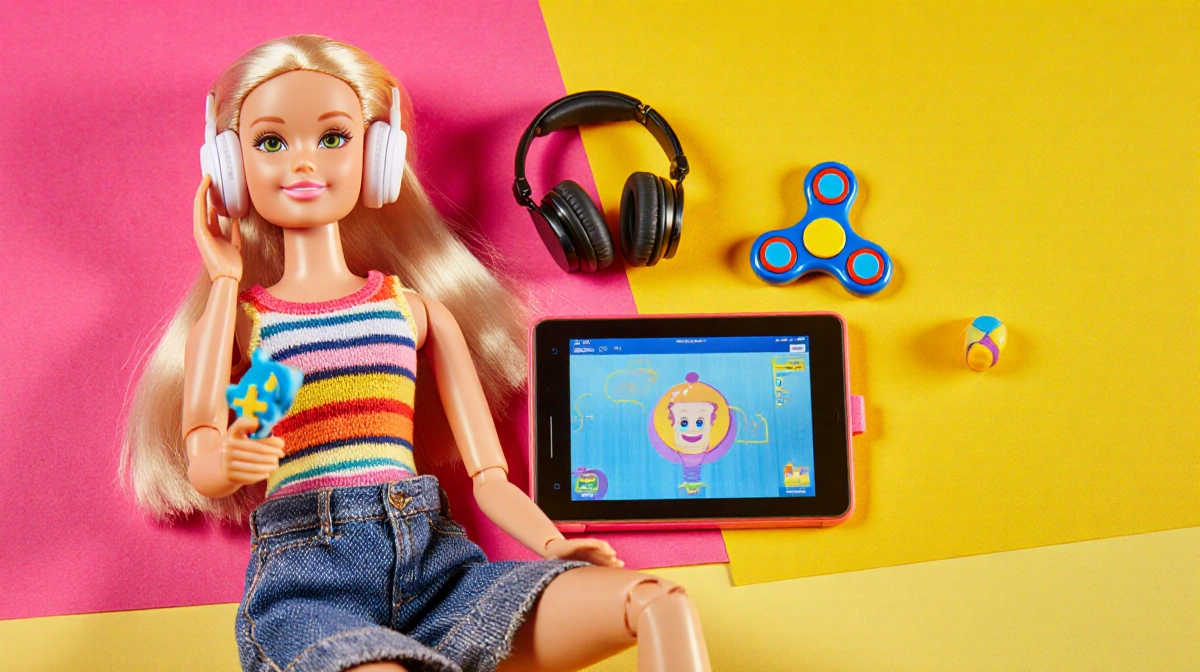
Mattel has launched its first-ever autistic Barbie doll, a milestone addition to the Fashionistas line that incorporates real-world assistive technology and sensory tools used by many on the spectrum.
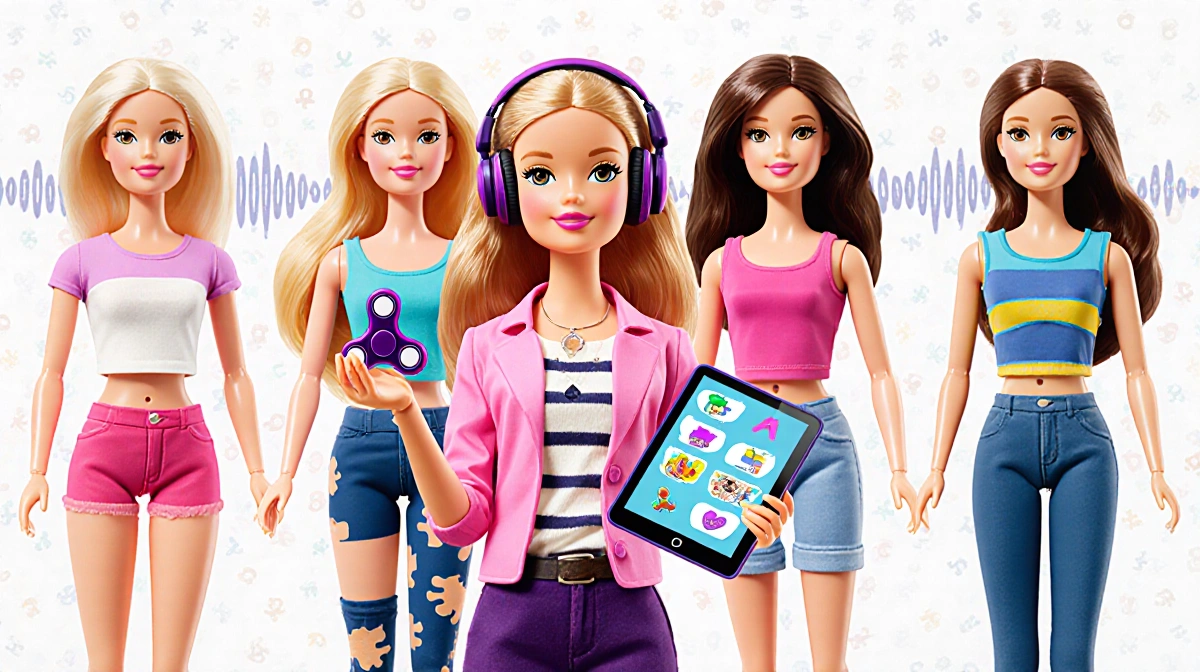
At a Glance
- The doll includes pink noise-canceling headphones, a spinning fidget spinner, and an AAC tablet with symbol-based apps.
- Design input came from an 18-month collaboration with the Autistic Self Advocacy Network (ASAN).
- The doll’s articulation, eye gaze, and clothing were engineered to reflect autistic traits and comfort needs.
- Why it matters: The toy aims to broaden representation in the doll aisle so autistic children can see themselves reflected in play.
The new Barbie carries three accessories engineered for sensory regulation and communication support. A pair of Barbie-pink noise-canceling headphones references a common tool autistic individuals use to reduce sensory overload. A pink finger-clip fidget spinner attached to the doll’s hand rotates, offering a tactile outlet that can ease stress and sharpen focus. Finally, the doll holds a pink tablet whose screen displays symbol-based Augmentative and Alternative Communication (AAC) applications-tools some autistic people rely on when speech is limited or unavailable.
Jamie Cygielman, global head of dolls for Mattel, framed the release as part of a broader inclusivity push.
“Barbie has always strived to reflect the world kids see and the possibilities they imagine, and we’re proud to introduce our first autistic Barbie as part of that ongoing work,” Cygielman said. “The doll, designed with guidance from the Autistic Self Advocacy Network, helps to expand what inclusion looks like in the toy aisle and beyond because every child deserves to see themselves in Barbie.”
ASAN, a nonprofit disability rights group run by and for autistic people, partnered with Mattel for more than 18 months to refine the doll’s design, ensuring authenticity rather than stereotype.
Engineering Authenticity
Mattel altered the doll’s anatomy and aesthetics to mirror autistic characteristics. Elbow and wrist joints now provide a wider range of motion, enabling the doll to replicate stimming movements such as hand flapping-gestures many autistic individuals use to process sensory input or express excitement. The figure’s eyes are sculpted with a subtle sideward gaze, reflecting how some autistic people avoid direct eye contact.
Clothing choices prioritize comfort over couture. The autistic Barbie wears a loose-fitting, purple pinstripe A-line dress with short sleeves and a flowing skirt that limits fabric-to-skin contact. Instead of standard Barbie high heels, she sports flat-soled purple shoes designed to promote stability and ease of movement.
Joining the Fashionistas Line
The autistic Barbie enters Mattel’s Fashionistas collection, a series that already includes dolls representing Down syndrome, type 1 diabetes, blindness, and other human variations. The line positions Barbie as a cultural mirror rather than a single beauty archetype.
To commemorate the launch, Mattel is donating 1,000 autistic Barbie dolls to pediatric hospitals nationwide, giving young patients a toy that may resemble their own experiences.
Price and Availability
The doll is on sale now at major retailers. Online listings show:
| Retailer | Price |
|---|---|
| Target | $11.00 |
| Walmart | $11.00 |
| Amazon | $11.87 |
Availability is immediate both in stores and through e-commerce channels.
Key Takeaways
- Mattel’s first autistic Barbie integrates real-world assistive tech-headphones, fidget spinner, AAC tablet-into play.
- 18 months of co-design with ASAN shaped the doll’s articulation, gaze, and wardrobe for authenticity.
- The release widens the Fashionistas line’s representation of disability and neurodivergence.
- A $11-$12 price point keeps the doll accessible while 1,000 units head to children’s hospitals.