At a Glance
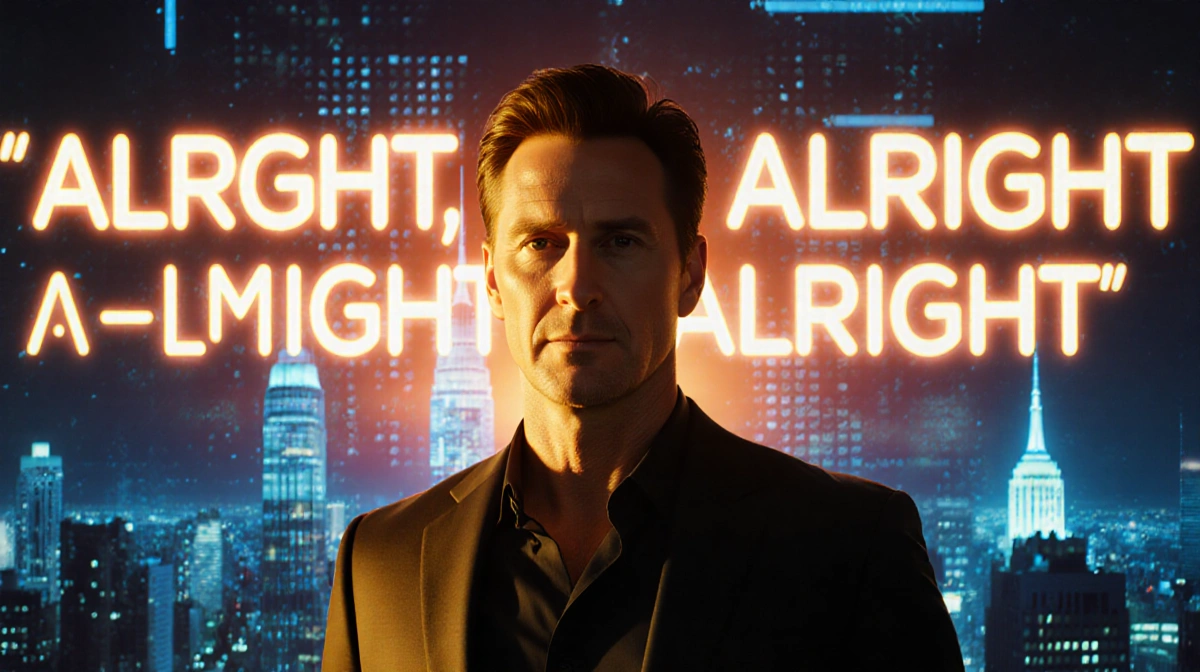
- Matthew McConaughey has secured eight USPTO trademarks for his catchphrase “Alright, alright, alright” and related audio clips
- The filings, submitted in December 2023 and approved by December 2025, aim to prevent unauthorized AI replication of his voice and likeness
- Trademarks include seven-second and three-second video clips plus audio of the phrase and other signature lines
- Why it matters: The move sets a precedent for celebrities using intellectual-property law to combat AI deepfakes
Matthew McConaughey is locking down legal control of his signature phrase. The actor, 56, has won approval for eight U.S. trademarks covering “Alright, alright, alright” and accompanying clips so he can sue anyone who uses AI to fake his voice or image.
The Filings
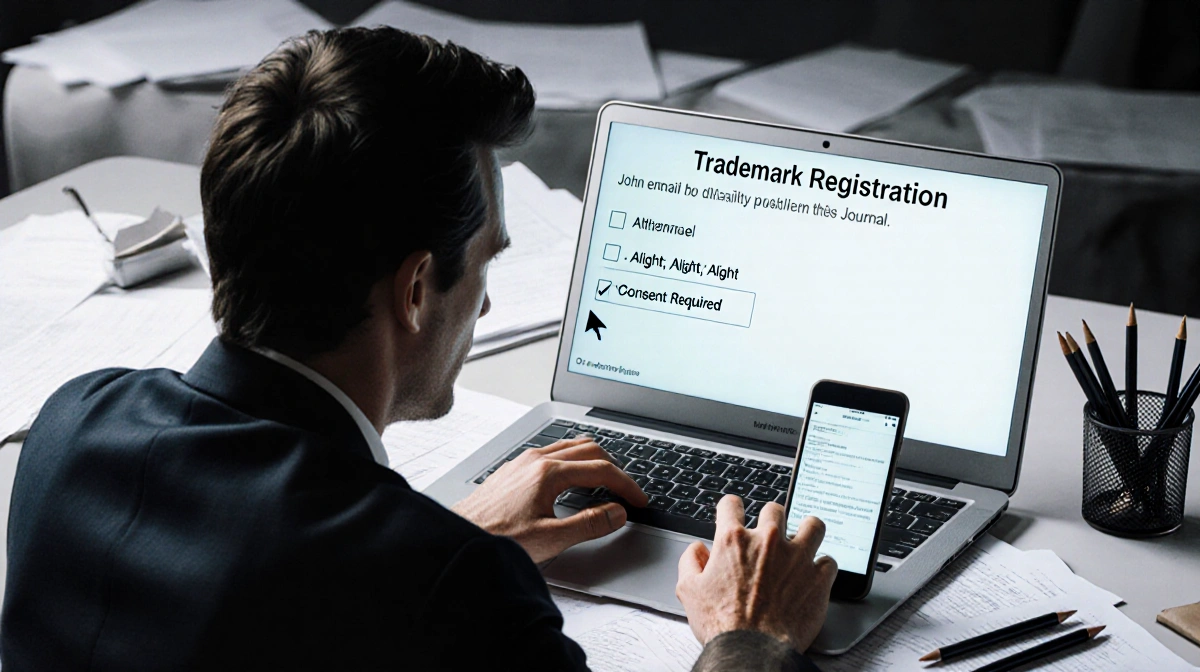
According to documents viewed by News Of Losangeles, McConaughey’s team filed the first application in December 2023; the Patent and Trademark Office granted approval in December 2025. The bundle covers:
- A seven-second video of McConaughey standing on a porch
- A three-second video of him seated in front of a Christmas tree
- Audio of the actor saying “Alright, alright, alright”
- Audio of him saying, “Just keep livin’, right?” followed by pauses and “What are we gonna do?”
The Wall Street Journal, citing the actor’s attorneys, reports that the approvals arrived over the past several months.
Why He Did It
McConaughey wants explicit consent every time his likeness appears. In an email to the Journal he wrote:
> “My team and I want to know that when my voice or likeness is ever used, it’s because I approved and signed off on it. We want to create a clear perimeter around ownership with consent and attribution the norm in an AI world.”
Jonathan Pollack, an attorney at Yorn Levine representing McConaughey, told the outlet the trademarks give them a fast legal lever: “In a world where we’re watching everybody scramble to figure out what to do about AI misuse, we have a tool now to stop someone in their tracks or take them to federal court.”
State right-of-publicity statutes already bar using a celebrity’s image to sell products without permission. By layering federal trademarks onto those rights, the lawyers hope the threat of a federal lawsuit will deter AI apps from cloning McConaughey at all.
The Broader AI Problem
Other stars have sounded similar alarms. Tom Hanks posted an Instagram warning in August 2024 after ads circulated using his likeness without consent. A YouTube video that racked up millions of views in September appeared to show Taylor Swift defending an Eras Tour fan, but the channel’s description admitted the clip used an AI-generated voice “inspired by Taylor Swift’s tone.”
McConaughey’s team sees trademarks as a proactive shield. Attorney Kevin Yorn told the Journal, “I don’t know what a court will say in the end. But we have to at least test this.”
From Cult Line to Legal Asset
McConaughey debuted “Alright, alright, alright” as David Wooderson in 1993’s Dazed and Confused. The phrase stuck for three decades, becoming shorthand for his laid-back persona. Now it doubles as a legal asset designed to keep emerging tech in check.
News Of Losangeles reached out to McConaughey’s representative and legal team; the rep did not immediately respond.
Key Takeaways
- Trademarks can extend beyond words to short audio and video clips
- Celebrities are combining publicity rights with federal marks to fight deepfakes
- McConaughey’s approvals show the USPTO is willing to register even brief media signatures if they identify a single source
- The strategy invites courtroom battles that could clarify how far trademark law reaches into AI-generated content