> At a Glance
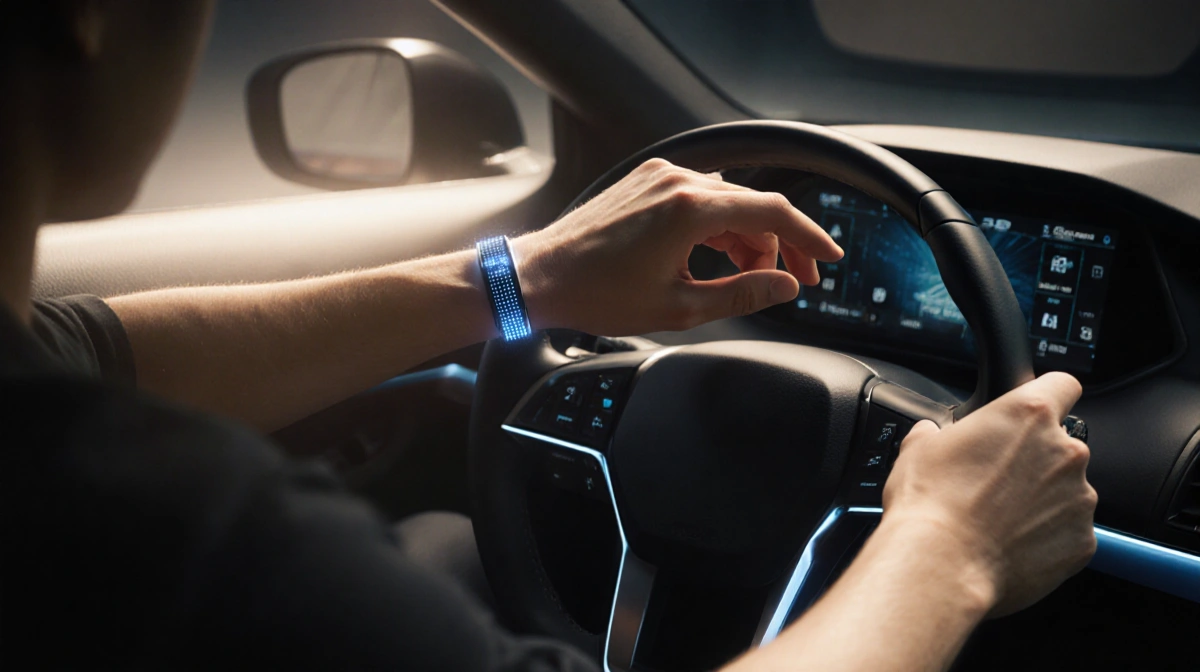
> – Meta and Garmin demoed a neural wristband that controls car interfaces through air gestures
> – The EMG band reads electrical signals from your wrist to detect finger movements
> – Two people can simultaneously control the dashboard in Garmin’s Unified Cabin concept
> > Why it matters: This could change how we interact with vehicle tech without taking hands off the wheel
Meta’s neural wristband technology has broken free from smart glasses and found a new home in automotive interfaces. During a CES demo, I tested how air gestures could control a car’s dashboard using only electrical signals from my wrist.
The Gesture-Controlled Car Experience
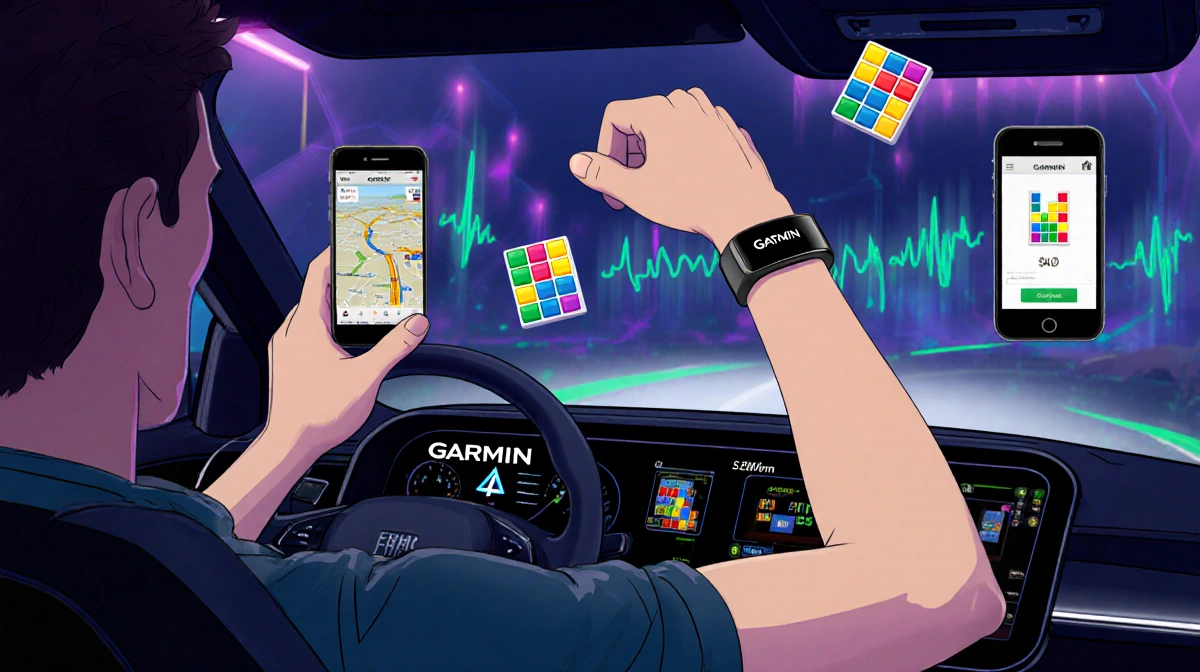
Sitting in Garmin’s futuristic demo cabin, I swiped through apps and played Tetris without touching a screen. The neural EMG band captured tiny electrical signals from my wrist muscles to interpret finger movements.
- Balled fist + thumb swipes scrolled through menus
- Finger pinches opened applications
- No hand lifting required – gestures work with hands resting at your side
The system supports two simultaneous users, so both driver and passenger can control different functions independently.
From Glasses to Garage
This automotive integration represents Meta’s first attempt to separate their neural band from companion devices like Ray-Ban Display glasses. Andrew Bosworth, Meta’s CTO, previously indicated the September-released band would eventually control other devices.
| Feature | Previous Implementation | New Automotive Demo |
|---|---|---|
| Companion Device | Ray-Ban Display glasses | Garmin Unified Cabin |
| Primary Use Case | AR/VR interactions | Car interface control |
| User Capacity | Single user | Dual simultaneous users |
Garmin’s concept platform is designed for other manufacturers to integrate into their vehicles, meaning this gesture technology could appear in various car brands if adopted.
Early Stage Reality Check
The demo showed limited functionality and inconsistent gesture recognition. I could navigate basic menus and launch simple apps, but the controls felt imprecise compared to traditional touch interfaces.
Kip Dondlinger, Garmin’s automotive OEM product design leader, guided the demonstration while wearing a second band, showing how multiple users could interact with the same system.
Key limitations observed:
- Only a handful of functions were demonstrated
- Gesture recognition accuracy needs improvement
- Safety implications for driving scenarios remain unclear
Key Takeaways
- Meta’s neural band works independently of smart glasses for the first time
- Automotive integration could enable hands-free dashboard control
- Garmin’s platform positions the tech for potential mass adoption
- Real-world implementation faces significant accuracy and safety hurdles
While my 2012 Honda CR-V won’t see this upgrade anytime soon, the demonstration suggests a future where wrist wearables seamlessly connect to everything around us – starting with our cars.