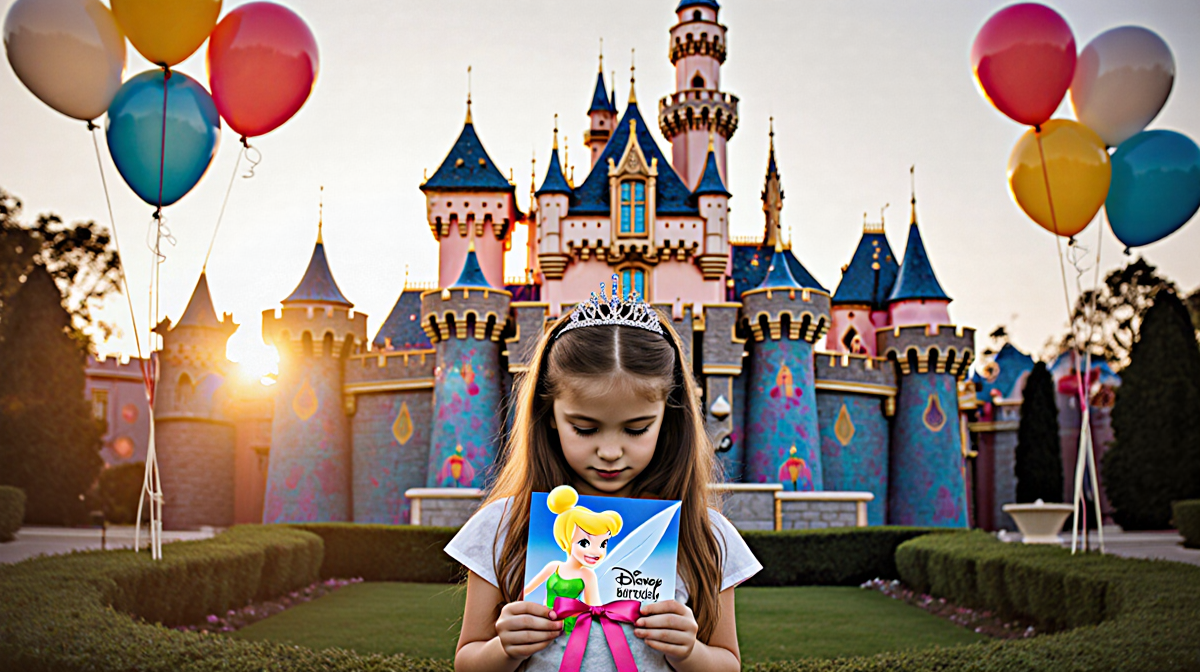
Morgan DeVore grew up with Disney at the center of her life. Living in Southern California, Disneyland was only a hop, skip and a jump away, and the park and its characters appeared in almost every family moment. From a weekly visit to a Tinkerbell-themed birthday, Disney was a constant source of joy and comfort.
At a Glance
- Morgan DeVore began visiting Disneyland at least once a week during childhood.
- She joined the Disney College Program and auditioned among 300 applicants.
- After being selected as a fur character, she graduated to the face character of Tinkerbell.
- 150 performers are kept in the program, with 80-90 becoming face characters.
- Why it matters: DeVore’s story shows how Disney can shape personal dreams and provide emotional support.
Early Life and Disney Influence
Morgan DeVore recalls that Disney was more than a theme park for her family; it was a safe haven during challenging times. When her younger brother was born, she and her aunt visited Disneyland while her mother went into labor. A Tinkerbell-themed birthday party marked another milestone, cementing the character’s importance in her life.
Her mother used Disney as a shield, shielding her children from family issues. “I was super innocent and unaware,” DeVore said. “I think that my mom used Disney to protect me and my siblings from what was going on at home.” She also noted that Disney’s message of leaving reality behind helped her cope.
The Disney College Program Journey
While in high school, DeVore heard about a girl who skipped college to work at Disney. She wrestled with the decision but found a solution: the Disney College Program. The program requires enrollment in a four-year university and offers a semester of work at Disney.
DeVore applied and traveled to Orlando for her audition. “I remember the casting director coming out, there were over 300 people at my audition,” she recalled. “I went to Orlando, so mine was the very first audition.” The process lasted one day, but she didn’t receive feedback until a month later.
Fur vs. Face Characters
Disney categorizes performers into fur and face characters. Fur characters are anthropomorphic, like Chip and Dale, Mickey, and Donald. Face characters can speak and act more fully.
DeVore was placed in the chipmunk height category. “For me, in the chipmunk category, this meant Winnie the Pooh, Remy, and other characters that fall under that distinct height group,” she explained. She performed as a fur character first, learning to communicate through large gestures and miming.
After a period, Disney Entertainment called her for a fitting. “They don’t tell you who you’re being fit for. It depends on Disney’s needs at the time,” she said. She was ultimately fit for Tinkerbell, a face character.
Becoming Tinkerbell
DeVore had a mini audition for Tinkerbell, followed by an official booking notice a month later. Acting guidelines for face characters are strict, ensuring each character’s magic is preserved.
“I feel like at such a young age, Disney was never fake to me. It’s always been real,” DeVore said. “And I even joke now that I’ve never grown out of the magic.” She credited Disney with amplifying her own sense of wonder.
Emotional Connections with Guests
DeVore’s time as Tinkerbell brought many heartwarming moments. She met a 92-year-old woman who had waited her entire life to meet the character. “She said that she had waited her entire life to meet Tinkerbell and she was finally able to afford a trip for the first time,” DeVore recalled.
Other guests shared personal stories. A mother asked DeVore to sign her daughter’s baby book after the child passed away from cancer. “They called her their little Tinkerbell,” DeVore said. She described the experience as “crazy”.
These interactions highlighted how performers become part of guests’ emotional journeys. “There are so many stories of people who have such real connections with these characters,” she said.
Key Takeaways
- Disney’s influence can shape life choices and provide emotional support.
- The Disney College Program offers a unique pathway for students to work at the parks.
- Transitioning from a fur to a face character requires dedication and training.
- Performers often become integral to guests’ personal stories.
Morgan DeVore’s journey from a frequent Disneyland visitor to a beloved face character illustrates the lasting impact of Disney on individuals and families.