> At a Glance
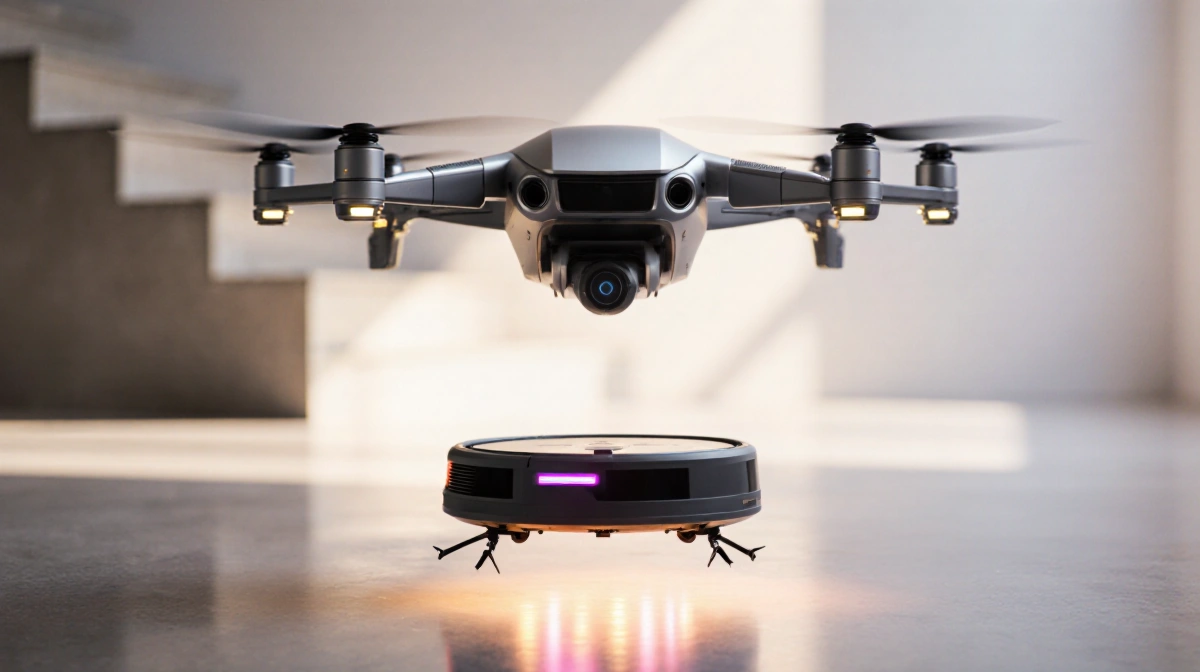
> – Mova strapped a robot vacuum to a custom drone and flew it indoors at CES 2026
> – The Pilot 70 prototype lifted for 30-60 seconds but missed its landing pad
> – A separate stair-climbing shell, the Zeus 60, is headed to market
> – Why it matters: Both concepts show brands pushing hard to solve multi-floor cleaning, even if one is pure theater
Mova, Dreame’s sub-brand, used CES 2026 to show two wildly different answers to the same question: how can a robot vacuum clean upstairs? One answer flew, the other walked.
The Flying Concept
Inside a metal safety cage on the show floor, the Pilot 70 drone heaved the robovac skyward, hovered briefly, then set down off-target. Previous demos had landed cleanly; a last-minute glitch spoiled this one.
- Custom airframe built to carry a vacuum’s weight
- Interior/exterior mapping presumed but not detailed
- Flight time: roughly 30-60 seconds
Marketing video imagined the drone ferrying the vacuum from a base station to a second-floor landing or a balcony, returning later for pickup. The footage featured sprawling rooms with high ceilings-spaces few consumers actually own.
The Walking Solution
While the drone stays a tech demo, the Zeus 60 stair-climbing shell is engineered for retail shelves.
| Feature | Specification |
|---|---|
| Max step height | 9.84 in (25 cm) |
| Climbing modules | Dual-sided, independent |
| Sensors | 10+ sets |
| Compatibility | Multiple future Mova vacuums |
The rig ratchets itself upward: lifts raise the vacuum, an arm extends it onto the next tread, lifts retract, repeat. At the top, the front swings open and the vacuum rolls out to clean.
Key Takeaways
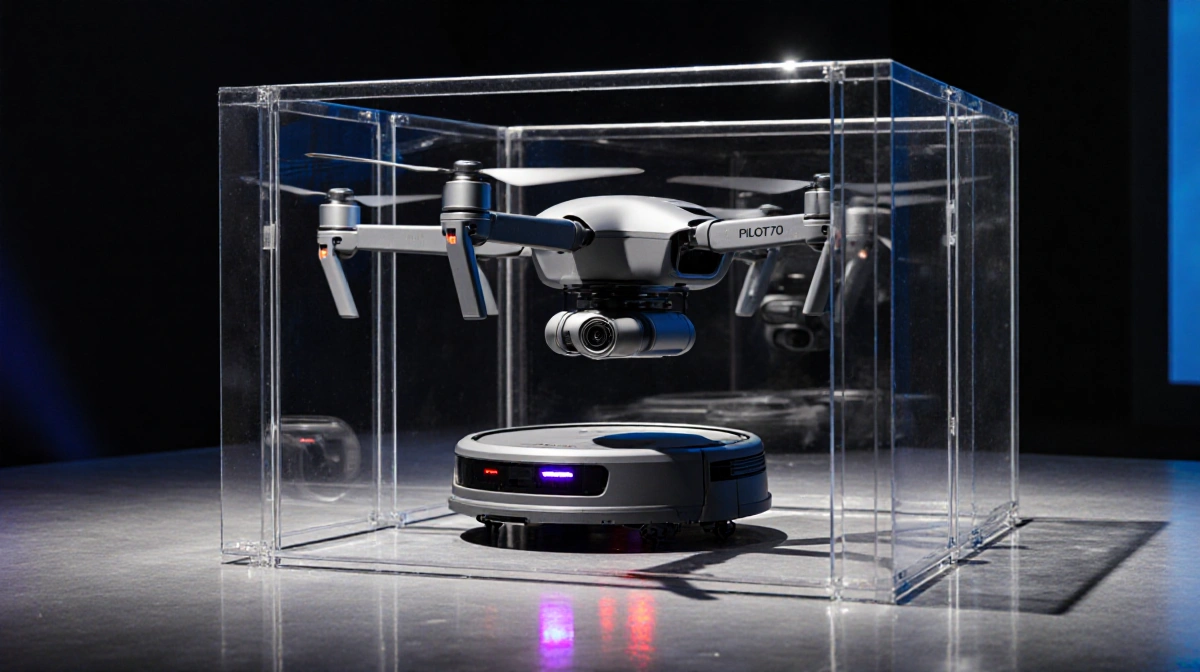
- Pilot 70 is headline-grabbing vaporware
- Zeus 60 targets real homes with stairs up to 9.84 in
- Neither tackles the tighter turns of narrow townhouses
- Expect Zeus 60 to reach buyers long before any drone variant
Mova’s twin reveals prove the race to automate multi-level cleaning is on-whether by air or by stair-stepper.