At a Glance
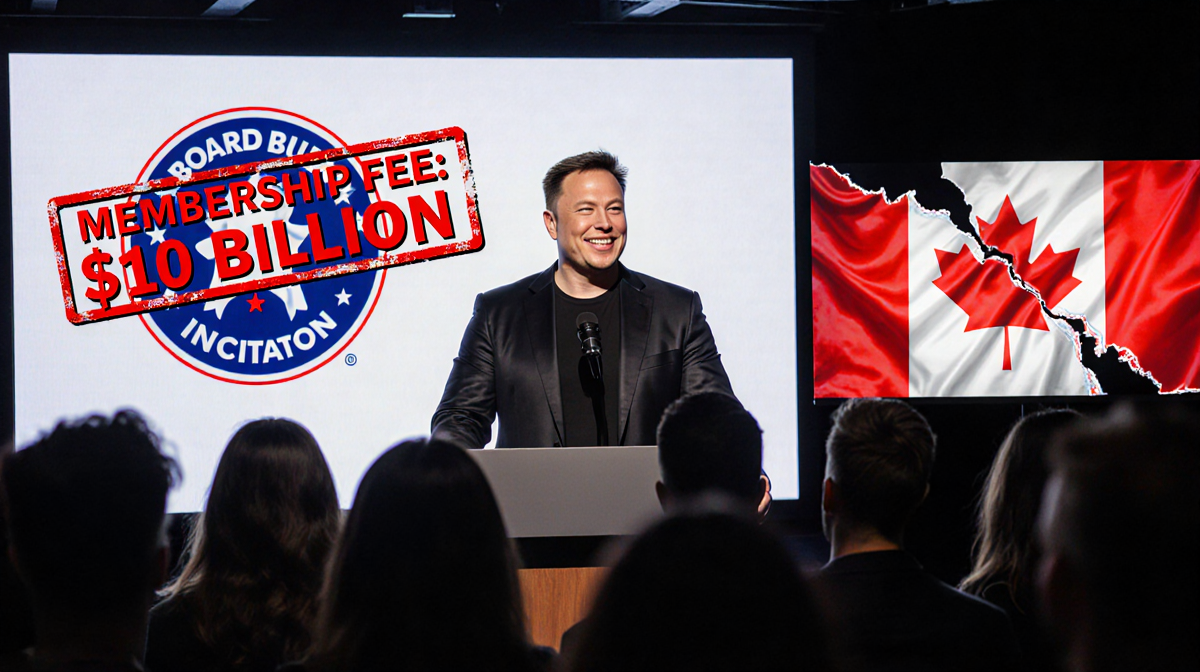
- Elon Musk cracked a joke about Donald Trump’s new Board of Peace during a World Economic Forum talk.
- The board aims to oversee Gaza’s redevelopment and other global conflicts, charging $1 billion for permanent membership.
- Trump’s invitation to Canada was withdrawn after a dispute with Prime Minister Mark Carney.
- Why it matters: The board’s financial model and international reception could reshape global peace-building efforts.
Elon Musk opened his talk at the World Economic Forum in Davos, Switzerland, on Jan. 22 with a joke that fell flat, but he followed it with a serious statement about the new board created by President Donald Trump.
Musk’s Light-Hearted Start
During the Thursday session, Musk laughed at his own pun, saying, “I heard about the formation of the peace summit, and I was like, is that p-i-e-c-e?” The crowd’s silence prompted Musk to clarify that the joke referenced Trump’s expansionist moves, adding “You know, a little piece of Greenland, a little piece of Venezuela.” He ended the segment with a simple line: *”All we want is peace.”
Trump’s Board of Peace: Structure and Fees
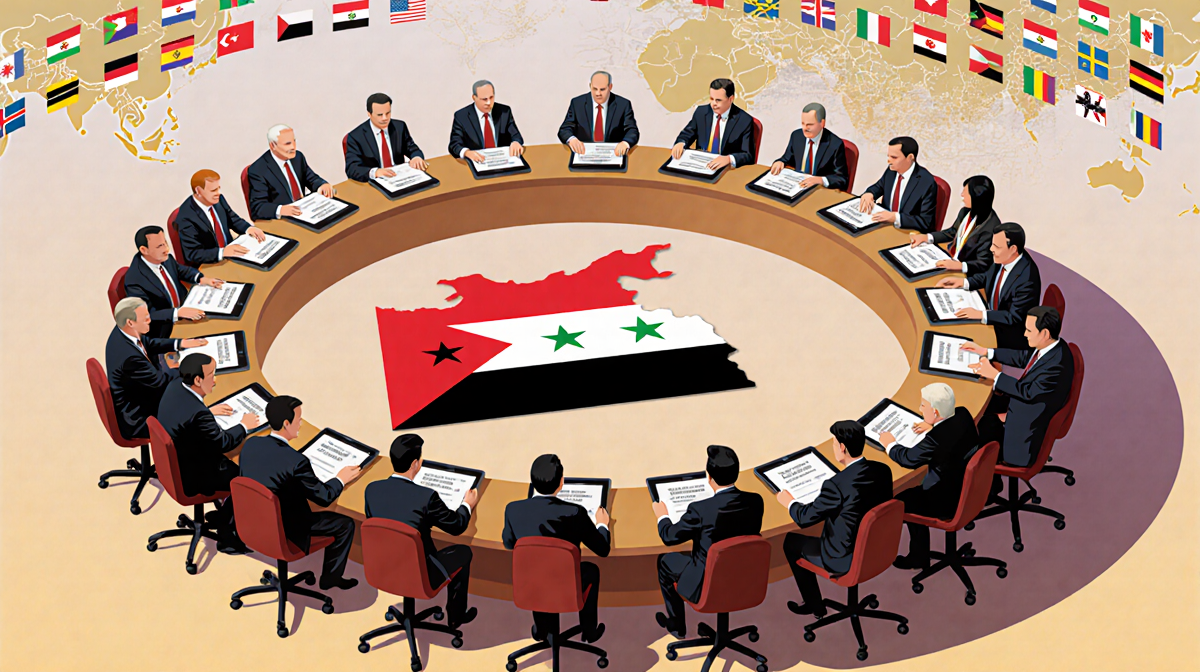
Trump announced the board as an international organization to oversee the redevelopment of Gaza and address other conflicts through a 20-point plan. The board is free for the first three years with an invitation and will cost $1 billion afterward for permanent member status.
The draft charter states:
> “Each Member State shall serve a term of no more than three years from this Charter’s entry into force, subject to renewal by the Chairman. The three-year membership term shall not apply to Member States that contribute more than USD 1,000,000,000 in cash funds to the Board of Peace within the first year of the Charter’s entry into force.”
Trump will indefinitely chair the board, which is intended to bring together leaders from around the world.
International Response
More than 20 countries-mostly from the Middle East, Asia and South America-have announced their intent to join. The list includes Albania, Argentina, Armenia, Azerbaijan, Bahrain, Belarus, Bulgaria, Egypt, Hungary, Indonesia, Israel, Jordan, Kazakhstan, Kosovo, Mongolia, Morocco, Pakistan, Paraguay, Qatar, Saudi Arabia, Turkey, the United Arab Emirates, Uzbekistan and Vietnam.
Canada declined to join after a disagreement between Prime Minister Mark Carney and Trump. In a message to Carney via Trump’s Truth Social account on Thursday, Jan. 22, Trump announced, “The Board of Peace is withdrawing its invitation to you regarding Canada’s joining, what will be, the most prestigious Board of Leaders ever assembled, at any time.”
Russia and China received invitations but have not confirmed participation.
Musk’s Relationship with Trump
Musk served as the inaugural leader of the Department of Government Efficiency after Trump took office in Jan. 2025 and left the administration in May. After a public falling out that cooled their friendship, the two appear to be back on good terms, with Musk attending recent events alongside Trump and describing a Mar-a-Lago dinner with the first couple as “lovely.”
Key Takeaways
- Musk’s joke highlighted skepticism about Trump’s peace agenda.
- The board’s financial model-$1 billion for permanent membership-raises questions about accessibility for developing nations.
- Canada’s withdrawal and Russia/China’s uncertainty illustrate mixed international reception.
- Musk’s return to Trump’s circle suggests a possible alignment of interests.
In Summary: Trump’s Board of Peace is a bold attempt to centralize global conflict resolution, but its high costs and uneven support may limit its effectiveness.