At a Glance
- NASA lost contact with MAVEN on Dec 6 after a brief signal.
- Analysis suggests the probe was spinning unexpectedly when it emerged from behind Mars.
- The next opportunity to re-establish contact is Jan 16, when Mars and Earth line up again.
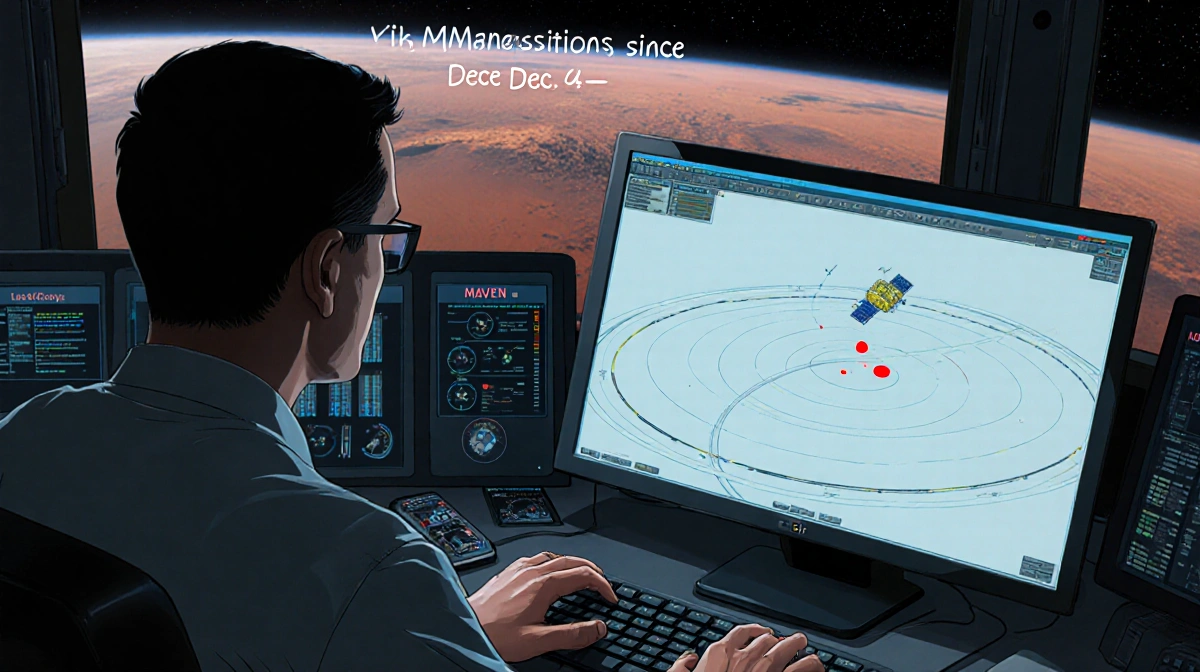
- Why it matters: MAVEN has been studying Mars’s atmosphere for over a decade; its loss could affect data on the planet’s climate evolution.
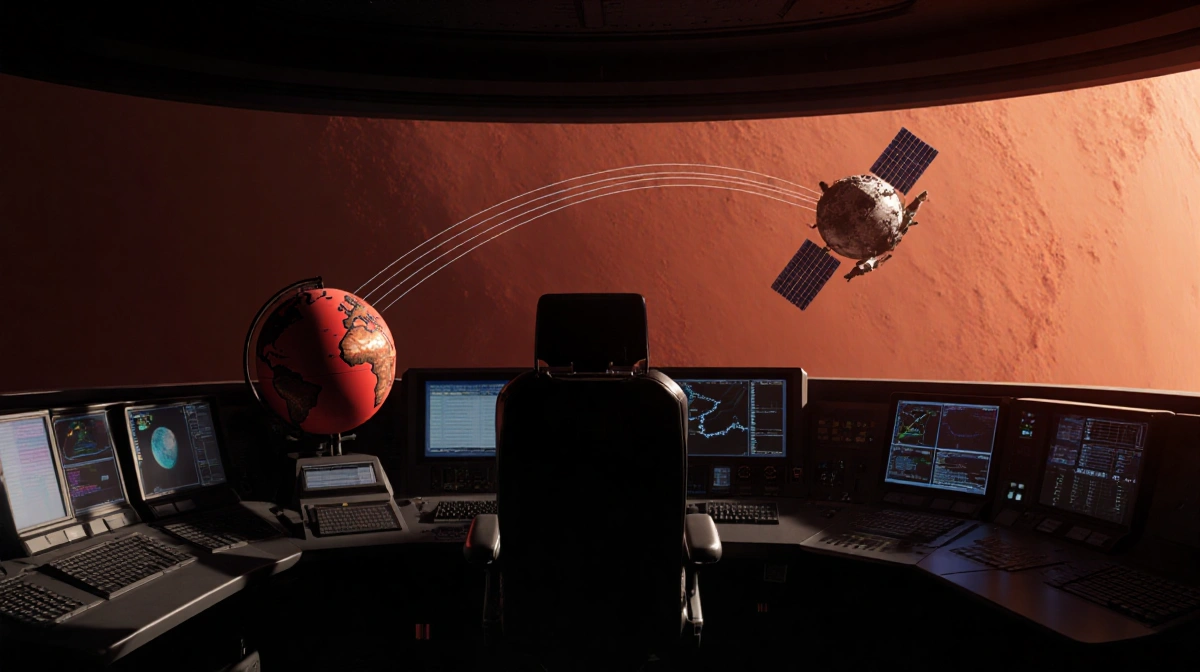
NASA has been trying to reconnect with the MAVEN spacecraft, which entered orbit around Mars in 2014 and has been a key asset for studying the planet’s atmosphere. After a brief signal on Dec. 6, mission controllers suspect the probe was spinning in an odd way, and the next chance to talk to it will be on Jan. 16.
What Happened
NASA lost communication with MAVEN on Dec. 6. The probe was behind Mars, so the signal loss was expected during the maneuver. When it re-emerged, no signals were received. Engineers recovered a short fragment of tracking data that day, which shows the spacecraft was rotating unexpectedly.
NASA officials said:
> “Analysis of that signal suggests that the MAVEN spacecraft was rotating in an unexpected manner when it emerged from behind Mars.”
Current Status
- All MAVEN subsystems were operating normally before the probe passed behind Mars.
- NASA has been using the Deep Space Network to send commands and listen for signals.
- On Dec. 16 and 20, the agency tried to image MAVEN from the Curiosity rover.
- No transmissions have been received since Dec. 4, and engineers are piecing together a timeline of events.
Timeline
| Date | Event |
|---|---|
| Dec 4 | Last confirmed transmission from MAVEN |
| Dec 6 | Probe emerged from behind Mars; brief signal; loss of contact |
| Dec 9 | NASA issued statement about anomaly |
| Dec 16 | Attempts to photograph MAVEN from Curiosity |
| Dec 20 | Second attempt to photograph |
| Dec 23 | NASA working on timeline |
| Jan 16 | Next window to try re-establishing contact |
Key Takeaways
- MAVEN has been orbiting Mars for over ten years, studying its atmosphere and relaying rover communications.
- The probe’s unexpected rotation may indicate a mechanical or power issue.
- NASA cannot contact MAVEN until Jan. 16, delaying any further data collection.
The MAVEN mission has outlived its planned two-year lifespan, but the current communication blackout may set back research into how Mars lost its atmosphere.