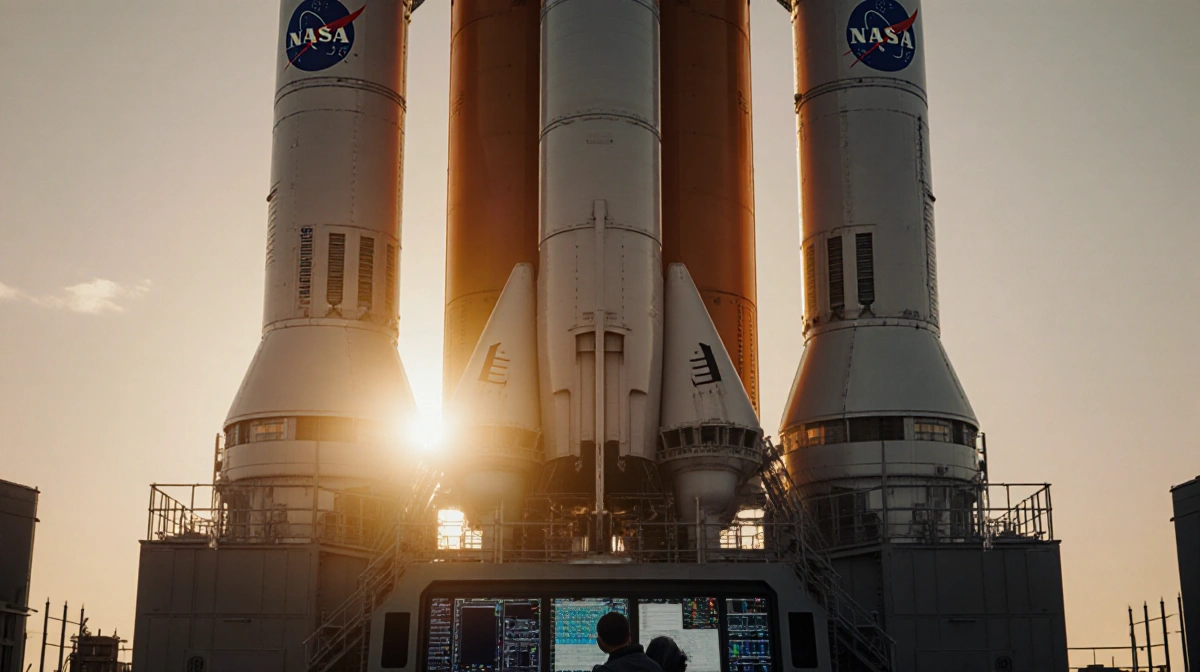
NASA will move its 322-foot-tall Space Launch System rocket to the launchpad Saturday, a critical step toward the first crewed lunar flight since 1972.
The rollout from the Vehicle Assembly Building to Launch Pad 39B at Kennedy Space Center begins at 7 a.m. ET and will be streamed live on NASA’s YouTube channel. The 4-mile trip could take up to 12 hours aboard a crawler-transporter moving at 1 mile per hour while carrying the 11 million-pound stack.
At a Glance
- Four astronauts will orbit the moon on 10-day Artemis II mission
- Launch window opens Feb. 6-11, with backup dates in March and April
- Wet dress rehearsal will fuel rocket and run countdown to T-minus 29 seconds
- Why it matters: Success sets up 2027 moon-landing mission amid U.S.-China space race
The event triggers final tests before NASA locks in an official launch date. “These are the kind of days we live for,” said John Honeycutt, Artemis II mission management team chair.
Crew and Flight Plan
The crew includes NASA astronauts Reid Wiseman, Victor Glover, Christina Koch, and Canadian astronaut Jeremy Hansen. During the 10-day mission they will:
- Orbit Earth to check spacecraft systems
- Travel to the moon and enter lunar orbit
- Test Orion’s docking and life-support capabilities
- Return to Earth for Pacific Ocean splashdown
Testing Before Launch
Once the rocket reaches the pad, teams will conduct a wet dress rehearsal, loading 750,000 gallons of cryogenic propellant and practicing launch-day procedures up to 29 seconds before simulated liftoff. Engineers will hunt for leaks or integration issues.
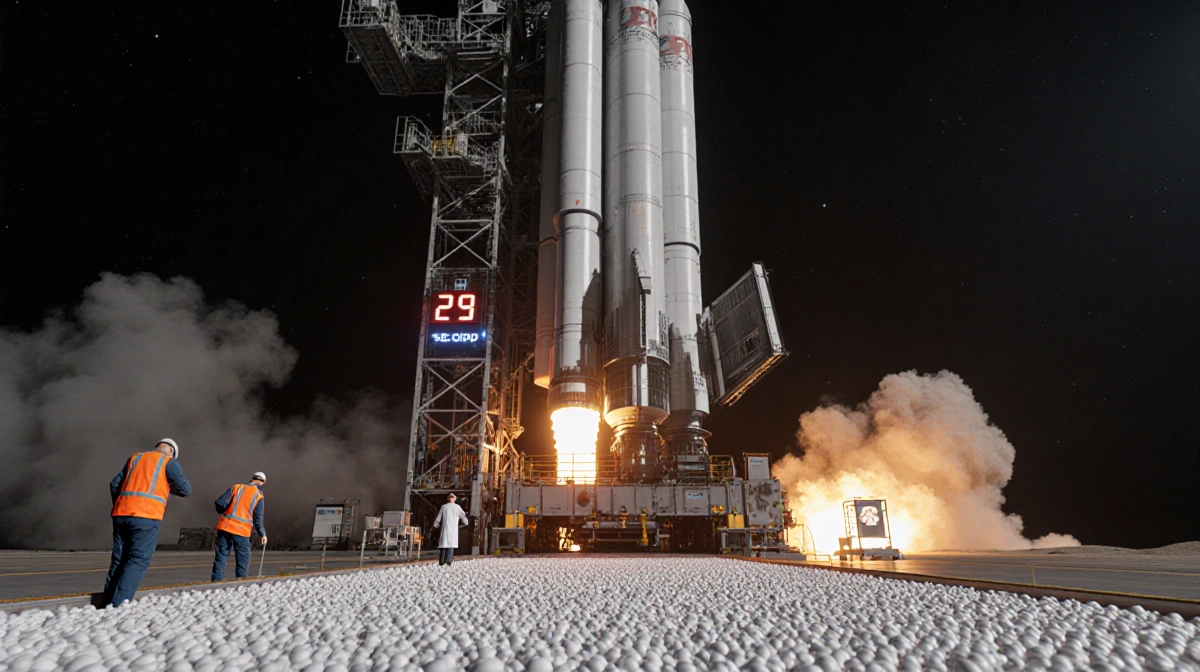
“Launch day will be pretty similar to wet dress,” explained Charlie Blackwell-Thompson, Artemis launch director. “We’re going to send the crew to the pad, and we’re not going to stop at 29 seconds.”
If problems emerge, the rocket rolls back for repairs; if not, NASA will announce the targeted launch date.
Broader Stakes
Artemis II is the first crewed test of the SLS-Orion system. A successful flight clears the way for Artemis III, now scheduled for 2026, to land astronauts near the moon’s south pole.
Returning astronauts to the moon is a White House priority as China targets its own crewed lunar landing by 2030.
NASA revealed Thursday that Artemis II has slipped to 2026, delaying the crewed lunar loop that had been eyed for late 2025.
The rollout Saturday marks the public start of the final push to send humans back to lunar orbit more than half a century after Apollo.