Netflix’s recent announcement to acquire Warner Bros., one of Hollywood’s oldest studios, has sent shockwaves through the entertainment industry and raised questions about the future of moviegoing.
The Deal and Its Immediate Fallout
Netflix said it will buy Warner Bros. Discovery for a price that includes $30 in cash per share, a figure that places the transaction at about $74.4 billion. The deal is set to change ownership of a studio that is a key player in the theater business, with 102 years of history and a current roster that includes three of the top five domestic‑earning films: “A Minecraft Movie,” “Superman” and “Sinners,” as well as the Oscar frontrunner “One Battle After Another.”
While the deal is still pending antitrust review, the announcement has already sparked speculation about how Warner Bros. will operate under a streaming giant.
Paramount’s Hostile Bid and Trump’s Warning
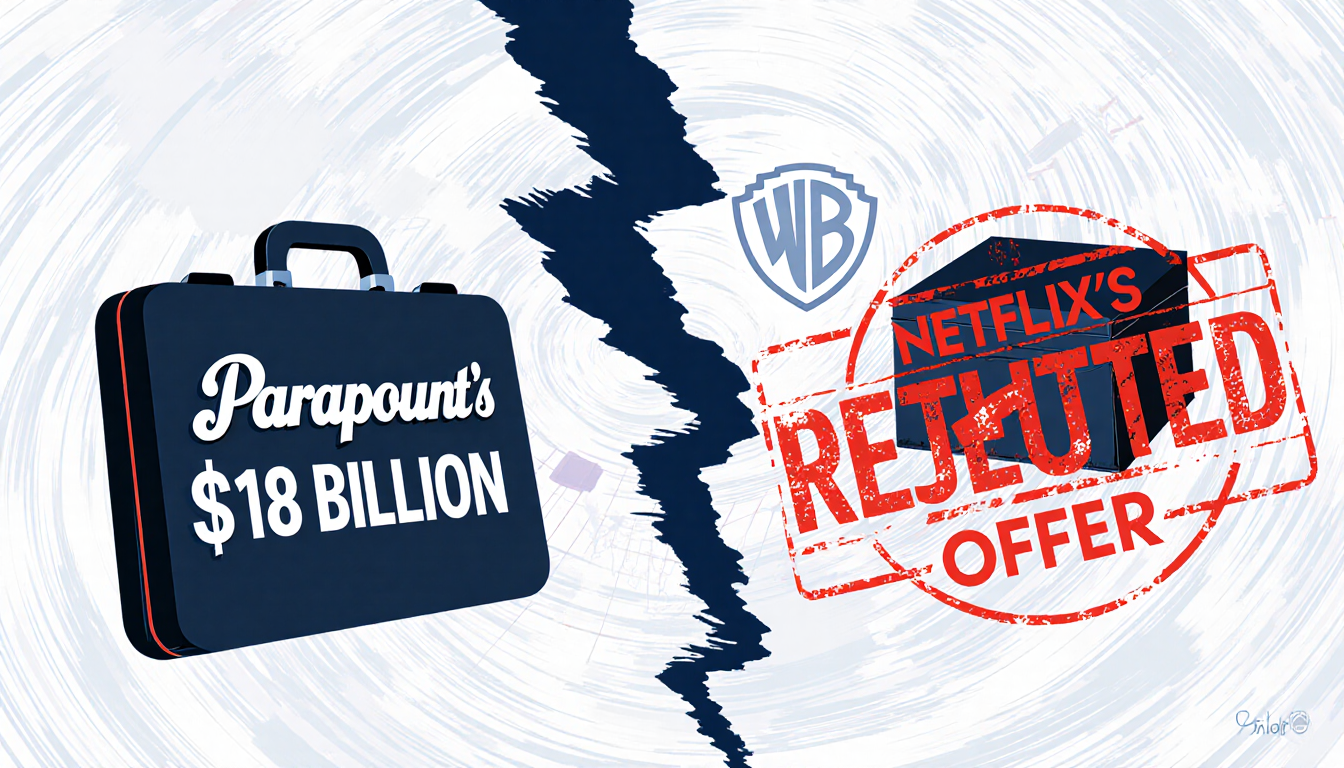
On the same day, Paramount launched a hostile takeover bid for Warner Bros. Discovery, offering $30 per share in cash and the cable television assets. Paramount’s offer is about $18 billion larger than Netflix’s, and Warner Bros. had earlier rejected it in favor of Netflix’s proposal.
President Donald Trump weighed in before the Kennedy Center Honors, saying the merger could be a problem because of the combined market share. “Netflix is a great company. They’ve done a phenomenal job. Ted is a fantastic man,” Trump said of Netflix co‑CEO Ted Sarandos, who met with the president in the Oval Office the week before the deal was announced on Dec. 5. “I have a lot of respect for him but it’s a lot of market share, so we’ll have to see what happens.”
Will Warner Bros. Keep Theaters Alive?
Sarandos confirmed on Friday that Warner Bros. movies will continue to follow a life cycle that starts in the movie theater. “We will continue to support a life cycle that starts in the movie theater,” he said. However, he added that long exclusive windows are not consumer friendly.
The industry has moved from a standard 90‑day theatrical window to about 45 days, with studios making film‑by‑film decisions. Netflix itself releases some movies theatrically, typically for a few weeks before streaming. Recent titles include Guillermo del Toro’s “Frankenstein,” Kathryn Bigelow’s “A House of Dynamite” and Noah Baumbach’s “Jay Kelly.”
Major chains such as AMC and Regal had refused to program Netflix releases until 2022, when the success of “Glass Onion” helped break the stalemate. In an unexpected move, “KPop Demon Hunters” unofficially topped the box office, earning nearly $20 million from a one‑weekend run in theaters two full months after its streamer debut.
Netflix also owns and operates the Paris Theater in New York and the Egyptian Theatre in Los Angeles.
Warner Bros.’ 2026 and 2027 Slate
The studio’s 2026 lineup features:
- “Wuthering Heights” (Margot Robbie) – February
- “Supergirl” – June
- “Practical Magic 2” – September
- An untitled Tom Cruise movie directed by Alejandro Iñárritu – October
- “Dune: Part Three” directed by Denis Villeneuve – December
In 2027, Warner Bros. plans sequels to “Superman,” “A Minecraft Movie” and “The Batman.” Earlier this year the company said it aims for 12 to 14 releases annually across its four main labels: Warner Bros. Pictures, DC Studios, New Line Cinema and Warner Bros. Animation.
Impact on Theaters and the Exhibition Business
Cinema United president and CEO Michael O’Leary said hours before the news broke that the deal posed “an unprecedented threat to the global exhibition business.” He urged regulators to scrutinize the specifics of the transaction and understand its negative impact on consumers, exhibition and the entertainment industry.
Theatrical exhibition has not fully recovered since the pandemic. Prior to 2020, the domestic box office regularly surpassed $11 billion. Since then it has only surpassed $9 billion once, in 2023, largely driven by Warner Bros. release “Barbie.”
How Top Filmmakers Will Respond
Warner Bros. has long been a home for top filmmakers, releasing films from Paul Thomas Anderson, Ryan Coogler and James Gunn this year, and maintaining longstanding relationships with Denis Villeneuve, Clint Eastwood and Todd Phillips. Whether these filmmakers will stay depends on whether robust theatrical releases continue.
“I make films for the big screen and believe in the theatrical experience and I just want to make sure the experience is maintained,” director Joachim Trier told the Associated Press on Monday.
Director Park Chan‑wook also spoke to the AP, saying he did not want to discuss specifics because nothing has been confirmed, but that he still believes movies should be watched in theaters.
The studio’s 2021 decision to release films simultaneously in theaters and on HBO Max during the pandemic led to a rift with Christopher Nolan, who after eight major films with Warner Bros. – including the “Dark Knight” trilogy – partnered with Universal for his next two films, “Oppenheimer” and next year’s “The Odyssey.”
HBO Max and Netflix: One Service or Separate?
That question remains unanswered. If the two platforms stay separate, there may be bundling options, similar to Disney and Hulu. Netflix said on Friday that adding HBO and HBO Max programming will give its members “even more high‑quality titles from which to choose” and “optimize its plans for consumers.”
The Warner Bros. library includes classics such as “Casablanca” and “Citizen Kane” as well as the “Harry Potter” movies.
Key Takeaways
- Netflix’s $74.4 billion purchase of Warner Bros. Discovery could reshape theatrical windows and distribution models.
- Paramount’s $74.4 billion hostile bid offers $18 billion more than Netflix’s, but Warner Bros. chose Netflix.
- Warner Bros. movies will still start in theaters, but long exclusive windows are questioned; the pandemic has shifted the industry to shorter windows.
The announcement has prompted regulators, theater chains, filmmakers and the public to examine how a streaming giant’s ownership of a major studio might affect the future of cinema.
Closing
As the deal moves forward, the entertainment world will watch closely to see whether Warner Bros. under Netflix will maintain its theatrical tradition or shift toward a model that favors streaming, and how that shift will impact the economics of movie theaters worldwide.