At a Glance
- Extension cords can ignite when paired with high-watt heating appliances
- Space heaters alone cause 1,700 fires per year between 2017-2019
- Anything above 1,500 watts needs a dedicated wall outlet
- Why it matters: A melted plug can start a lethal house fire within minutes
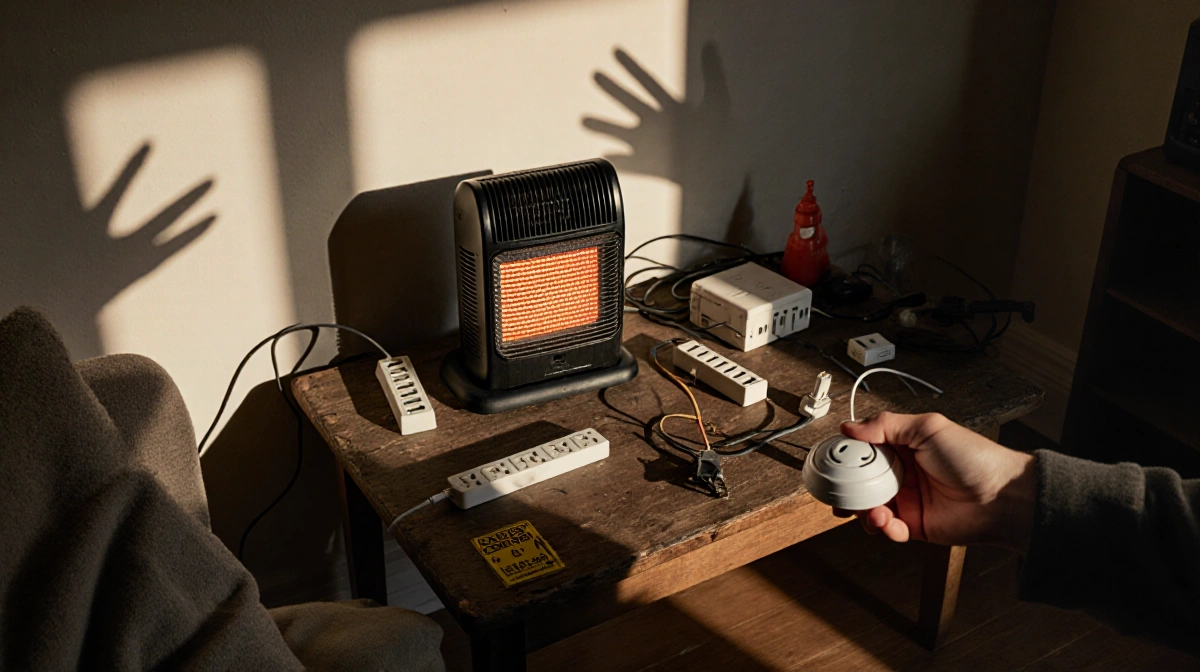
January’s deep freeze drives thousands to drag out space heaters, air fryers and toaster ovens. Each device can quietly pull more electricity than an extension cord can handle, turning a common workaround into a fire-starter. Brooklyn electrician Paul Martinez, owner of Electrified NYC, told News Of Losangeles the blunt rule: “No extension cords whatsoever” for anything that heats or runs nonstop.
The Seven Deadly Devices
- Air fryers
Large models hit 2,000 watts. A 14-gauge cord maxes out at 1,800 watts. Pull the fryer out only when needed and plug it straight into a wall outlet.
- Microwaves
Built-in units dodge the problem. Countertop models need their own circuit because of high, sudden power draws.
- Space heaters
The Consumer Product Safety Commission counted 1,700 heater-linked fires a year from 2017-2019, some fatal. Martinez: “The plug melts and it starts a fire.”
- Toasters & toaster ovens
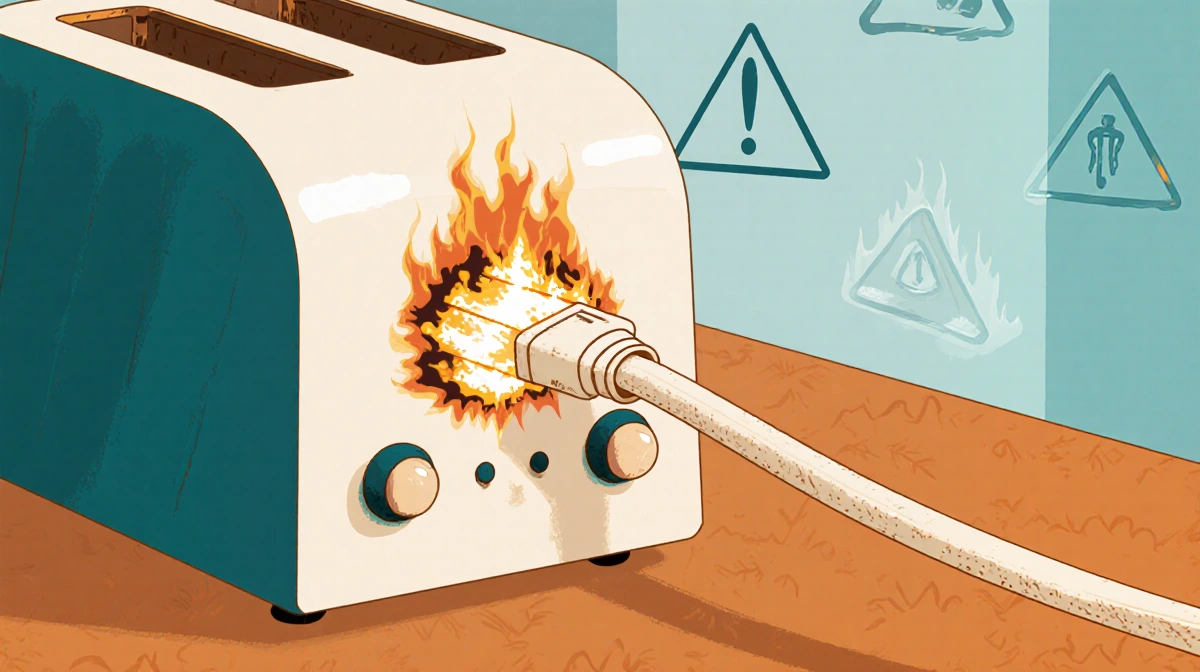
Wattage runs 1,200-1,400. A 14-gauge cord can’t carry the amperage and can burn up, igniting nearby material.
- Refrigerators
Only 300-800 watts, yet they run 24/7. A loose extension connection can make the compressor stutter, spoil food or overheat.
- Air-conditioning units
Undersized 5,000-BTU models cycle constantly, pulling extra current. Pair that load with a cord and the plug can overheat before the breaker trips.
- Daisy-chained extension cords
Plugging cords into cords multiplies resistance, heat and fire odds. One heat source is dangerous; two cords in series is worse.
Cord Math That Saves Lives
| Cord Gauge | Max Watts | Safe For Heating Appliances? |
|---|---|---|
| 14-gauge | 1,800 | No – risk above 1,500 W |
| 12-gauge | 2,400 | Still discouraged by pros |
| Wall outlet | 1,800 | Yes – on dedicated circuit |
Martinez keeps the advice simple: “Never use them with any appliances whatsoever.” Reserve power strips and surge protectors for low-draw electronics-laptops, lamps, routers. Anything that glows red or spins a compressor deserves a direct wall receptacle and, ideally, its own circuit.
Key Takeaways
- Check the wattage plate; anything near or above 1,500 W needs a wall outlet
- Extension cords are for electronics, not heating elements
- One melted plug can destroy a home-skip the cord and stay safe