At a Glance
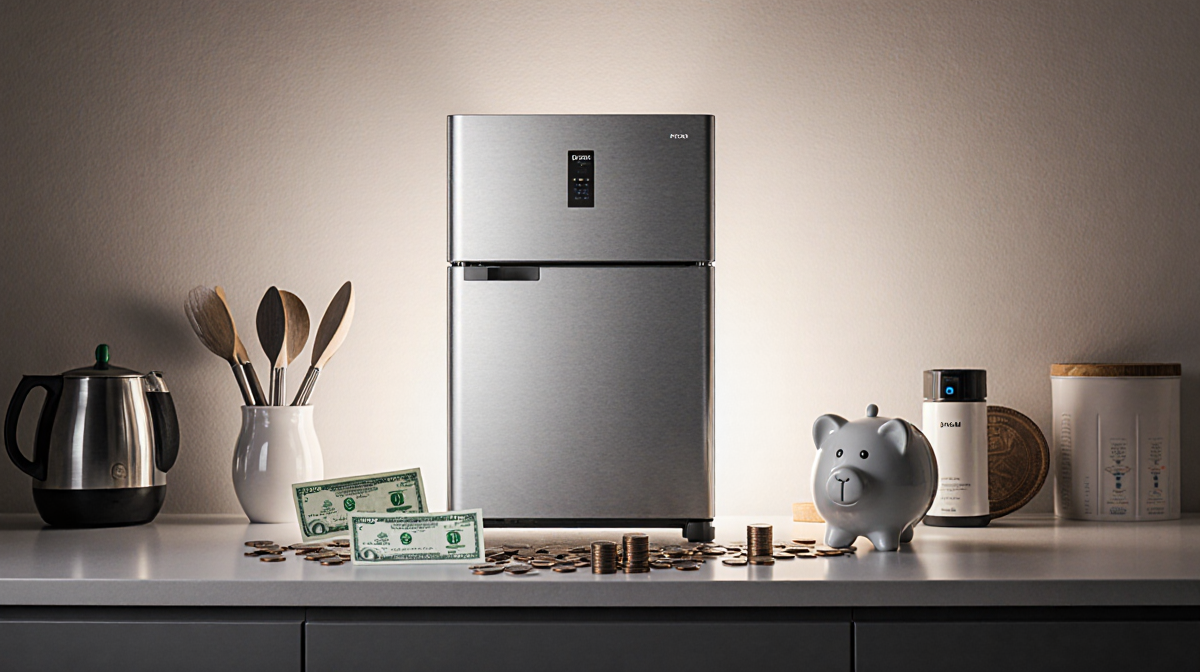
- Modern fridges can cut energy bills by up to $340 over ten years.
- Bottom-mounted freezers save about $272; top-mounted only $83.
- Compact models show negligible change from 2016.
- Why it matters: Upgrading now can offset the purchase price through long-term savings.
A new refrigerator’s energy efficiency has become a key factor for homeowners. Comparing 2025 models with 2016 ones shows a clear trend: newer designs use significantly less power, especially side-by-side units.
Energy Efficiency Overview
Energy-Star certification drives most modern fridges. The 2025 criteria require top-mounted freezers to use no more than 637 kWh per year, while bottom-mounted and side-by-side units must be at least 27 % more efficient than the federal standard.
The average 2025 top-mounted freezer uses 344 kWh/yr versus 394 kWh/yr in 2016, translating to an annual cost of $56.62 compared with $64.94. Over ten years, that adds up to $83 in savings.
Data Sources
The analysis drew on 2,630 fridges, split into two groups:
| Fridge type | 2025 sample | 2016 sample |
|---|---|---|
| Top-mounted freezers | 385 | 137 |
| Bottom-mounted freezers | 440 | 192 |
| Side-by-side | 2,368 | 1,235 |
| Compact | 150 | 547 |
Energy-Star data covered 2025 models, while 2016 figures came from the California Energy Commission’s Modernized Appliance Efficiency Database System.
Fridge Types & Savings
The most potential savings come from side-by-side refrigerators:
| Type | 2025 annual kWh | 2016 annual kWh | 10-year savings |
|---|---|---|---|
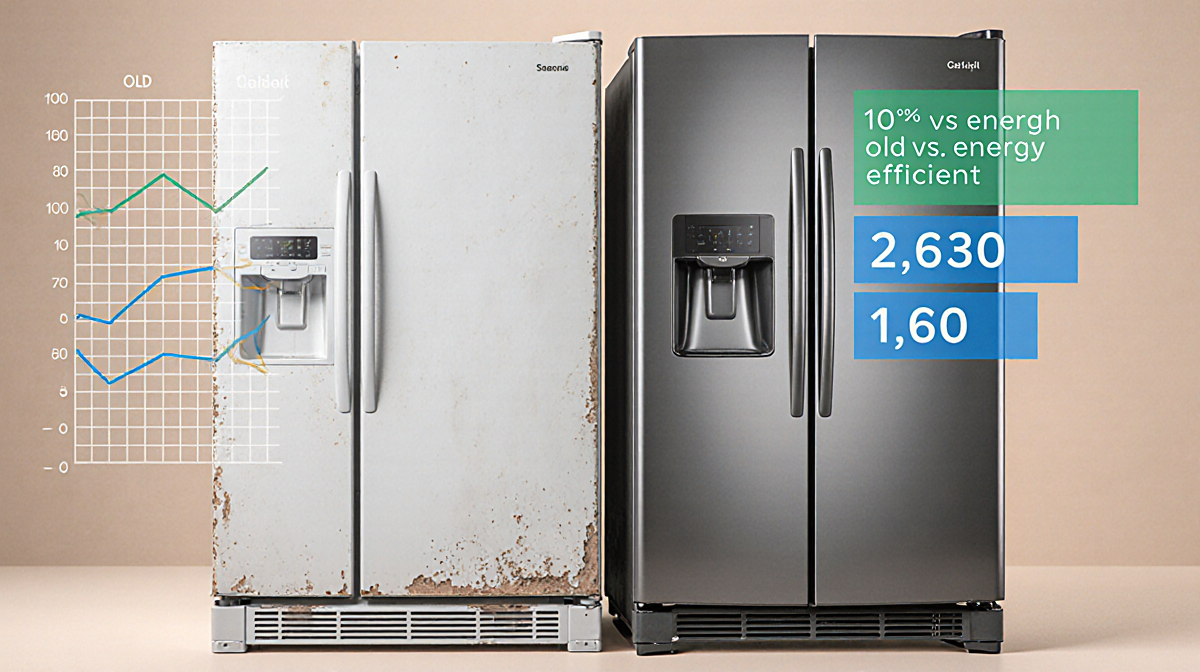
| Side-by-side | 507 | 714 | $340 |
| Bottom-mounted | 468 | 633 | $272 |
| Top-mounted | 344 | 394 | $83 |
| Compact | 256 | 252 | $0 |
Even a modest efficiency boost can reduce a decade’s energy bill by hundreds of dollars.
How to Compare Your Current Fridge
Use Energy Star’s Flip Your Fridge Calculator, which asks for your fridge’s age, size, and local electricity rate. The calculator gives a rough estimate that can be cross-checked with the Energy Guide Label for an exact yearly usage figure.
Retail prices vary, but many 2025 models are priced similarly to 2016 equivalents. If the upfront cost difference is less than the projected savings, the new unit is a good investment.
Regional Variations
Electricity rates differ widely across the U.S. In 2024, North Dakota’s average rate was just 11.51 ¢/kWh, while Hawaii’s was 42.86 ¢/kWh.
Higher rates mean larger savings. Residents in Hawaii, California, Massachusetts, Connecticut, Rhode Island, and Alaska could see 51 % to 160 % more savings on a new Energy Star fridge compared with the national average. In contrast, states with cheap power, such as North Dakota, Idaho, and Washington, see much smaller benefits.
Smart Fridge Costs
Premium smart refrigerators often carry a hefty price tag. Samsung’s smart models can cost at least $700 more than their traditional counterparts, a cost that far outweighs any energy savings.
Smart fridges are not necessarily efficient; the added features come at a premium that erodes the long-term benefit.
Calculations & Methodology
Energy efficiency calculations involve three components:
- Efficiency variable – a class-specific multiplier.
- Adjusted volume – accounts for freezer and fridge compartments.
- Base load – the minimum energy a fridge must use.
The formula
\[( ext{Efficiency variable} imes ext{Adjusted volume}) + ext{Base load}\]
produces the maximum allowable energy use. Comparing this to the federal standard yields the Energy Star rating.
The 2025 standards require:
- Top-mounted freezers ≤ 637 kWh/yr.
- Bottom-mounted and side-by-side units 27 % more efficient.
- Compact refrigerators 30 % more efficient.
These thresholds guide the classification of each model.
Takeaways
- Side-by-side fridges offer the biggest long-term savings.
- Bottom-mounted freezers also provide substantial benefits.
- Top-mounted freezers save modest amounts, often not enough to justify a costly upgrade.
- Compact models show little change; energy savings are minimal.
- Smart fridges’ extra cost usually outweighs any efficiency gains.
Upgrading to a modern, Energy Star-certified fridge can pay for itself through energy savings, especially if you live in a state with higher electricity rates.