At a Glance
- Nonstick pans are great for low-heat, sticky foods but struggle with searing, char, and acidic dishes.
- Five categories of food-meat, vegetables, caramelized items, acidic sauces, and stir-fries-are best cooked in stainless steel or cast iron.
- The coating on nonstick pans can wear out quickly, especially when exposed to high heat or acids.
- Why it matters: Choosing the right pan improves flavor, extends cookware life, and keeps your kitchen safe.
In most kitchens, nonstick pans are a staple because they make cooking and cleanup easier. However, their design limits their performance at higher temperatures and with acidic or heavily stirred foods. A chef-instructor at the Institute of Culinary Education notes that “nonstick cookware, including ceramic, is niche and rarely a go-to pan for most chefs in professional kitchens.”
Why Nonstick Pans Fall Short
Nonstick cookware is engineered for low-to-medium heat. The coating that prevents sticking also limits the surface temperature that can be achieved. When you try to sear a steak or chicken thigh, the pan simply cannot reach the Maillard reaction temperature needed for a golden crust. As a result, the outside of the meat looks pale and the flavor is muted.
The same limitation applies to vegetables. A cast-iron skillet or stainless-steel pan can develop a char that adds depth of flavor, while a nonstick pan will leave vegetables soft and unseasoned.
Foods Best Avoided in Nonstick
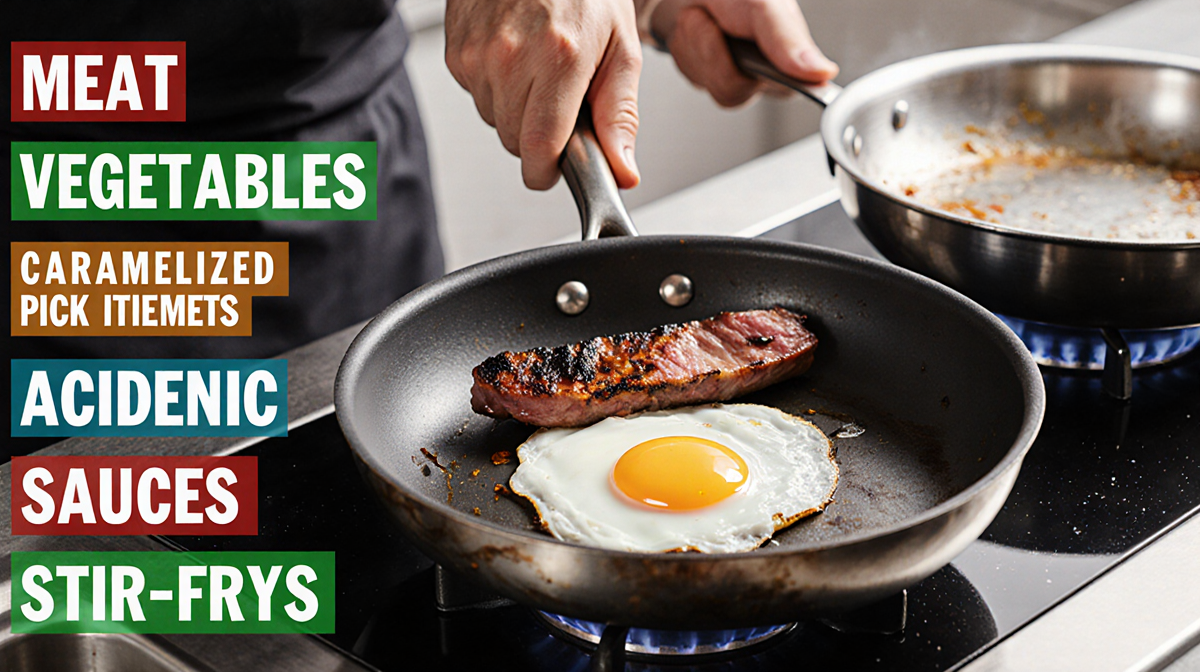
Below are five categories of food that do not fare well in nonstick cookware:
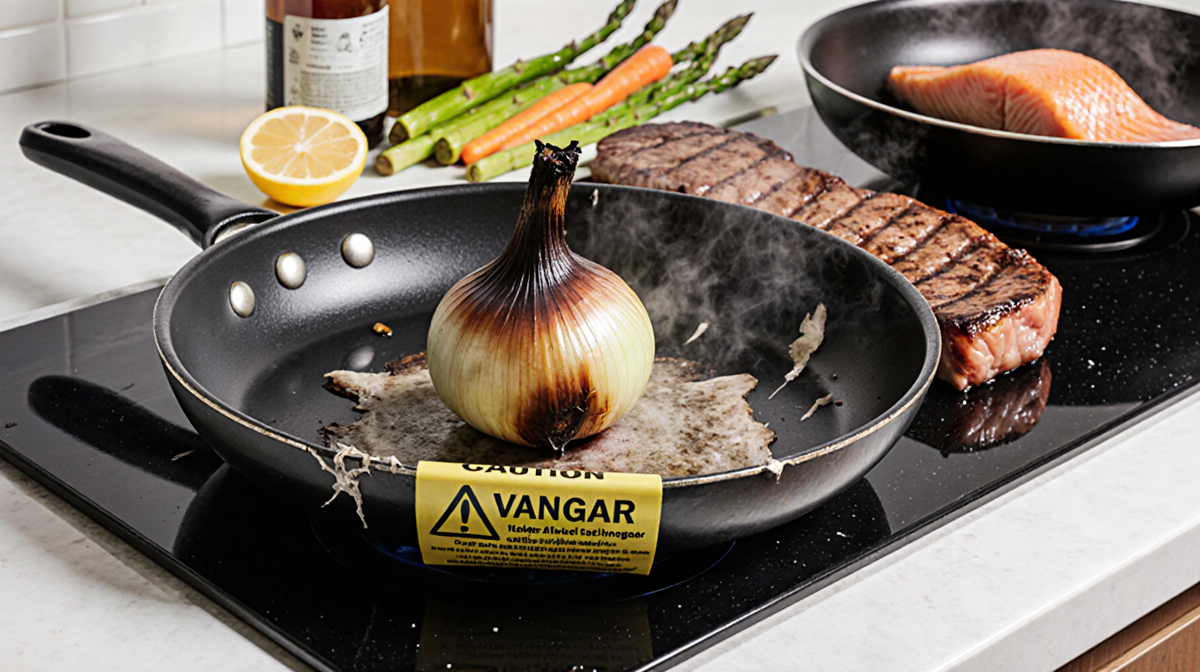
- Most meat and fish – Steaks, pork chops, chicken breast, and salmon require high heat for a proper sear.
- Vegetables that benefit from char – Zucchini, carrots, onions, asparagus, and bok choy are best sautéed in a pan that can hold heat.
- Foods that need caramelization – Onions, garlic, and other items that form a fond are unsuitable for nonstick surfaces.
- Acidic foods – Tomato sauce, wine-based sauces, vinegar-rich dishes, and lemon-juiced recipes can corrode the coating over time.
- Stir-fries, soups, and sauces – Constant stirring or whisking wears down the nonstick surface and reduces its lifespan.
> “Ratatouille is one dish I wouldn’t cook in a nonstick,” LaMarita says. “The acids in this recipe and others will corrode the delicate nonstick surface over time.”
Heat Tolerance: A Quick Comparison
| Pan Type | Typical Max Temperature | Ideal Use Cases |
|---|---|---|
| Nonstick | 350-400 °F | Scrambled eggs, pancakes, sticky sauces |
| Stainless Steel | 500-550 °F | Searing meats, sautéing vegetables |
| Cast Iron | 600-650 °F | Broiling, high-heat searing, deep-frying |
The table shows that stainless steel and cast iron can withstand temperatures that nonstick cannot, making them the preferred choice for dishes that rely on high heat.
Maintaining Your Nonstick Pan
Even with proper use, nonstick surfaces wear out. To extend the life of your pan:
- Use metal-free utensils such as silicone or wooden spoons.
- Avoid sudden temperature changes; let the pan heat gradually.
- Clean with mild soap and a soft sponge; harsh abrasives can scratch the coating.
- Replace the pan when the coating shows signs of peeling or flaking.
> “I find that nonstick surfaces wear down eventually, even with proper use, so why speed up that process?” LaMarita notes.
Alternatives and Tips
If you need a pan that can handle high heat and acidic ingredients, consider these options:
- Stainless-steel skillet – Offers excellent heat distribution and is dishwasher safe.
- Cast-iron skillet – Retains heat well and can be seasoned to create a natural nonstick surface.
- Carbon-steel pan – A lighter alternative to cast iron that also handles high heat.
For everyday cooking, keep a small nonstick pan for quick, low-heat tasks, but reserve a stainless-steel or cast-iron pan for searing, sautéing, and dishes that require a fond.
Key Takeaways
- Nonstick pans are convenient but limited to low-heat, sticky foods.
- High-heat dishes, acidic sauces, and constant stirring damage nonstick surfaces.
- Stainless steel and cast iron are superior for searing, caramelizing, and acidic cooking.
- Proper care can extend the life of a nonstick pan, but replacement is inevitable.
By matching the right pan to the right dish, you’ll enjoy better flavor, longer cookware life, and a safer kitchen experience.